How to Zero a Red Dot Sight on a Pistol
Zeroing a pistol red dot sight means precisely aligning your Point of Aim (POA) with your bullet's Point of Impact (POI) at a specific distance. This fundamental calibration is absolutely critical to ensure uncompromising accuracy, repeatable performance, and ethical engagement in any operational or defensive scenario.
Two Paths to Precision
Achieving a flawless zero is the bedrock of professional-grade marksmanship. Today, shooters have two distinct paths to reach this standard: the traditional manual method honed through decades of field experience, and the modern, digitally assisted method utilizing the SIG CONNECT app. Both paths demand precision and a commitment to excellence. However, evolving technology now offers a vastly faster route to absolute confidence in your equipment.
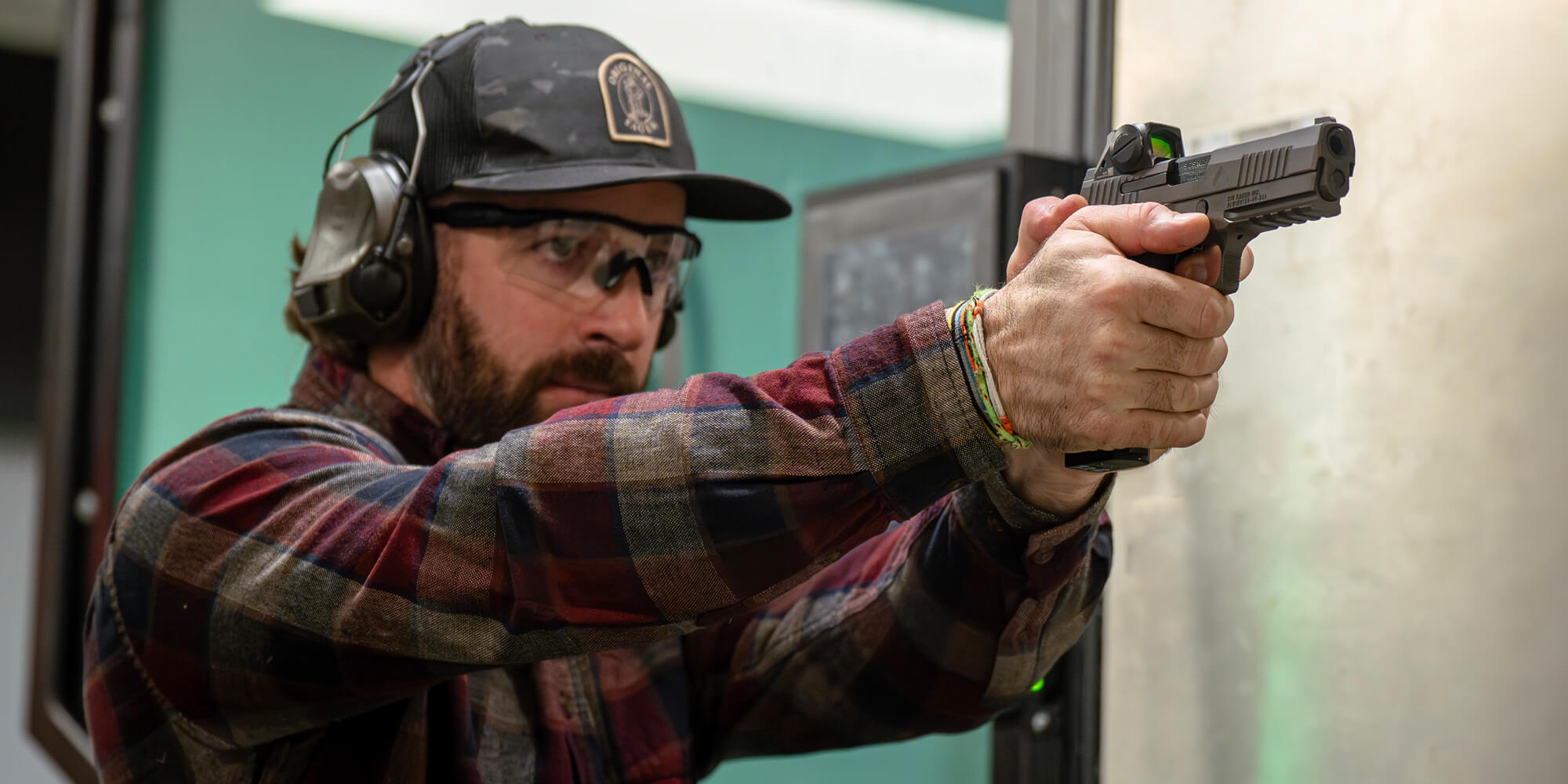
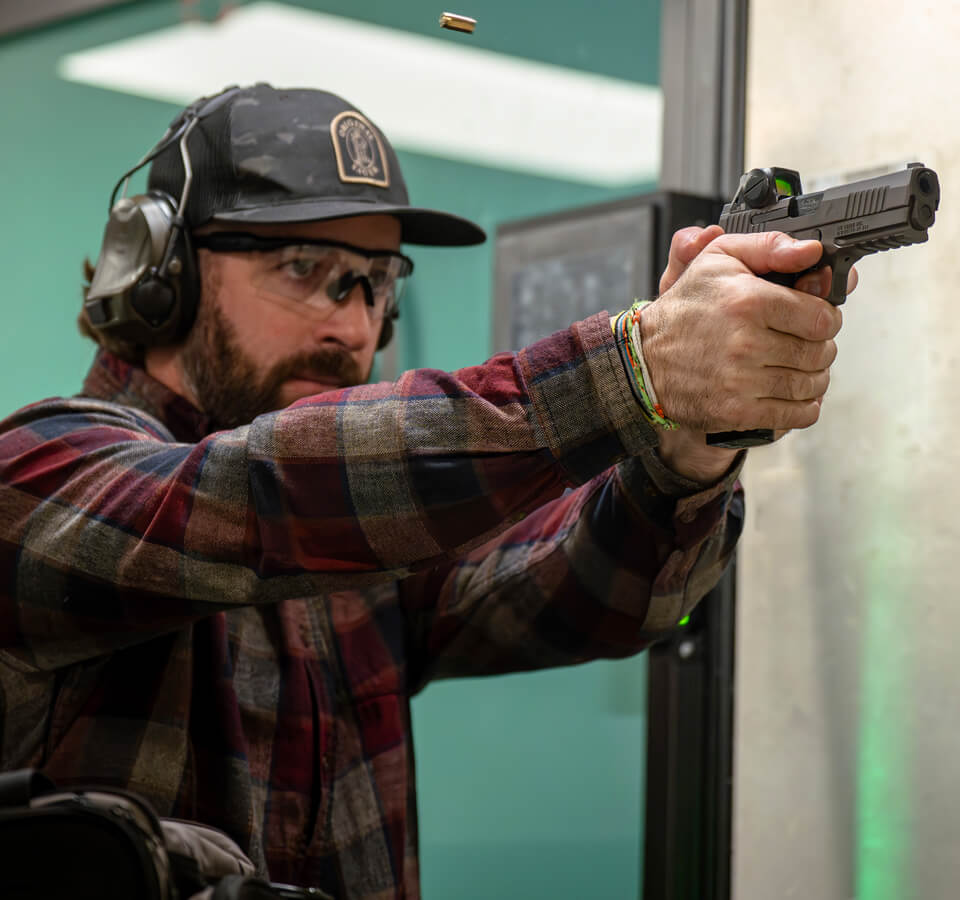
Method 1: The Traditional Manual Zero
The manual zero requires patience, stable mechanics, and a thorough understanding of optic adjustments. By meticulously adjusting your optic to match your point of impact, you build fundamental knowledge of your pistol's ballistics.
Required Gear:
- High-visibility zeroing targets.
- A stable shooting rest or sandbags to eliminate human error.
- Your chosen duty or defensive ammunition (avoid mixing grain weights).
- A proper torque tool for securing optic plates and making turret adjustments.
Expert-Level Nuance - Understanding MOA and Distance: Before turning any dials, you must understand your optic's Minute of Angle (MOA) adjustments. One MOA equals roughly 1in at 100yds. Therefore, a red dot with 1 MOA adjustments requires a 1/4 turn to move the POI exactly 1in at 15 yards. If you need to adjust 2in, it would take a 1/2 turn. Keep in mind that your POI changes based on how far away you are from a target. Be sure to choose a POA that suits the typical distance at which you expect to be shooting. At SIG SAUER Academy in Epping, NH, instructors teach students to zero at 15yds because between 15yds & 50yds POI has a max deviation of only .4in (which is negligible) with 124gr. ammo. With 147gr. ammo the deviation is only .9in. Zeroing a red dot sight at 15yds is a realistic distance for the average shooter to be able to produce a group. Attempting to zero at 25yds can be cumbersome and frustrating to produce a group.
Step-by-Step Zeroing Process:
- Establish a Stable Foundation: Fire from a seated or fully supported position using your sandbags. The goal is to test the gun's mechanical accuracy, not your freestanding marksmanship.
- Fire a Control Group: Shoot a slow, deliberate 3-to-5 round group at your chosen distance, aiming at the exact center of the target. Ignore where the rounds hit initially; focus strictly on maintaining a perfectly consistent Point of Aim (POA).
- Adjust Windage and Elevation: Measure the distance from your POA to the center of your group (the POI). Adjust the elevation (up/down) and windage (left/right) turrets using the correct MOA math to bring the POI to the POA. Move the turrets in the direction you would like the group to shift. If you want the group to shift left, then move the windage turret left. If your group is too high, move the elevation turret down.
- Confirm the Zero: Fire another 3-round group to confirm the mechanical adjustments. Repeat this process as necessary until your POA and POI are identical.Video Integration:
For a comprehensive visual breakdown of this manual process, watch our expert tutorial here.
Method 2: The Digital Zero via SIG CONNECT
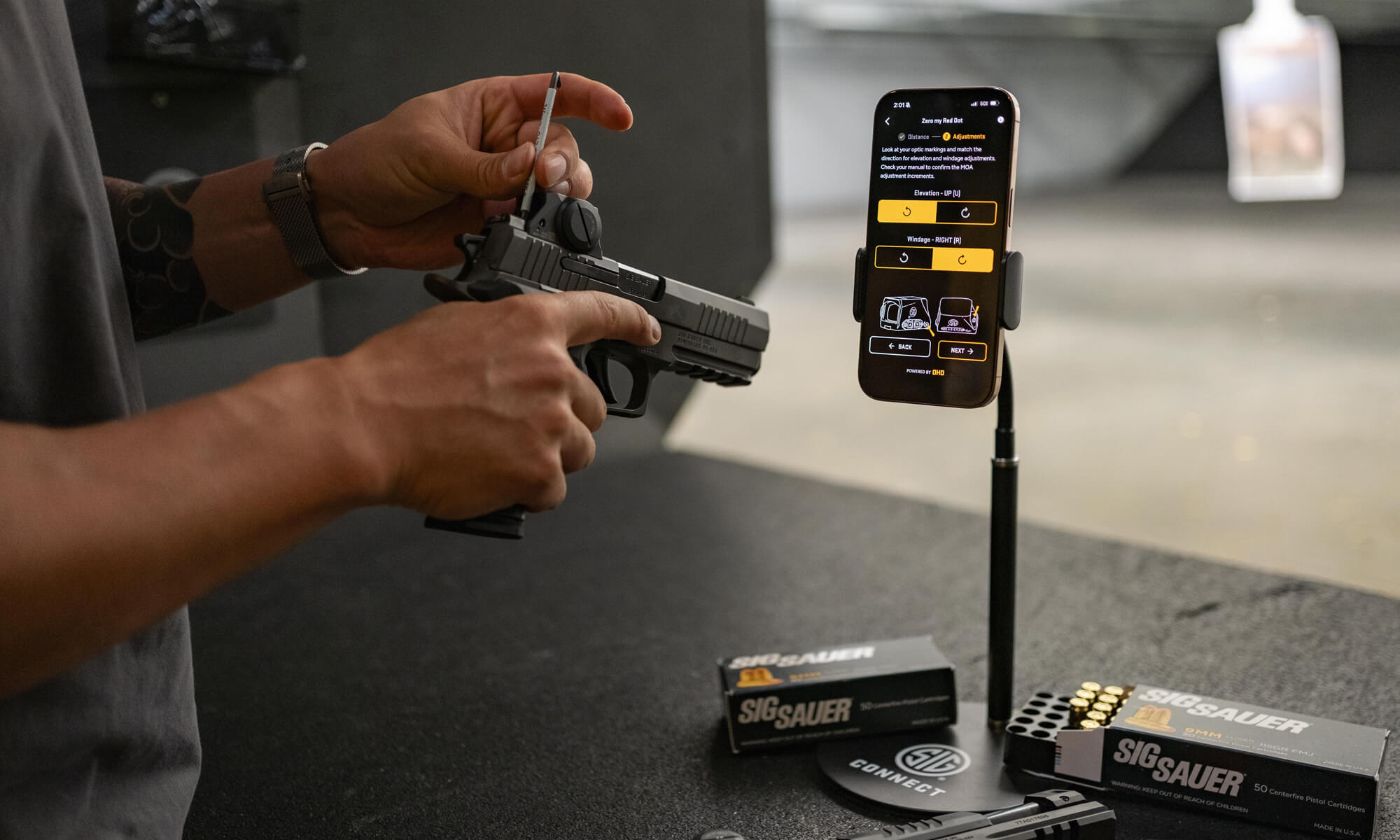
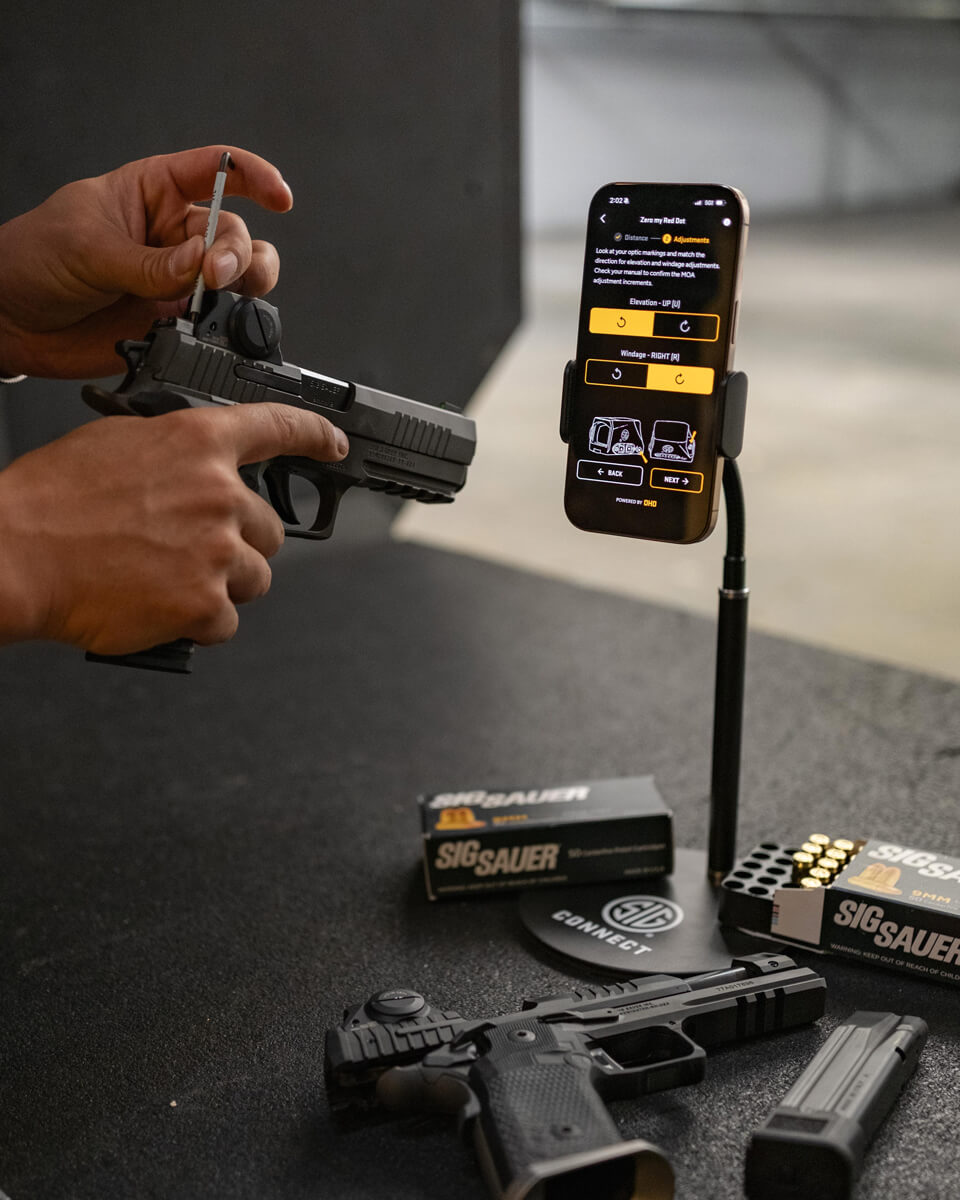
While traditional methods are undeniably effective, SIG SAUER has revolutionized the zeroing process for maximum efficiency. The Zero My Red Dot feature within the SIG CONNECT app is the ultimate digitally assisted solution for modern shooters.
Powered by advanced Optimal Hit Detection (OHD) technology, the app uses your smartphone camera to analyze your target dynamically. It calculates the exact adjustments needed for your specific optic model and distance.
The Digital Advantage: By utilizing OHD, you can easily zero your optic without the traditional hassle and completely eliminate the guesswork of MOA math. This technology stops you from wasting expensive ammunition and allows you to achieve quick, mathematically precise results in as few as 5 shots.
Video: See the OHD technology in action and learn how to streamline your next range day,
Technical FAQ
Does red dot zeroing depend on ammo grain weight?
Absolutely. A 115-grain training round and a 124-grain or 147-grain defensive hollow point will have distinct ballistic trajectories, resulting in different Points of Impact. Always confirm your final zero with your specific carry or duty ammunition. Additionally, be aware that your initial Cold Bore shot may exhibit a slight POI shift compared to a hot barrel.
What distance should I zero my 9mm pistol red dot?
The industry standard for a 9mm pistol red dot is typically between 10 and 25 yards. A 10-yard zero provides an incredibly tight POA/POI correlation at close, defensive ranges. A 25-yard zero extends your effective range while keeping mid-range trajectory deviations minimal. Choose the distance that best dictates your specific operational environment.
How do I co-witness a red dot with iron sights?
Co-witness refers to the ability to see and utilize your iron sights through the red dot's glass window. A common mistake is attempting to "slave" the red dot directly to the iron sights. Instead, you must zero the red dot entirely independently using a target. Once the optic is properly zeroed to the POI, your iron sights will naturally align within the lower portion of the optic window, providing a reliable, secondary backup system.
Compare Products
Items