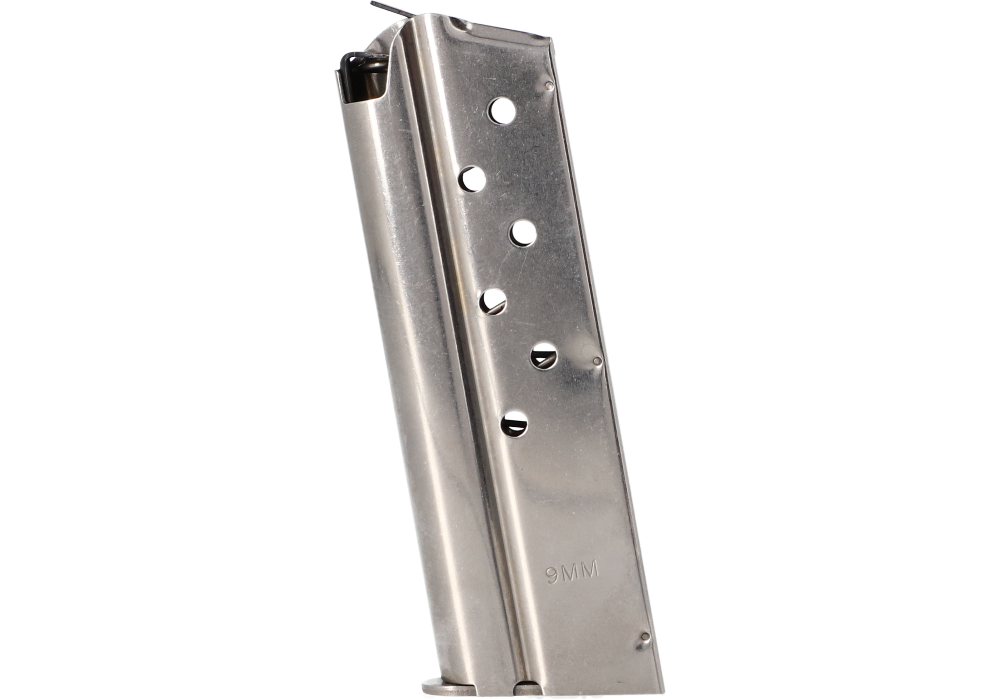
1911 compact magazines are an important part of a dependable shooting setup, whether the pistol is used for concealed carry, practice at the range, competition, or personal collection. Compact 1911 pistols generally use Officer-size or similarly shortened magazines designed for frames with a compact grip and shorter magazine well, often associated with barrel lengths around 3 to 3.5 inches. The correct magazine must match both the pistol’s caliber and its frame dimensions; a magazine intended for a full-size Government model may not seat properly, lock into place, or provide the correct feeding geometry in a compact 1911. Common compact configurations include .45 ACP magazines with a standard capacity often around six rounds and 9mm magazines that commonly hold seven or eight rounds, although capacity varies by design and manufacturer specifications. Before ordering, confirm the exact model, caliber, magazine length, and compatibility information provided for your firearm. It is also worth checking whether you prefer a flush-fit magazine for a smooth profile or an extended-capacity option that provides additional rounds and a slightly longer base. A flush-fit magazine can be especially useful for concealed carry because it keeps the bottom of the grip clean and reduces the chance of snagging on clothing. An extended base may offer additional gripping surface during reloads and can make the magazine easier to remove from a snug pouch. Small differences in follower shape, spring tension, feed-lip geometry, and base-pad construction can affect how a magazine performs, so selecting well-designed components from a trusted source is a worthwhile part of preparing a compact 1911. For a broader selection of compatible components, explore 1911 Compact Accessories alongside magazines and related shooting essentials.
Choosing among 1911 compact magazines often comes down to how the pistol is carried and used. Someone who keeps a compact 1911 for everyday carry may prioritize a reliable flush-fit magazine for the pistol and a second magazine with a durable base pad for use as a spare. A range-focused shooter may want several magazines to spend more time practicing and less time stopping to reload, while a new owner may appreciate a magazine loader that reduces thumb fatigue during extended sessions. Magazine carriers and pouches are also useful additions, particularly low-profile single or double carriers shaped for the narrow, single-stack profile of a 1911. Leather can provide a traditional appearance and a comfortable break-in, while polymer or molded designs may offer a more structured fit and consistent retention. Whichever style you choose, look for a carrier that holds the magazine securely without making it difficult to access, and verify that it accommodates the specific base-pad shape. Compact 1911 accessories can also include replacement base pads, grip panels, grip screws, and other small components that influence handling and carry comfort. Slim grip panels may help reduce bulk beneath a cover garment, while textured materials can provide a more confident hold during practice. Grip dimensions and screw spacing are not universal across every 1911 variant, so measure carefully and consult the firearm’s documentation before purchasing replacement panels. These accessories can make thoughtful gifts for a 1911 owner, especially when the recipient already has a preferred pistol but could use additional magazines, a quality carrier, or a simple loading aid. During the warmer months, when lighter clothing can make concealment more demanding, a compact magazine with a smooth profile and a properly fitted carrier may be particularly practical. As the weather turns cooler and range sessions become more comfortable, extra magazines and organized storage can make a training bag more useful without adding unnecessary bulk.
Reliability begins with proper fit and continues with sensible inspection and maintenance. When a new magazine arrives, compare it with the original magazine supplied with the pistol and confirm that it seats fully, locks in place, drops free as intended, and presents cartridges correctly. Use only the caliber specified for the firearm, and avoid assuming that every magazine labeled for a compact 1911 will work in every compact 1911. Even pistols with similar dimensions can differ in magazine catch location, feed-ramp geometry, grip length, or tolerance. At the range, test the magazine with the ammunition you plan to use and pay attention to feeding, slide lock, extraction, and ease of removal. A magazine that performs well in one pistol may not behave identically in another, making individual function checks valuable before relying on it for defensive use. Keep magazines clean and inspect the feed lips, follower, spring, and base for unusual wear, dents, cracks, or deformation. Avoid storing them where dirt, moisture, or loose range debris can enter through the witness holes or magazine opening. Rotating several magazines can help distribute wear, while clearly labeling them makes it easier to identify one that needs attention. Standard-capacity magazines are often the simplest choice for a close-fitting carry setup, while extended-capacity magazines can be useful for training or as a spare when their dimensions suit the carrier and pistol. Store unloaded firearms and ammunition securely in accordance with applicable laws and manufacturer guidance, and use a qualified professional or the firearm manufacturer’s support resources when compatibility is uncertain. With the right match of caliber, compact frame size, capacity, base-pad profile, and carry accessory, 1911 compact magazines can help create a more organized, comfortable, and consistent shooting setup for practice, carry, and time spent maintaining a trusted firearm.