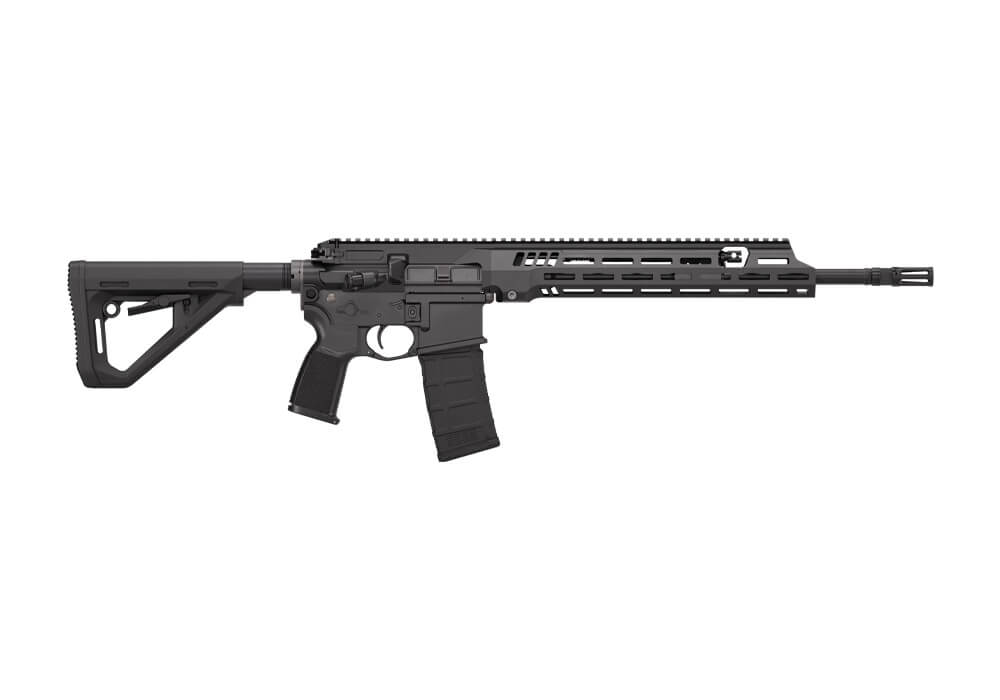
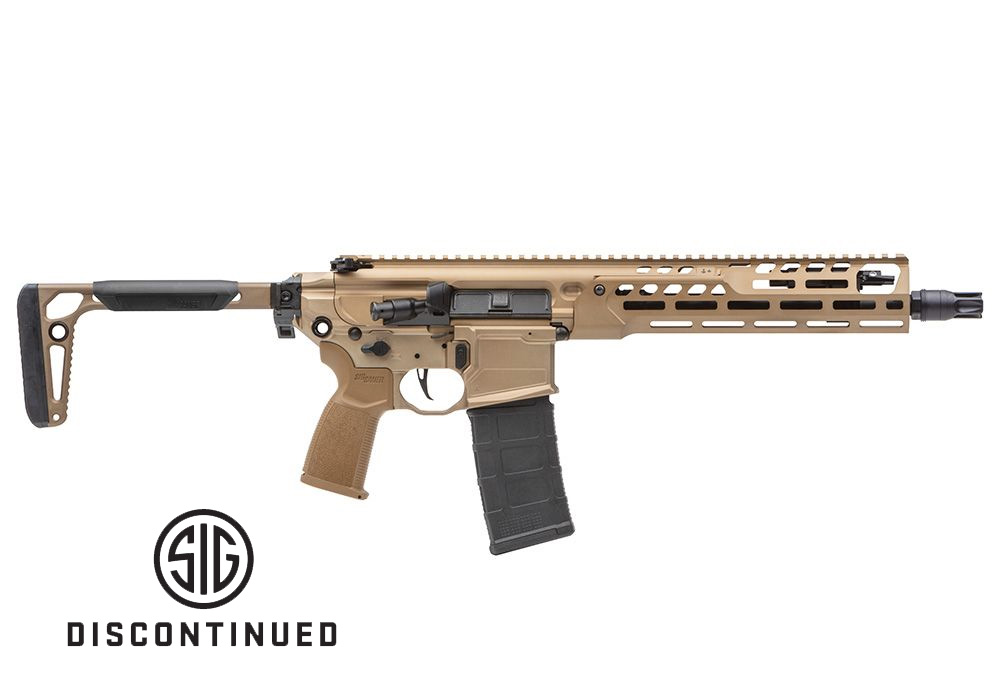
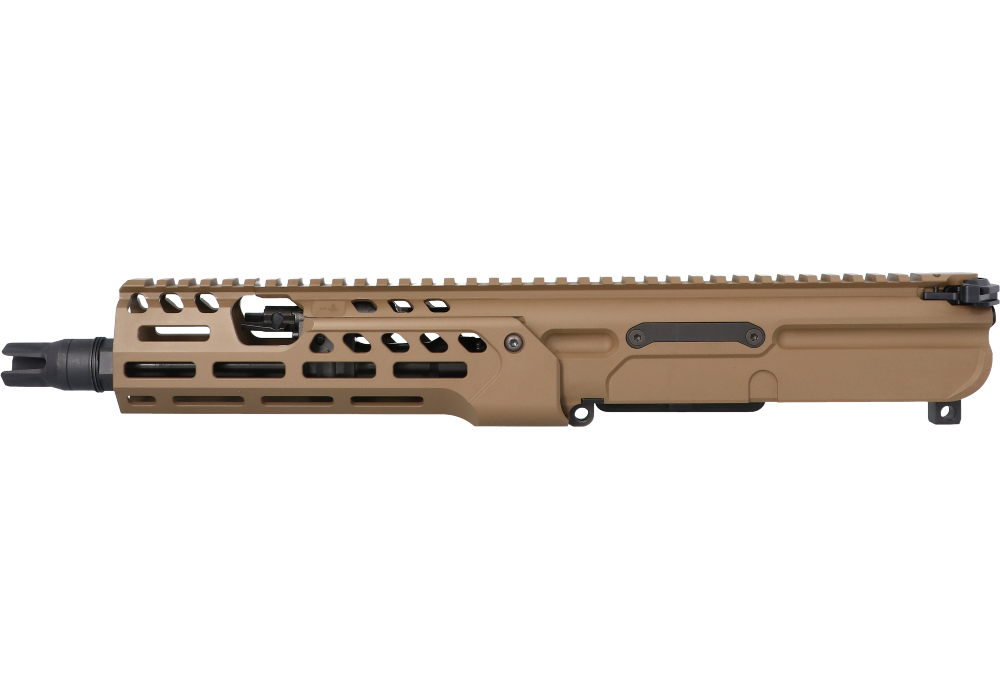
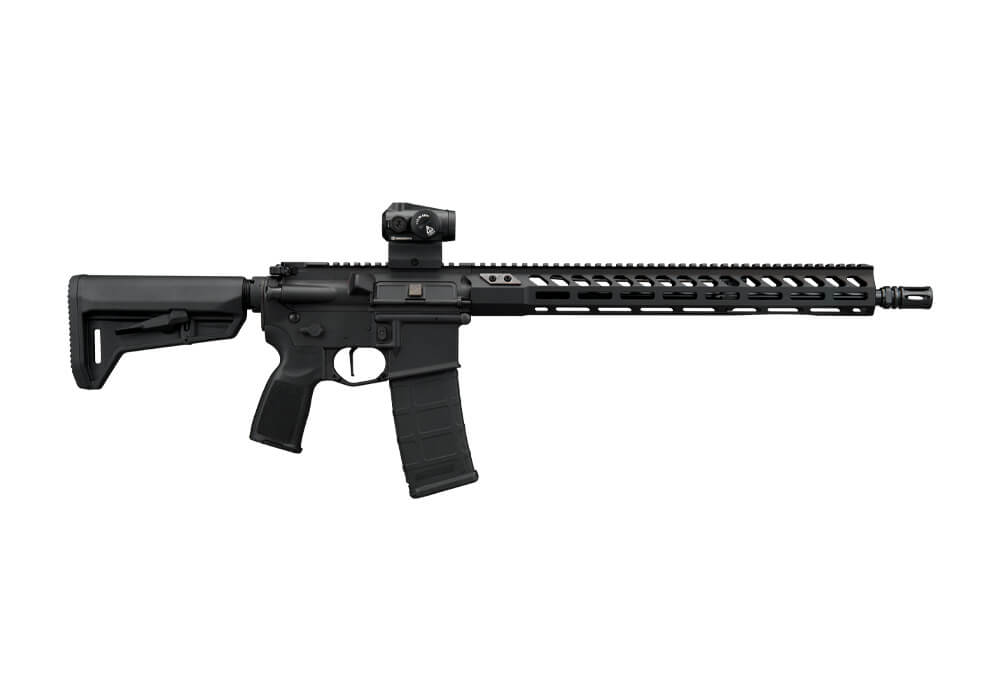
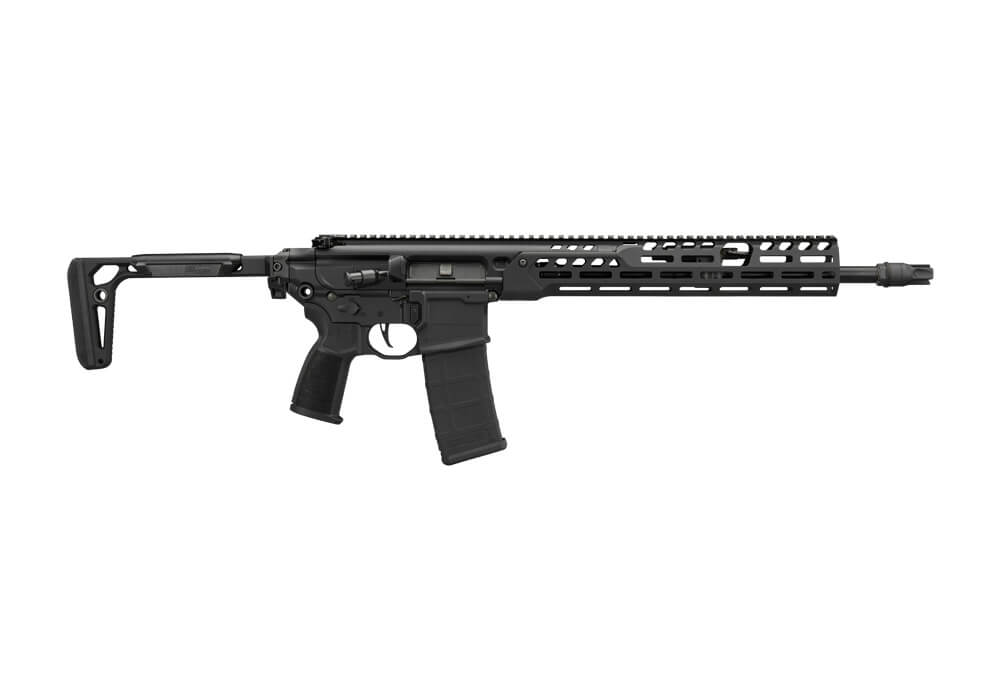
AR-15 rifles are often selected for personal safety because their shoulder-fired design offers a stable shooting platform, intuitive controls, and a broad range of setup options. Compared with many compact firearms, a rifle can provide three points of contact—shoulder, firing hand, and support hand—which may help a properly trained shooter maintain control and accuracy. Many models are chambered in .223 Remington or 5.56 NATO, cartridges known for manageable recoil and a wide selection of factory ammunition. These characteristics can make an AR-15-style rifle a practical choice for lawful adults who want a versatile firearm for home protection, property security, or preparedness. Every household has different needs, however, and a rifle intended for personal safety should be selected with the surrounding environment, storage plan, experience level, and local regulations in mind. A compact, balanced configuration may be easier to maneuver through a home or transport to a designated range, while a standard-length barrel can offer a useful balance of handling and ballistic performance. Buyers should also consider controls that are easy to operate consistently, a stock that adjusts for a comfortable length of pull, and a handguard that allows a secure support-hand position. The goal is not to add every available accessory, but to create a dependable, familiar setup that can be handled safely under pressure. Before purchase, review applicable federal, state, and local laws, including restrictions that may apply to configuration, magazine capacity, transport, and storage. A qualified firearms dealer can help clarify compliance requirements, while a certified instructor can help new owners build safe habits from the first range session.
A complete personal-safety setup involves more than choosing the rifle itself. A reliable sighting system can make aiming more straightforward, and a quality red dot optic may support quick target acquisition with both eyes open when properly zeroed and practiced with. A fixed or folding backup sight can provide an additional aiming option if the primary optic is unavailable. For low-light conditions, a weapon-mounted light may help a trained user positively identify a potential threat before deciding whether any response is justified; identification is a critical safety step, and a light should never be treated as a substitute for sound judgment or training. Ammunition selection deserves equal care. Use factory-loaded ammunition from a reputable manufacturer, confirm that it is appropriate for the rifle’s chamber, and practice with the same general bullet weight and load characteristics used for defensive preparation whenever possible. In a home, the direction of the muzzle, the location of family members, and the construction of interior walls all matter. No ammunition can eliminate the risk of a projectile passing through a wall, so safe backstops, a household emergency plan, and secure positioning are important considerations. Accessories should be selected for reliability rather than appearance: a sling can help keep the rifle controlled during movement, a sturdy case can protect it during transport, and magazines in standard or extended capacity should be inspected regularly for proper fit and function. During the cooler months, changing clothing layers can affect how a rifle’s stock meets the shoulder and how controls are reached, making periodic practice in realistic but controlled conditions especially valuable. As with any firearm, personal safety depends on responsible storage, disciplined handling, and regular training—not simply on the platform or accessory package.
These rifles may appeal to experienced owners, first-time buyers working with a qualified instructor, rural property owners, and recreational shooters who want one adaptable platform for several lawful purposes. They can also be considered as a gift for an adult family member or shooting partner, but a firearm should never be given casually or transferred outside applicable legal requirements. The recipient must be legally eligible to possess it, and the purchaser should confirm transfer rules with a licensed dealer before making arrangements. For a new owner, the most useful accompanying gifts are often practical items such as a secure locking container, eye and ear protection, a chamber flag, cleaning supplies, training time, or a gift certificate for professional instruction. A rifle that rests locked and unloaded in a secure location, with ammunition stored appropriately and access limited to authorized adults, supports a safer household than a firearm left ready for unplanned handling. Owners should establish clear rules for children and visitors, inspect the rifle before use, and verify that it is unloaded before cleaning, storing, or transporting it. Practice should begin with fundamentals—safe direction, trigger discipline, loading and unloading procedures, sight alignment, controlled shooting, and malfunction awareness—under the supervision of a competent instructor. Those interested in structured marksmanship and organized range use may also explore AR15 Rifles For Outdoor Shooting Events. Whether chosen for a secure home, a rural property, or regular range practice, an AR-15 rifle should be viewed as part of a broader safety plan that includes preparation, communication, lawful decision-making, and ongoing skill development.