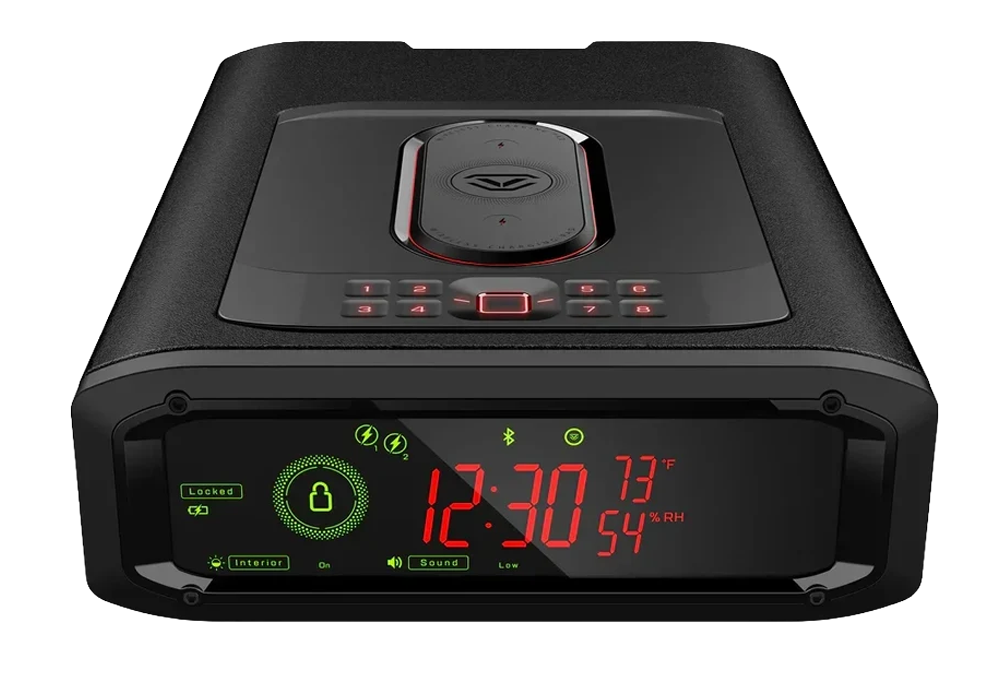
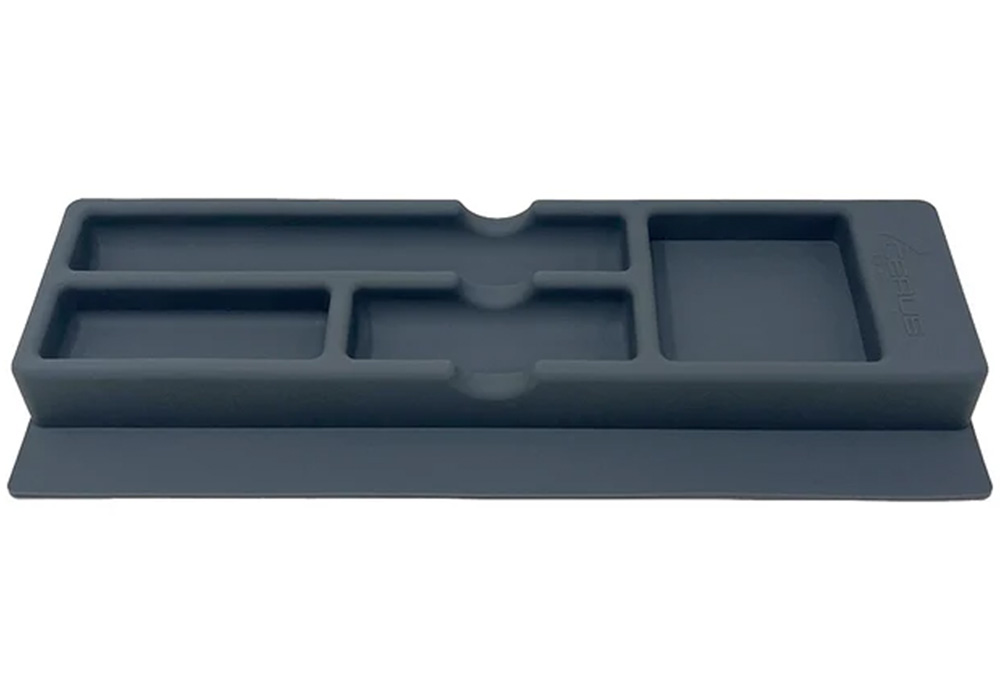
Gun room accessories help organize firearms, shooting equipment, and maintenance supplies while supporting secure storage and a clean, usable layout. The category includes storage and display systems, protective surfaces, equipment organizers, and workspace accessories that give each part of a collection a defined place. A well-planned room separates firearm storage from the bench area and keeps frequently used gear easy to identify without crowding shelves or walkways. Modular wall panels can provide flexible placement for compatible supports, shelves, and holders, while freestanding storage can suit spaces where wall installation is impractical. Vertical and horizontal arrangements serve different room layouts: one may leave more room along a narrow wall, while another allows longer firearms to sit above a work surface without competing with nearby shelving. Fit matters as much as appearance. Firearms vary in overall length, stock shape, grip profile, and attached equipment, so supports should accommodate the complete firearm rather than just its basic dimensions. Contact points should cradle the firearm without pressing against controls or placing unnecessary stress on finishes. Protective padding or coated surfaces can help limit scuffs, but their compatibility with firearm finishes still deserves attention. Steel and aluminum are common choices for structural components, with durability depending on construction, finish, installation, and the stated load rating. A sturdy-looking panel is only as dependable as its attachment to the supporting surface; mounting requirements and hardware compatibility should follow the accessory manufacturer’s instructions. Clearance around doors, drawers, and neighboring equipment also affects everyday usefulness. A shelf that blocks a safe door or a support that crowds an adjacent firearm can turn an orderly display into an awkward storage arrangement. Security remains a separate consideration from presentation. Open racks and display mounts are not substitutes for locked storage or controlled access. Firearms should be stored unloaded and secured against unauthorized access, with ammunition secured separately. Accessories work best when they complement those safeguards, keeping the storage area organized without obscuring locks, blocking access, or creating confusion about where equipment belongs.
The work surface gives a gun room its practical center, whether it occupies a dedicated bench or a compact section of countertop. Protective mats, compartmented organizers, and stable storage surfaces help separate maintenance tasks from the surrounding room and keep small components from disappearing beneath larger equipment. For accessories focused on that workspace, Gun Bench Accessories connects storage planning with the details of a functional bench. Surface protection deserves particular attention because contact with tools, oils, and cleaning solutions can affect both the worktop and the accessory itself. A padded material may cushion contact, while a firm base can help an organizer remain stable; neither feature guarantees resistance to every maintenance chemical. Material compatibility, cleaning instructions, and the intended use should guide the choice. Some surfaces can be wiped clean, while others require a different care routine to preserve their texture or backing. Loose grit should be removed before a firearm rests on a protective surface, since debris can scratch a finish even when the underlying material feels soft. Organization is most useful when it reflects actual habits. Frequently used tools belong within comfortable reach, small components benefit from clearly separated spaces, and maintenance supplies should remain in their original labeled containers with closures secured. A clear portion of the bench allows room to inspect equipment without balancing it across unrelated gear. Lighting also influences how well the space functions. Even illumination across the work surface helps reveal residue and small parts, while display lighting serves a different purpose by emphasizing the arrangement on a wall or inside a cabinet. Positioning matters more than brightness alone: harsh glare on a reflective surface or shadows cast by a shelf can make detail harder to see. Cords should remain clear of walking paths, moving doors, and the active work area. Care extends beyond the bench mat to the organizers themselves. Wiping away residue, checking protective contact surfaces, and inspecting fasteners according to the manufacturer’s guidance help preserve a tidy, dependable workspace without treating every accessory as maintenance-free.
Storage for the rest of the equipment often determines whether a gun room stays organized after regular use. Magazine holders, compartmented bins, shelving, and gear supports can keep related equipment together while preserving a clear distinction between firearms, ammunition, maintenance supplies, and personal protective gear. Compatibility is important here, too. Magazines differ in shape and dimensions, and an organizer should fit the intended equipment without excessive pressure or an unstable balance. Shelving needs adequate support for the actual load rather than just enough space for the containers. Protective equipment and range bags benefit from designated locations that prevent straps from tangling and keep heavier pieces from leaning against stored firearms. Clear labels can help distinguish similar-looking containers, particularly when different platforms or users share the room. Labels on storage areas should supplement, not replace, original identification and safety information on ammunition and maintenance supplies. The most useful arrangement is not necessarily the largest or most elaborate. A recreational shooter may need a compact place for range essentials and routine care, while a collector may place greater emphasis on protective contact surfaces and an orderly presentation within a secured space. In a shared household, locked access and unmistakable storage boundaries take priority over decorative display. A narrow room may benefit from shallow shelving and an uncluttered walkway; a larger room can still feel cramped if every wall and work surface is filled. Leaving room to return equipment to its designated place makes organization easier to maintain after a range visit. Gun room accessories can also be thoughtful gifts for someone who values a tidy workspace, but measurements, mounting preferences, and existing storage systems matter more than appearance alone. A compatible accessory that fits the recipient’s routine is more useful than one that requires an entirely different layout. Across these uses, durable materials, appropriate fit, straightforward care, and a clear purpose are the strongest foundations for a gun room that remains organized, accessible to authorized users, and comfortable to work in.