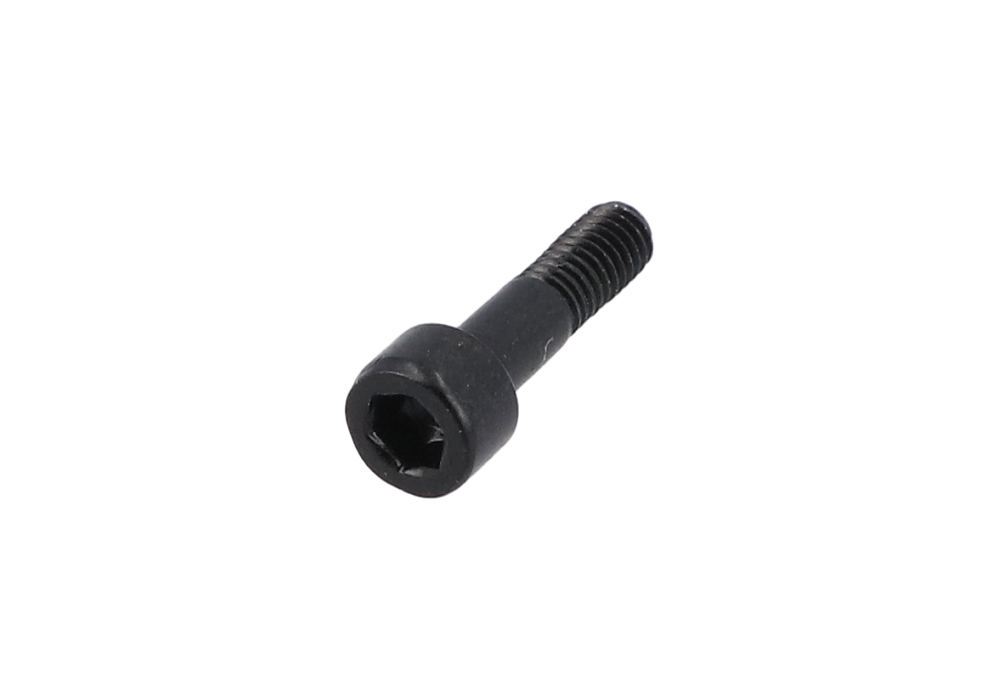
Hex screws for firearm maintenance are fasteners with a six-sided drive or head, used to secure compatible components during routine care and replacement work. Internal hex, often called socket-drive or Allen-drive, screws accept a matching hex key or bit inside a recessed opening. Their six flat drive surfaces provide multiple areas of tool contact, helping transmit turning force with less tendency to slip out than a conventional slotted drive when the tool fits correctly. That engagement can be useful around recessed mounting points, closely fitted panels, and other areas where access is limited. It does not make the screw immune to damage: an undersized bit, a worn socket, or an angled tool can still round the recess. For shoppers comparing hex screws, compatibility matters more than a similar appearance. Thread diameter, thread pitch, length, head profile, and drive size all contribute to the correct fit. Two screws can share a head diameter yet have different threads, and a metric fastener is not interchangeable with an inch-pattern fastener simply because both seem close in size. Internal hex drives also differ from six-lobe star drives, so the tool shape deserves the same attention as the screw dimensions. Firearm owners maintaining grip panels, accessory interfaces, or other manufacturer-designated attachment points benefit from matching replacement hardware to the original specification rather than treating small screws as universal parts. A screw that starts into a hole is not necessarily the right screw for that application. Its threads must match, its head must seat as intended, and its length must suit the complete assembly. These details are especially important when several similar fasteners sit together on a cleaning mat. Keeping each screw associated with its original location helps preserve those distinctions and makes replacement selection less dependent on memory. For regular range users, collectors, and professional armorers alike, correctly specified hardware supports consistent maintenance without introducing unnecessary uncertainty into an otherwise familiar task.
Material and finish influence how a hex screw holds up to repeated handling, contact with cleaning products, and exposure to moisture from hands or storage environments. Alloy steel is common where the application calls for strength, while stainless steel can offer corrosion resistance suited to certain uses. Neither description alone establishes compatibility or service life. Strength requirements, material treatment, thread quality, and the surrounding component all matter, particularly when a steel screw engages a softer metal housing. Stainless steel is not corrosion-proof, and a dark finish does not by itself establish a particular strength rating or protective performance. Black oxide and other surface treatments may affect appearance, corrosion behavior, or friction, but their suitability depends on the fastener specification and application. The most useful comparison is therefore between documented requirements, not just color or material labels. Head shape deserves equally careful attention. Socket-head, button-head, and flat-head screws occupy different amounts of space and meet their mating surfaces differently. A countersunk opening requires the specified head geometry; a rounded or cylindrical head cannot be assumed to serve the same purpose. Clearance around nearby components can also determine whether a fastener is suitable, even when its threads match. Length is another detail that can be easy to overlook across assemblies with different panel thicknesses or mounting interfaces. A screw that is too long may reach the bottom of a blind hole before securing the attached component, while one that is too short may provide insufficient thread engagement. Substituting washers or other hardware can change that relationship further. For this reason, the original parts documentation or the firearm or component manufacturer’s specifications remain the best reference for replacement selection. When those details are unclear, a qualified gunsmith can identify the appropriate hardware without relying on trial-and-error fitting. Durability starts with that correct match: a strong screw in the wrong dimensions is still the wrong fastener, and a carefully finished head cannot compensate for incompatible threads.
Careful handling helps preserve both the hex recess and the threaded connection over successive maintenance sessions. A clean, unworn hex bit of the exact specified size should seat fully in an undamaged recess; packed residue or a rounded tool can prevent proper contact. Small fasteners reward controlled handling rather than force, especially around finished surfaces where a slipping tool can leave a visible mark. Manufacturer torque specifications matter because tighter is not automatically more secure. Excessive tightening can damage threads, distort a component, or compromise the screw, while insufficient tightening may allow movement in an attachment that depends on consistent clamping. Lubricants, coatings, and thread-locking compounds can affect the connection, so their use should follow the relevant manufacturer’s instructions rather than a general habit carried over from another assembly. Maintenance should take place only with the firearm unloaded and ammunition separated from the work area. A divided tray, a well-lit bench, and clearly identified replacement hardware make it easier to keep visually similar screws from becoming mixed together. During inspection, rounded sockets, damaged threads, corrosion, or a head that no longer seats properly are reasons to seek an appropriate replacement or professional assessment rather than continue forcing the connection. Cleaning and storage practices should also suit the screw’s finish and the adjacent materials, with residues removed according to the applicable care instructions. For attachments involving sighting equipment, Hex Screws for Tactical Optics provides a related category to consider alongside the mounting system’s exact hardware requirements. Firearm maintenance screws are practical purchases for owners who prefer an organized workbench, armorers responsible for consistent service practices, and enthusiasts preserving equipment over years of use. They can also be a useful addition to a maintenance-focused gift when the recipient’s exact compatibility requirements are known. Whether replacing a worn fastener or keeping clearly labeled spares with maintenance supplies, the value lies in precise fit, dependable tool engagement, and hardware appropriate to its intended job.