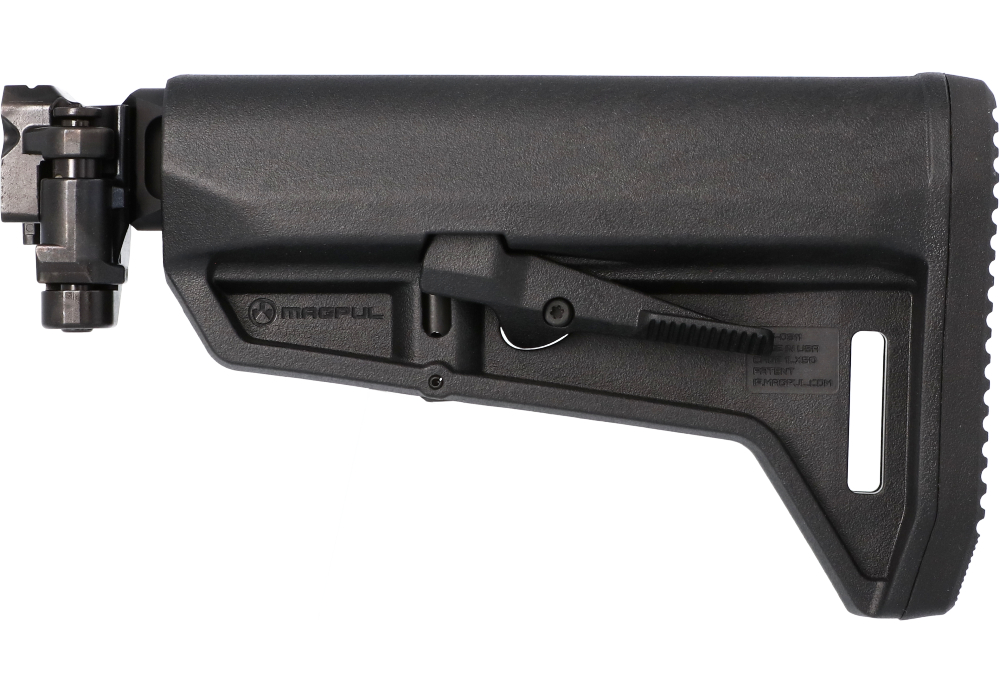
Lightweight folding stock adapters are designed to give compatible rifles and pistols a more compact profile for transport, storage, and movement without requiring a complete change to the firearm’s basic configuration. By allowing the stock or brace to fold alongside the receiver, these adapters can make a firearm easier to place in a discreet case, secure in a vehicle, or carry through tight spaces at the range or during outdoor activities. They are especially useful for shooters who value a compact setup but still want the familiar shoulder support and handling characteristics of a fixed or adjustable stock. A well-designed adapter can also help preserve a balanced feel, keeping unnecessary weight from shifting too far rearward. For many builds, the difference between a lightweight aluminum adapter and a heavier steel model is noticeable when the firearm is carried for extended periods. Aluminum options may weigh only a few ounces, with some weighing approximately six ounces, while steel construction can provide additional strength for demanding use. The best choice depends on the firearm, the stock or brace being used, the intended level of use, and the shooter’s preference for minimum weight versus maximum durability. Before purchasing, confirm the adapter’s mounting interface, hinge direction, compatibility with the receiver, and compatibility with the selected stock or brace. Folding mechanisms vary in design, and a secure lockup is essential for consistent handling when the firearm is deployed. A folding adapter should be treated as a precision component rather than a universal accessory; a model intended for one rear interface may not install correctly on another, even when the firearms appear similar at a glance. Reviewing the manufacturer’s specifications and installation requirements is an important part of selecting a dependable fit. For a broad selection of options, explore Folding Stock Adapters for Shooting Sports and compare designs based on construction, interface, folded dimensions, and intended use.
Compatibility with the firearm’s operating system is one of the most important considerations when shopping for lightweight folding stock adapters. Many traditional AR-style rifles use a receiver extension and buffer system that extends behind the receiver, so the bolt carrier group depends on that system during cycling. On these firearms, a folding adapter may require a compatible bolt carrier extension or related conversion component to allow the action to function properly when the stock is unfolded. Other firearms use a bufferless operating system and may accept a folding adapter without the same type of carrier modification. These differences are not cosmetic; they affect installation, operation, maintenance, and the parts required for a complete setup. A folding adapter designed for a 1913 Picatinny rear interface follows a different approach, attaching to the rail rather than a traditional receiver extension. This can be a practical solution for firearms already configured with a 1913 interface, but the rail’s dimensions, locking surfaces, and stock or brace connection still need to be checked carefully. Shooters should also consider hinge tension, locking strength, folded clearance, and whether the adapter permits the stock to fold to the preferred side. Some designs offer adjustable hinge tension, which can help tailor the opening resistance to individual preferences and keep the stock from swinging freely during transport. Others add length to the firearm’s length of pull; an increase of roughly 1.3 inches is possible with certain designs, so measuring the existing setup can prevent surprises in shoulder placement. When installed correctly, the adapter should feel solid, align cleanly with the receiver, and allow the stock or brace to lock firmly in both its extended and folded positions. If fitting requires unusual force, significant alignment changes, or uncertainty about the operating system, professional installation by a qualified gunsmith is a sensible choice.
These adapters appeal to a wide range of responsible firearm owners, including recreational range shooters, hunters who transport a rifle through wooded terrain, competitors seeking a compact case configuration, and owners building a practical firearm for training or emergency preparedness. The folded profile can be particularly convenient during the cooler months, when layered clothing, vehicle storage, and additional gear can make every inch of space useful. A compact firearm may fit more naturally in a purpose-built case alongside eye and ear protection, a sling, maintenance supplies, and a small range bag, while the unfolded configuration remains familiar when it is time to shoot. Lightweight folding stock adapters can also be a thoughtful gift for an experienced shooter who is refining an existing build, provided the purchaser knows the exact firearm model, rear interface, operating system, and preferred stock or brace. An adapter is rarely a universal gift, since a mismatch can create installation problems or leave important components incompatible. For that reason, gift buyers may prefer to pair the accessory with a conversation about the recipient’s build or choose a store gift card instead of guessing. Regardless of who makes the purchase, safe handling remains central: follow all applicable laws and regulations, verify that the firearm is unloaded before installation or inspection, use the correct tools and torque specifications, and confirm proper function at a safe range before relying on the modified setup. Folding the stock reduces storage length, but it does not replace a secure case, safe storage practices, or careful transport. With the right interface and operating-system compatibility, a lightweight folding stock adapter can be a practical way to make a familiar firearm easier to carry, store, and configure for changing conditions without sacrificing the solid feel expected from a properly fitted component.