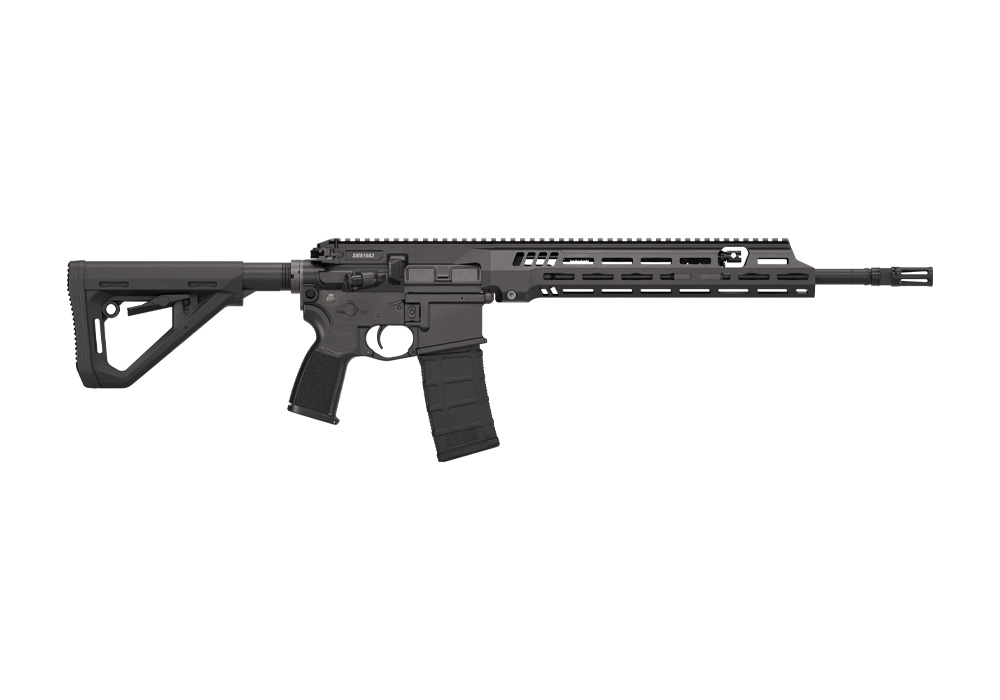
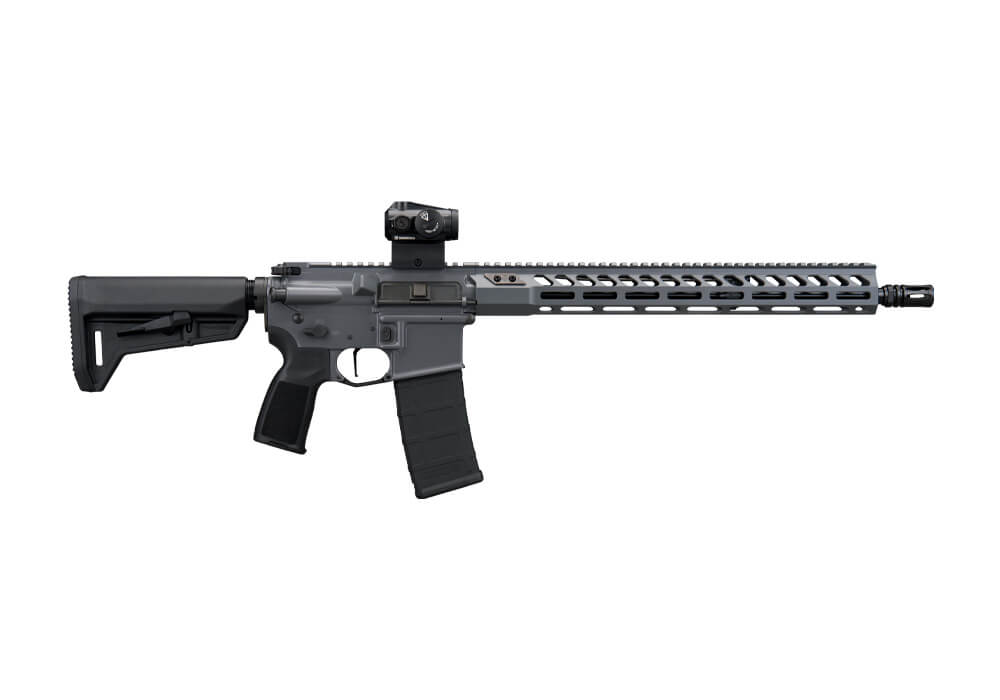
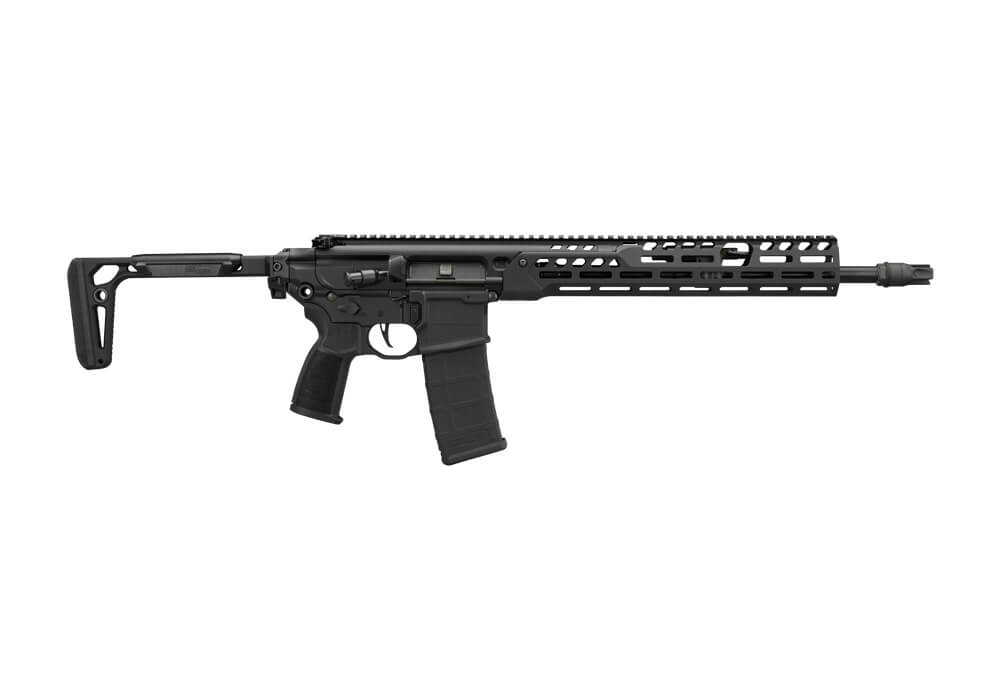
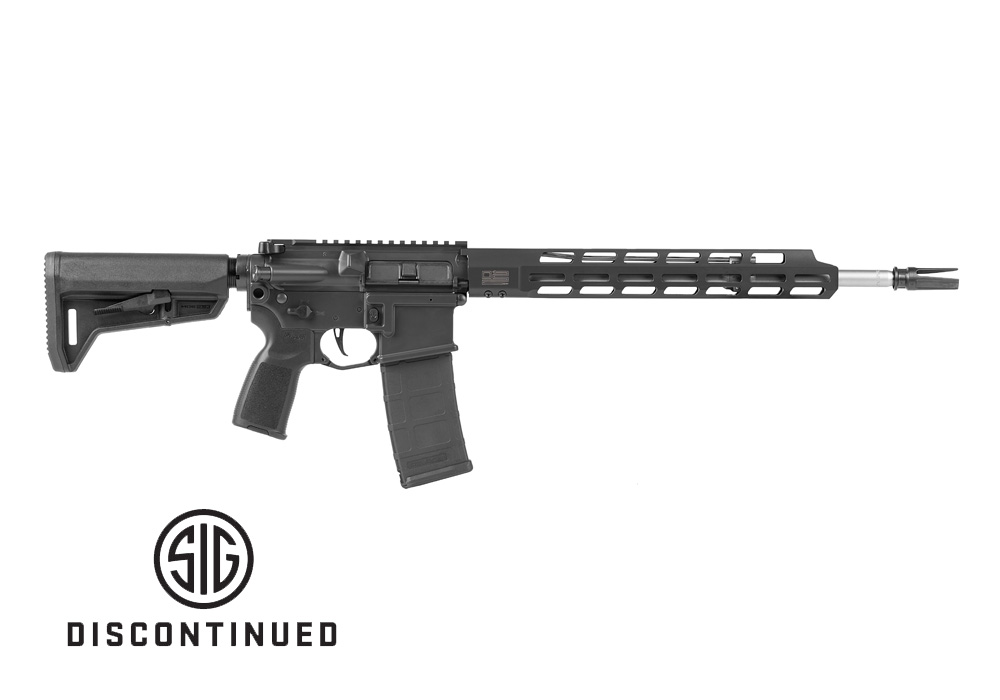
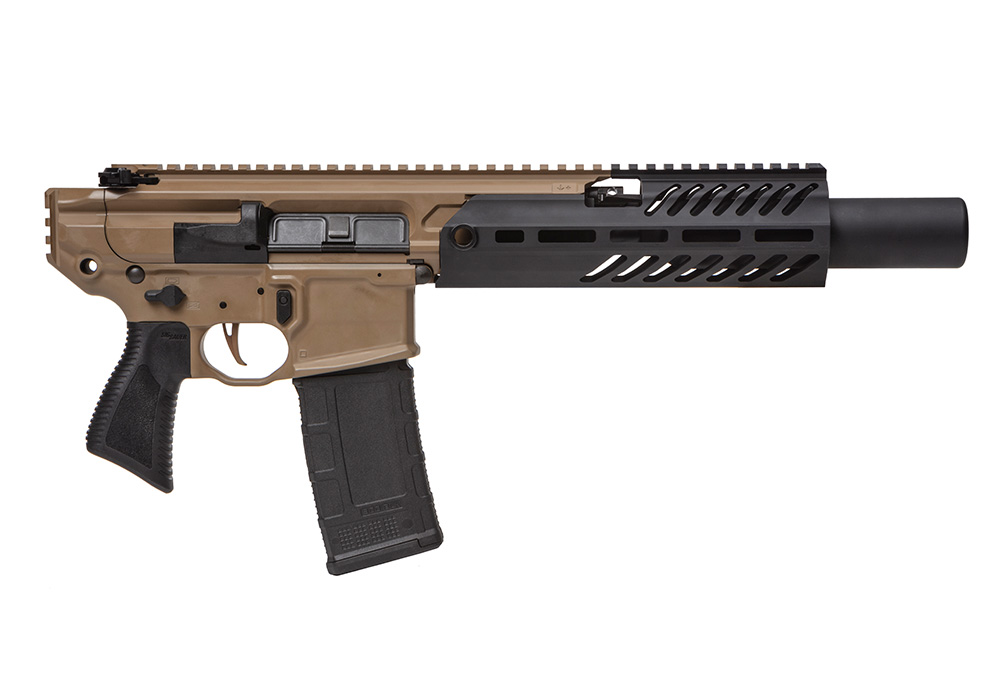
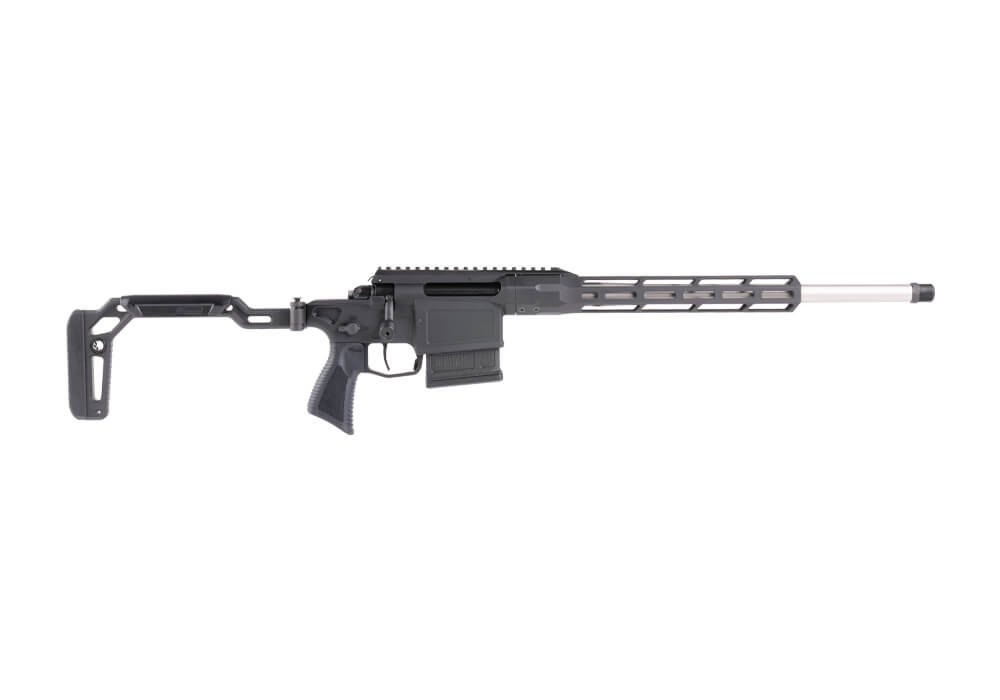
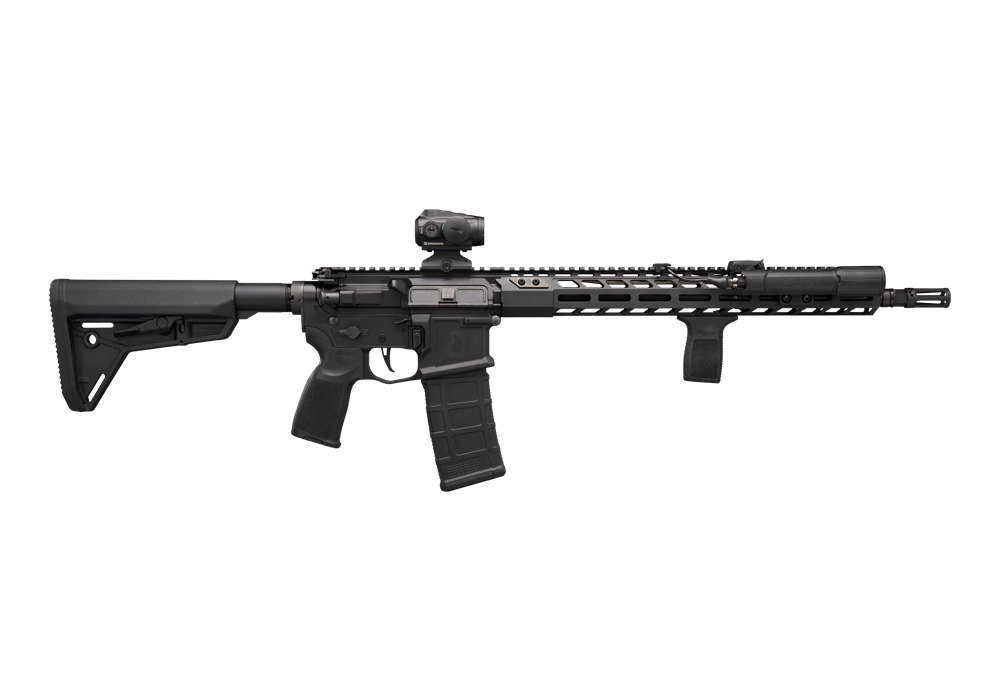
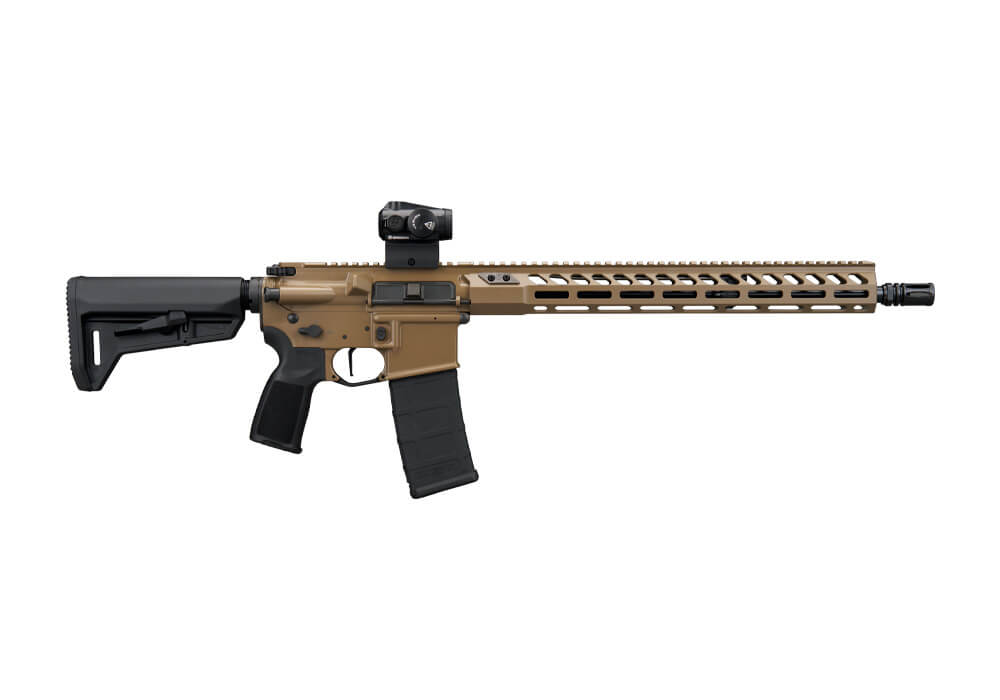
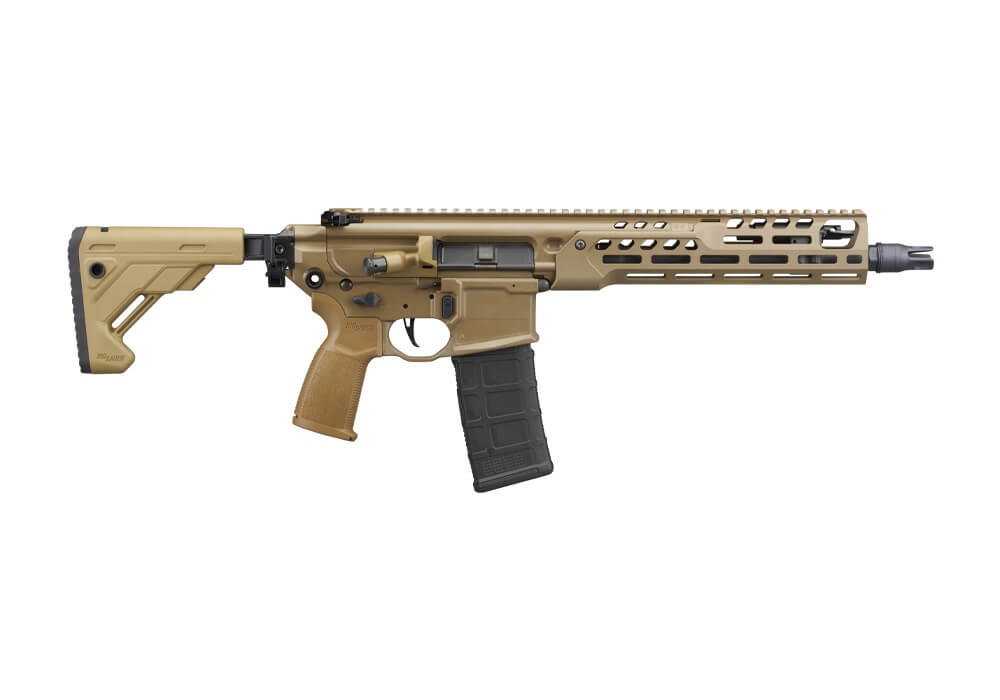
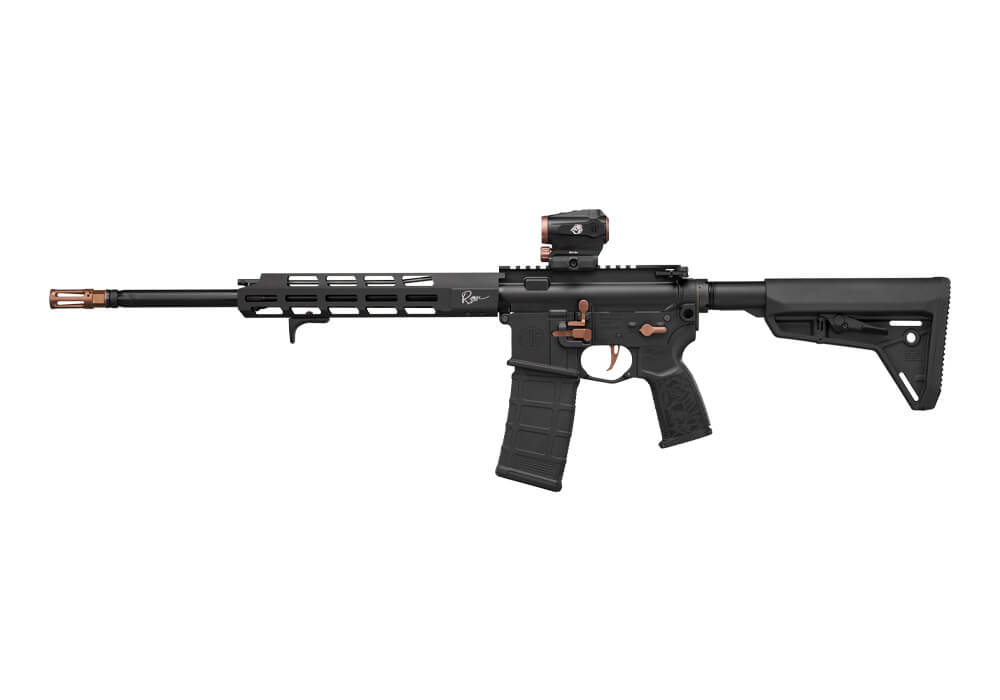
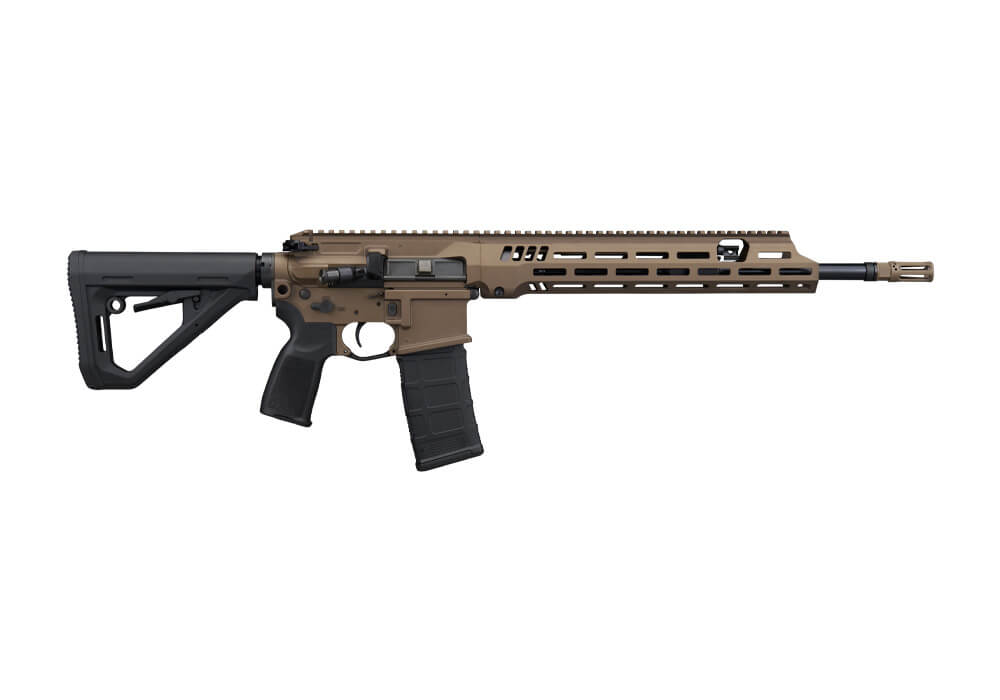
Military inspired 5.56 rifles bring the familiar lines, controls, and handling characteristics of service-style carbines into the civilian market. These firearms are generally semi-automatic rifles chambered for 5.56 NATO, a widely used cartridge that is also commonly associated with .223 Remington compatibility, though owners should always confirm the manufacturer’s markings and ammunition guidance before use. The category includes rifles influenced by classic full-length service rifles, compact carbine configurations, modern modular platforms, piston-operated designs, direct-impingement systems, and bullpup layouts that place the action behind the trigger. That variety gives shoppers room to choose a rifle based on the experience they want at the range, the fit of the firearm, and the features that matter most to their intended use. Some buyers are drawn to the clean, traditional profile of a fixed-stock rifle with a front sight and a familiar manual of arms. Others prefer a modern carbine with an adjustable stock, ambidextrous controls, a free-float handguard, or mounting space for an optic, sling, and other lawful accessories. Military-inspired styling can also carry personal meaning: a rifle may echo the design of a platform a family member carried, complement a collection of historical firearms, or serve as a first centerfire rifle for an enthusiast who appreciates the evolution of service-rifle design. These rifles are commonly used for recreational target shooting, organized training, competition, and responsible property or home-defense planning where permitted by law. Their practical appeal often comes from a balance of manageable recoil, familiar ergonomics, broad accessory support, and readily available ammunition, rather than from appearance alone.
When comparing military inspired 5.56 rifles, start with the fundamentals. Barrel length influences overall balance, sight radius, velocity, and maneuverability, while a longer barrel may feel steadier from a supported position and a shorter configuration may be easier to handle in confined spaces, subject to applicable laws and regulations. A fixed stock can provide a solid cheek weld and a traditional feel; an adjustable stock may help accommodate different shooters, clothing layers, or storage needs. Handguard design affects how the rifle feels in the hands and whether it accepts the accessories you plan to use. Some platforms use a lightweight slim handguard, while others provide modular attachment points for a light, bipod, sling mount, or optic. Pay attention to the operating system as well. Direct-impingement rifles are known for their straightforward design and familiar maintenance routine, while short-stroke piston systems offer a different approach to cycling and can appeal to buyers who prefer that style of operation. Controls should be easy to reach without changing your grip, and ambidextrous features may be especially useful for left-handed shooters or anyone training from varied positions. A reliable trigger, clear sights, consistent magazine fit, and a comfortable grip can make more difference over a long range session than a long list of decorative features. Buyers should also check whether a rifle includes a standard or extended capacity magazine, whether magazine restrictions apply in their area, and whether the configuration complies with state, local, and federal requirements. A qualified firearms retailer, instructor, or attorney can help clarify regulations, while a certified gunsmith can answer questions about configuration changes. For shoppers considering a broader selection of contemporary sporting designs, Modern Sporting 5.56 Rifles offers a useful point of comparison.
A military inspired 5.56 rifle can be a meaningful purchase for an experienced owner, a practical addition to a recreational range setup, or a memorable gift for a responsible adult who has expressed a clear interest in firearms. It should not be treated as a surprise present without first confirming the recipient’s eligibility, preferences, and local transfer requirements; in many cases, the most considerate gift is a contribution toward a rifle chosen together. New owners benefit from beginning with a safety class taught by a qualified instructor, followed by deliberate practice with safe loading and unloading, sight alignment, trigger control, malfunction procedures, and secure storage. Even experienced shooters should take time to learn the specific controls of a new platform before heading to the range. During the warmer part of the year, an outdoor range session can reveal how the rifle balances from a bench, prone position, or standing position, while cooler months are a good reminder to evaluate gloves, clothing, and storage conditions without compromising control. Keep the rifle unloaded and secured when it is not in use, store ammunition separately as appropriate, and use a locking device or dedicated safe that prevents unauthorized access. Routine care should follow the owner’s manual and may include inspection, cleaning, lubrication, and checking that mounted accessories remain secure. Ear and eye protection are essential, and every shooter should follow the range’s rules, keep the muzzle pointed in a safe direction, keep the finger outside the trigger guard until ready to fire, and identify the target and what lies beyond it. With thoughtful selection, proper training, and responsible storage, these rifles offer a durable connection to military design history while serving the everyday needs of lawful civilian shooting and collection.

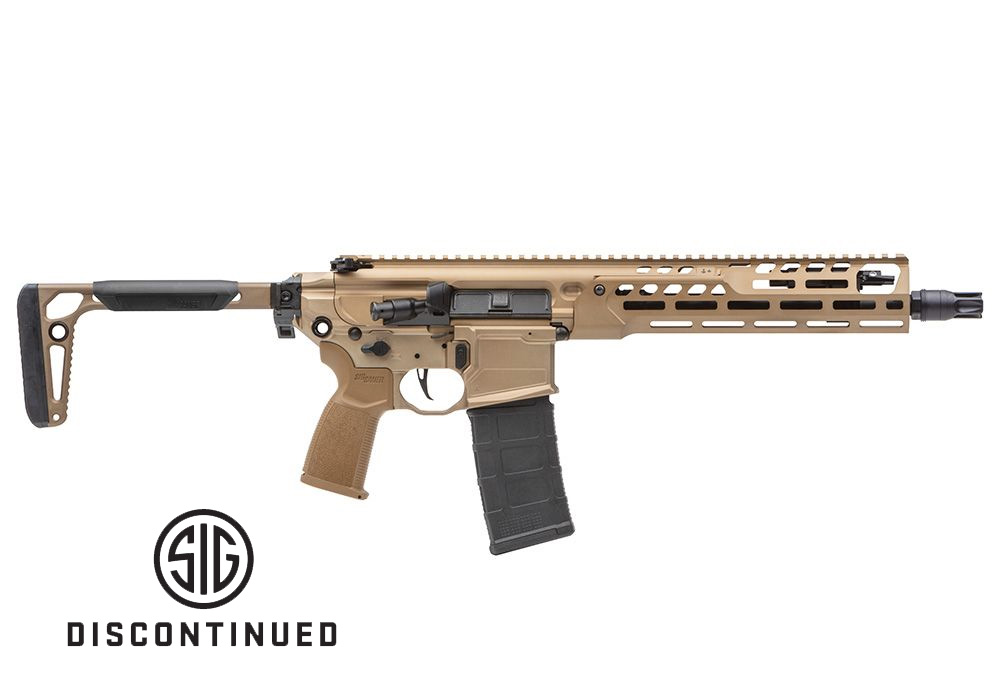


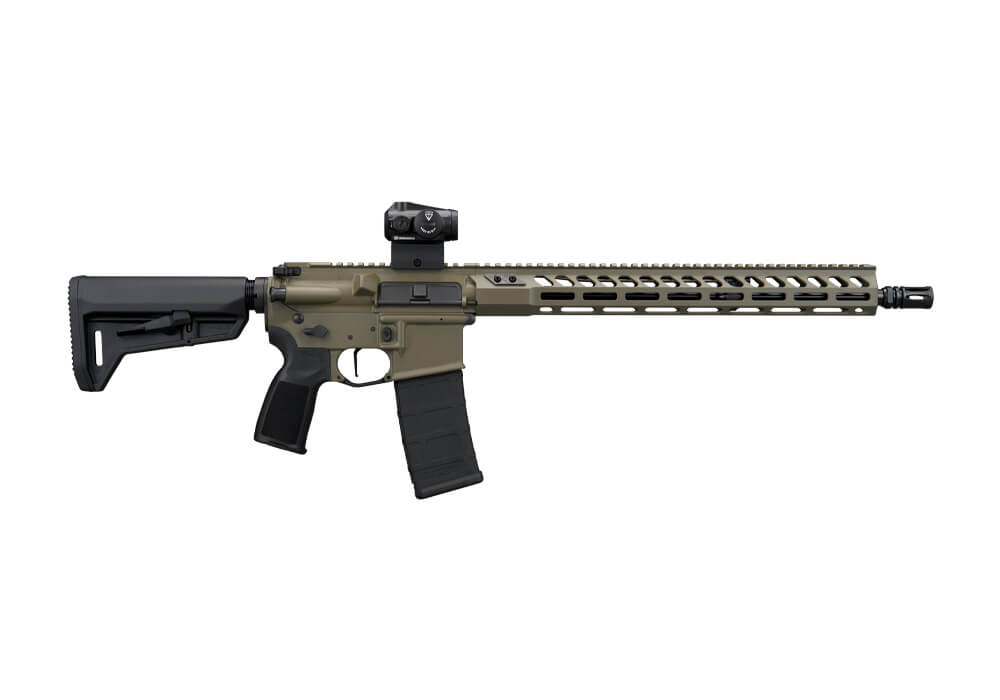
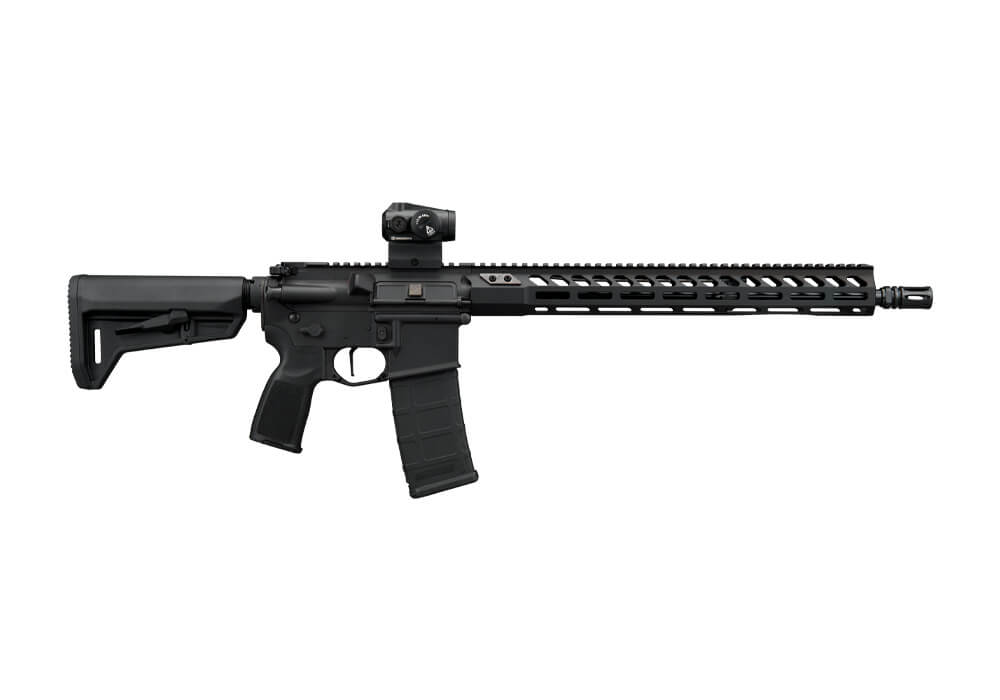
![[["SIGM400, 5.56 NATO, RIFLE, 16IN, TREAD COIL V2, BLK, SEMI, TELE STO","CK, AL MLOK HG, (1) 30RD MAG, ROMEO5 GEN II"]]](http://www.sigsauer.com/media/catalog/product/r/m/rm400-16b-trd-v2-coil-right.jpg)