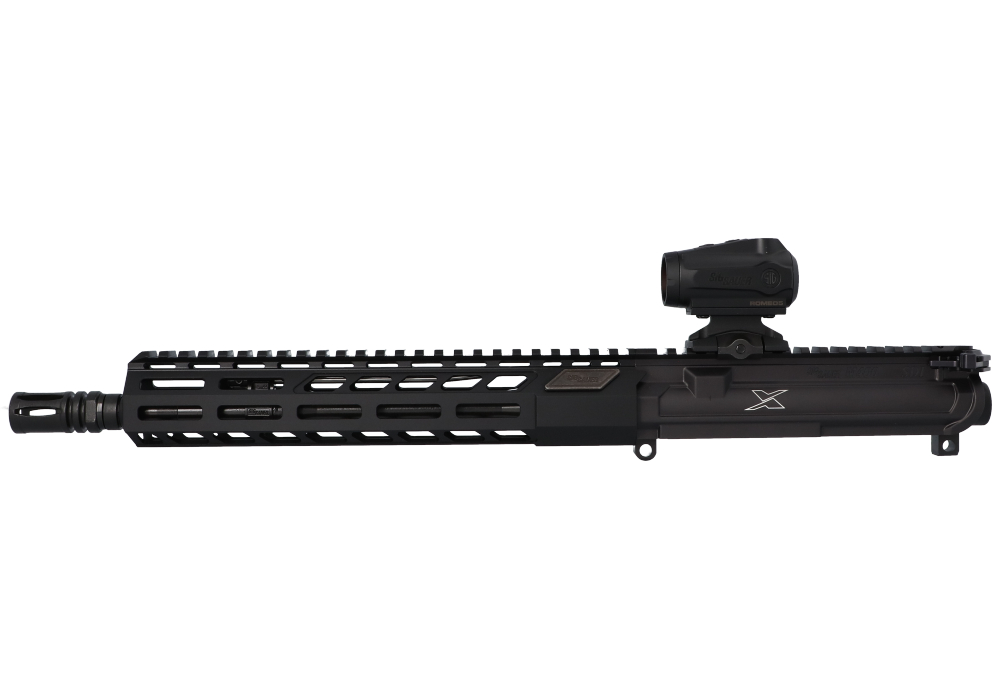
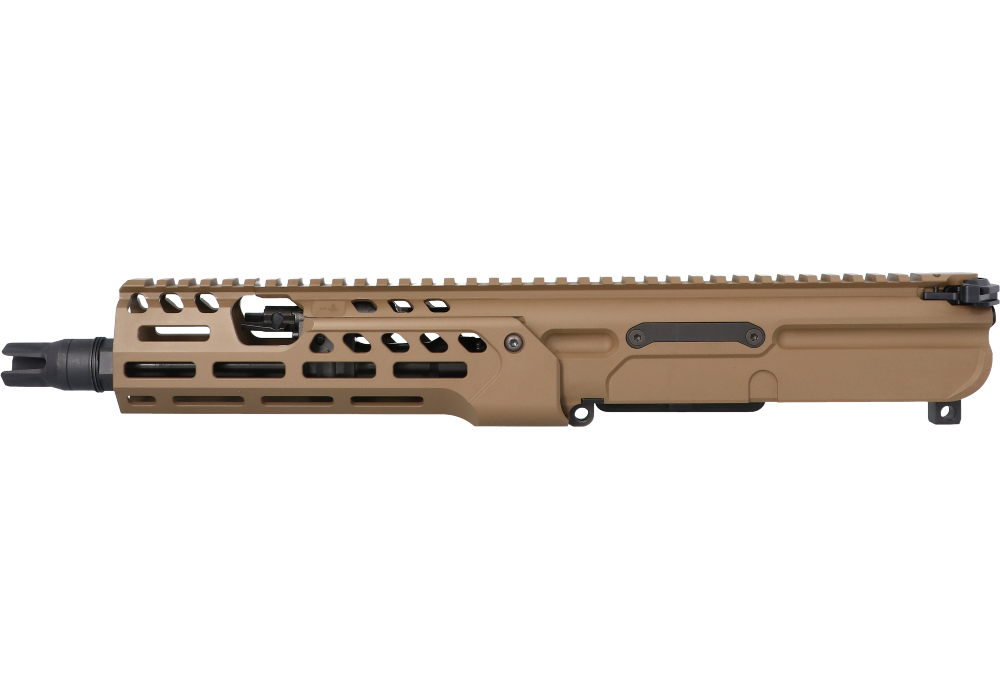
An upper receiver is the top portion of a modular rifle platform, serving as the housing and mounting point for several of the firearm’s most important operating components. Depending on the configuration, it may contain or support the barrel, bolt carrier group, charging handle, gas system, handguard, dust cover, and forward assist. The upper receiver attaches to a compatible lower receiver through the front and rear takedown pins, allowing qualified owners to configure one platform for different uses while keeping the lower receiver consistent. This modular design is one of the reasons upper receivers remain popular with recreational shooters, hunters, competitors, collectors, and individuals maintaining a dependable rifle for training or lawful personal protection. A replacement upper may restore a rifle after extensive use, while an additional upper can provide a different barrel length, caliber, sighting setup, or handguard arrangement without requiring an entirely separate firearm. During the cooler months, many shooters spend more time at the range checking zeroes, evaluating equipment, and preparing for the next season, making an upper receiver a practical component to consider when refining a well-understood setup. As with any firearm component, buyers should confirm that the selected configuration is compatible with their lower receiver, ammunition, magazines, buffer system, and intended use, and should review all applicable federal, state, and local laws before purchase or installation.
Upper receivers are commonly offered in stripped, assembled, and complete configurations, and understanding the difference helps narrow the selection. A stripped upper is the basic receiver shell and is generally suited to a knowledgeable builder who already has, or plans to source, the remaining compatible parts. An assembled upper typically includes additional receiver components such as the dust cover and forward assist, reducing the number of parts that must be selected separately. A complete upper assembly commonly includes the barrel, handguard, gas system, and other operating components, offering a more straightforward path for someone seeking a coordinated configuration. Buyers should look closely at barrel length, caliber, twist rate, chamber specifications, gas system length, muzzle interface, handguard attachment method, and the presence or absence of a bolt carrier group and charging handle. These details affect handling, balance, sight radius, accessory compatibility, and the ammunition the firearm is designed to use. A shorter configuration may feel quick and convenient in confined spaces or on a compact range bay, while a longer barrel may provide a steadier feel from a bench or supported position. Lightweight handguards can make a rifle more comfortable to carry across uneven ground, whereas a more substantial setup may suit extended range sessions where stability matters. When comparing Mil Spec Upper Receiver Assemblies, pay attention to interface standards, finish, machining, included components, and the manufacturer’s compatibility information rather than assuming that every part will interchange without inspection. A clear product description and careful measurement are especially valuable when replacing a worn component or matching an upper to a lower already in hand.
The right upper receiver depends on the way the rifle will be used and on the owner’s experience with inspection, maintenance, and safe handling. A new shooter may appreciate a complete, purpose-matched assembly that reduces guesswork and presents a consistent starting point, while an experienced enthusiast may prefer a stripped or partially assembled configuration to select individual components with greater control. Competitive shooters often consider weight, balance, recoil management, and the ability to mount an optic or support equipment in a repeatable position. Hunters may prioritize practical carry weight, dependable operation, appropriate barrel dimensions, and a configuration suited to the game and terrain where lawful hunting will occur. A replacement upper can also be a thoughtful gift for an experienced firearm owner, particularly when the giver knows the recipient’s lower receiver pattern, preferred caliber, and intended role; otherwise, a gift card or a conversation about compatibility may be the wiser choice. Before installation, inspect the parts for damage, verify that the upper and lower are designed to work together, and consult the manufacturer’s instructions or a qualified gunsmith if any fit, timing, headspace, or function concern arises. After installation or any significant change, function checks should be performed in a safe environment, and live-fire testing should begin conservatively at an appropriate range with the correct ammunition. Stored securely and maintained according to the manufacturer’s recommendations, a properly matched upper receiver can help a modular rifle remain adaptable through changing range routines, outdoor conditions, and the long-term preferences of its owner.