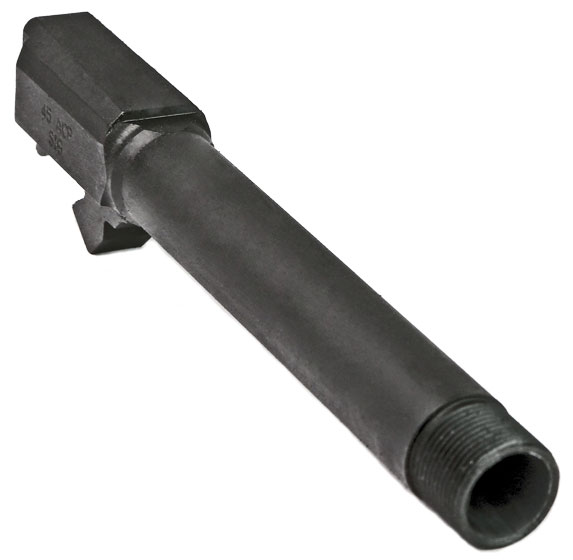
Choosing the right .45 ACP muzzle device barrel begins with matching the barrel, firearm, ammunition, and intended use as a complete system. A threaded .45 ACP barrel provides the attachment point for compatible muzzle devices, including compensators, linear compensators, and flash hiders, but thread compatibility is only one part of the selection process. Traditional .45 ACP pistols, including many 1911-style platforms, commonly use a .578"-28 thread pattern, while 5/8"-24 threads are frequently found on .45 ACP carbines, pistol-caliber carbine builds, and certain rifle configurations. Larger-profile custom barrels may use 11/16"-24 or another specialized thread pitch. These patterns can look similar at a glance, and forcing a device onto an incorrect thread can damage the barrel or device, so always confirm the firearm manufacturer’s specifications before ordering. It is equally important to verify bore clearance, barrel diameter, shoulder dimensions, and the device’s intended caliber. A muzzle device designed for .45 ACP should provide sufficient clearance for the projectile and should not be selected based solely on external appearance or thread size. For shoppers comparing .45 ACP muzzle device barrels, the most dependable approach is to identify the exact firearm model, determine whether the barrel is factory-threaded or requires a different configuration, and then compare the listed specifications with the muzzle device manufacturer’s requirements. Those details matter whether the barrel is intended for a classic pistol, a modern defensive handgun, a range-focused carbine, or a custom project assembled for competition and recreational shooting.
The purpose of a muzzle device depends on the platform and the shooter’s priorities. A compensator redirects propellant gases to help reduce muzzle rise and improve control during rapid, deliberate fire. The effect is often more noticeable on a carbine or longer-barreled platform than on a compact handgun, where the short barrel and reduced leverage can limit the practical benefit. A linear compensator directs blast and some of the perceived report forward, which may be useful on a pistol-caliber carbine used at an indoor range or in a confined shooting position, although it does not eliminate noise and should never be treated as hearing protection. A flash hider is intended to reduce the visible flash produced at the muzzle, which can be helpful in low-light conditions, while some users simply prefer its traditional profile and clean fit. Threaded barrels can also support other compatible accessories, but every attachment must be rated for the firearm, caliber, and ammunition being used. When comparing products in a .45 ACP muzzle device barrel selection, consider the barrel’s material, finish, length, rifling, locking or indexing method, and whether the device requires a specific shoulder, washer, shim, or thread protector. A properly fitted barrel and muzzle device should remain secure during use without altering the firearm’s safe operation. After installation, a qualified gunsmith can confirm alignment and clearance, particularly when the firearm will be used with a suppressor or any device that extends the bore path. Alignment checks are especially important on compact pistols and configurations with limited space around the muzzle. For additional ways to organize a compatible setup, browse 45 ACP Accessories and compare each item’s specifications rather than relying on a general caliber label alone.
These products may appeal to experienced handgun owners, PCC enthusiasts, competitive shooters, collectors updating a classic platform, and anyone refining a range setup around the smooth, substantial recoil impulse of the .45 ACP cartridge. A threaded barrel can be a thoughtful gift for a shooter who has already identified the exact firearm and thread pattern, but it is not an ideal surprise purchase when those details are unknown. Fitment is too important to leave to guesswork, and a gift card or a carefully confirmed accessory choice is often more useful than an attractive part that cannot be installed safely. During the cooler months, many shooters spend more time maintaining firearms indoors, reviewing equipment, and preparing for visits to an outdoor or indoor range, making it a practical period to inspect barrel threads, replace worn thread protectors, and check that accessories remain properly secured. Before installation or use, unload the firearm, remove the magazine, verify the chamber is empty, and follow the owner’s manual. Any barrel or muzzle device work should be completed with the firearm pointed in a safe direction and with appropriate eye and hearing protection available for later testing. Use only ammunition appropriate for the firearm and confirm that the muzzle device is tight, correctly aligned, and free of obstructions before firing. If the barrel, threads, or shoulder show damage, or if the device does not seat squarely, stop and seek assistance from a qualified professional. With careful attention to thread pitch, bore clearance, platform compatibility, and intended function, .45 ACP muzzle device barrels can provide a dependable foundation for a more controlled, comfortable, and purpose-built shooting setup.