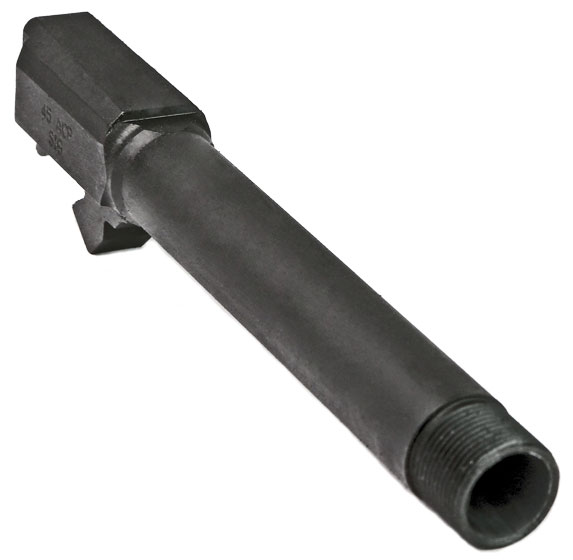
A .45 ACP barrel is a purpose-built component for the .45 Auto cartridge, a low-pressure pistol round commonly associated with a heavy 230-grain bullet, manageable velocity, and a distinctive, steady recoil impulse. When shopping for 45acp barrels, the first consideration is exact firearm compatibility. A barrel intended for a 1911 may be designed around a Government, Commander, or Officer’s frame, while a barrel for a polymer-framed pistol, a pistol-caliber carbine, or an AR-45 pattern build will use a different locking, feeding, and operating system. Even firearms chambered for the same cartridge can require different hood dimensions, locking surfaces, feed-ramp geometry, link arrangements, or breech-face relationships. Confirming the manufacturer’s model designation and generation before ordering is essential, particularly when replacing a worn barrel or selecting a component for a custom build. A properly matched barrel helps the firearm cycle reliably, supports consistent bullet alignment, and allows the sights or optic to maintain a dependable relationship with the point of impact. For broader maintenance and setup needs, shoppers may also find useful information and compatible components in 45 ACP Accessories. As with any firearm component, installation should follow the firearm manufacturer’s instructions, and a qualified gunsmith should inspect any barrel that does not fit cleanly or that requires fitting. A barrel should never be forced into place, modified without the proper tools and knowledge, or fired before the firearm has been checked for safe operation.
Barrel length is another important choice because it affects handling, sight radius, balance, and the way a firearm is carried or used. Traditional 1911 configurations generally include Government barrels around 5 inches, Commander barrels around 4.25 inches, and Officer’s barrels around 3.5 inches. A longer barrel can provide a longer sight radius on a conventional handgun and may offer a slightly different balance in the hand, while a shorter barrel can make a compact pistol easier to carry and maneuver. These differences are practical rather than absolute; the best length depends on the host firearm, the intended role, and the shooter’s familiarity with the platform. Some 1911 barrels are designed as drop-in components, while others are gunsmith-fit parts intended to be carefully matched to the slide and frame for proper lockup. For AR-45 and other blowback-operated pistol-caliber carbines, available lengths may range from compact configurations near 5.25 inches to carbine-length options around 16 inches. These barrels can change the overall balance and handling of the firearm, and a longer option may be selected for a dedicated range setup, a build with a shoulder stock where legally permitted, or a configuration intended to accept a particular handguard and muzzle device. Threaded barrels deserve extra attention. Common thread patterns for .45 ACP applications include .578x28 and, in some configurations, 5/8x24, but the correct pattern must match the muzzle device or suppressor adapter being used. Thread direction, shoulder dimensions, thread length, and concentricity all matter; a device that appears to fit may still be unsuitable if it does not align correctly with the bore. Suppressor use also involves separate legal requirements and compatibility checks, so buyers should verify all applicable federal, state, and local rules before purchase or installation.
Construction and internal specifications help distinguish one 45acp barrel from another. Many options are machined from 416R stainless steel or 4150 chrome-moly-vanadium steel, with the final finish selected for corrosion resistance, appearance, maintenance preferences, and the demands of the host firearm. Rifling is typically designed to stabilize common .45 ACP bullet weights, with a 1:16 right-hand twist appearing frequently across handgun and pistol-caliber carbine applications. That twist rate is generally suited to traditional 230-grain loads as well as many standard-pressure practice and defensive loads, though ammunition performance can vary with bullet profile, construction, velocity, and barrel length. Chamber dimensions and throat design should be considered alongside twist rate, especially when a barrel will be used with a range of factory ammunition. A clean, properly finished chamber supports reliable extraction, while a suitable feed ramp can help the firearm handle the bullet shapes commonly selected for .45 ACP. Shooters replacing a barrel after extensive range use may be looking for renewed accuracy and dependable cycling; builders may be choosing a threaded barrel to support a specific configuration; and competition-oriented users may prioritize a fitted barrel, consistent lockup, and a finish that complements frequent cleaning. A carefully selected barrel can also be a thoughtful gift for an experienced firearm owner, particularly when the recipient has already identified the exact platform, length, thread pattern, and fit required. Because these details are highly specific, a gift card or a confirmed model specification is often more practical than guessing at compatibility. Whether preparing for a range session during warmer weather, tuning a carbine for indoor practice during the cooler months, or restoring a trusted 1911 for regular use, compare the barrel’s chambering, platform, length, twist, material, finish, threading, and installation requirements before completing the purchase. Always use appropriate eye and ear protection, inspect the firearm before handling or installation, and follow safe storage, transport, and operation practices.