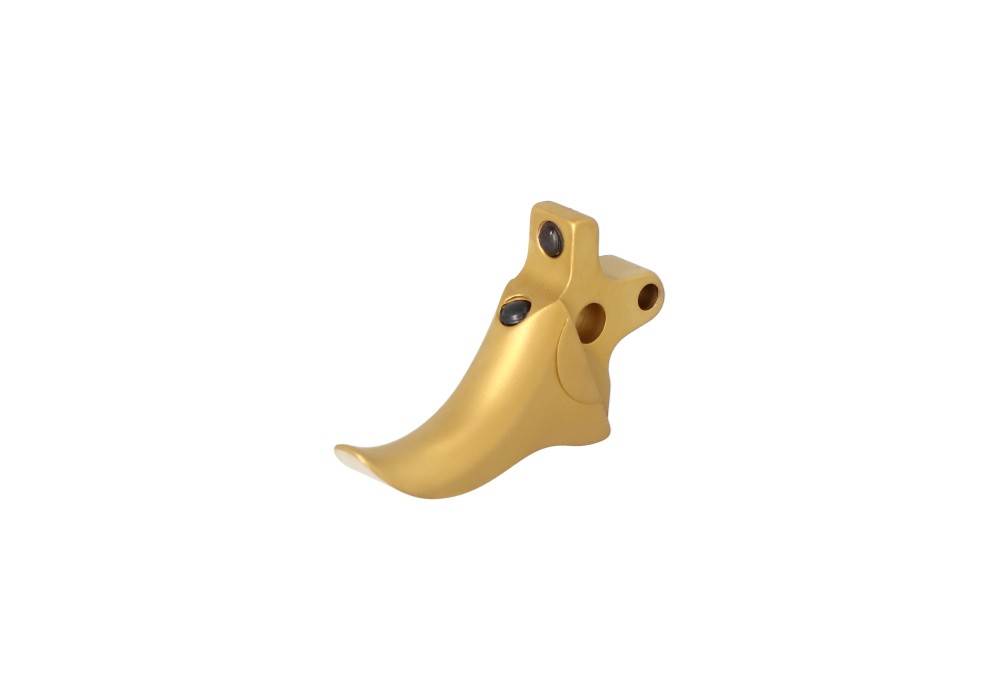
Adjustable triggers are firearm components that allow certain aspects of trigger feel to be tailored within the manufacturer’s specified limits. Depending on the design, those adjustments may include pull weight, pre-travel, over-travel, or the position of the trigger shoe. Pull weight is the force required to move the trigger through its break, the point at which the firing mechanism releases. Pre-travel, sometimes called take-up, is the movement before the trigger reaches its primary resistance; over-travel is the movement that continues after the break. Reset describes the forward movement needed before the trigger mechanism is ready for another firing cycle. These characteristics contribute to how a trigger feels, but not every adjustable trigger offers control over every characteristic. A clear description of the available adjustments is more useful than a broad claim about customization. Single-stage and two-stage designs also provide different experiences. A single-stage trigger generally presents its principal resistance in one continuous pull, while a two-stage trigger has a distinct initial movement followed by a more defined second stage. Neither format is automatically the better choice; familiarity, intended use, and compatibility all matter. For recreational target shooters, competitors, and experienced firearm owners, the appeal often lies in a predictable feel that suits an established preference. A distinct break and consistent movement can support a familiar shooting experience, but a trigger alone does not determine accuracy or replace sound firearm handling. The shape of the trigger face adds another dimension. Flat and curved profiles place the finger against different contours, and differences in width, reach, and surface texture can be noticeable during an extended range session. Someone with smaller hands may pay particular attention to reach, while another shooter may prefer the familiar contact of a curved face. Adjustable triggers are best understood as platform-specific components with defined mechanical characteristics, not universal upgrades that deliver the same result in every firearm or for every owner.
Fit is the foundation of any adjustable trigger selection. Components intended for bolt-action rifles, semiautomatic rifles, and handguns can differ substantially in their construction, attachment points, and relationship to the firearm’s safety mechanisms. Even firearms that look similar may use different internal arrangements, so a general platform description is not enough to establish compatibility. The exact model, configuration, and manufacturer’s stated fit requirements should agree before a component is selected. Some designs are integrated assemblies, while others consist of separate components; that distinction affects compatibility and servicing requirements, but does not by itself establish quality. Materials and manufacturing processes also deserve attention. Depending on the design, trigger components may use hardened steel for wear surfaces, aluminum for housings or shoes, and protective finishes that help resist corrosion. Steel hardness, surface finish, and the quality of contact areas matter because small internal parts experience repeated mechanical contact. A smooth exterior is not a substitute for appropriate materials or consistent construction, and a protective coating does not eliminate the need for care. Durability is better judged through the manufacturer’s specifications, intended application, service requirements, and support than through appearance alone. Intended use should carry equal weight. A firearm used primarily for supervised target practice may have different requirements from one carried for professional duties or taken into the field. Rules for organized competition may also restrict permissible equipment or trigger characteristics. The lightest permitted setting is not necessarily the most suitable one, and adjustment range should never be treated as permission to move beyond documented limits. Preserving the firearm’s safety functions and dependable operation takes priority over achieving a particular feel. Professional installation or evaluation may be appropriate, especially when the firearm manufacturer or component manufacturer specifies it. Clear documentation, an identifiable compatibility statement, and access to qualified support are meaningful considerations for an owner who expects a component to remain serviceable over years of regular use.
Care for an adjustable trigger begins with the documentation supplied for both the firearm and the component. Cleaning products, lubrication requirements, inspection intervals, and service procedures can vary by design, so a routine appropriate for one assembly may not suit another. Residue, dust, and excess lubricant can collect around small moving parts, while moisture left unattended can affect unprotected surfaces. Protective finishes help, but they do not turn a mechanical assembly into a maintenance-free component. Follow the manufacturer’s care requirements rather than assuming that more solvent or lubricant will produce a better result. Any inspection, cleaning, or service should take place with the firearm unloaded and ammunition kept separate, and work beyond the owner’s knowledge should be handled by a qualified gunsmith. A change in trigger feel, unexpected movement, visible wear, or a problem with a safety mechanism warrants professional evaluation rather than further experimentation. The Adjustable Trigger Tools page is a related place to explore supporting accessories, with suitability determined by the requirements of the particular component. Properly fitting tools and clear service documentation are practical considerations alongside the trigger itself. Long-term ownership also includes suitable storage, protection from contamination, and attention to the firearm’s overall condition. For an experienced shooter, the most satisfying choice is often one that feels familiar during ordinary use and remains consistent with appropriate care. Think of a target shooter settling into a regular practice session: the shape against the finger, the character of the initial movement, and the defined resistance all become part of a recognizable interface. Those preferences are personal, which also matters when considering an adjustable trigger as a gift. Confirming the recipient’s exact firearm configuration, preferred trigger style, and interest in a replacement component is more thoughtful than choosing by appearance or adjustment range alone. A well-matched selection brings together compatibility, documented adjustment options, suitable materials, and realistic maintenance expectations, giving knowledgeable owners a component chosen for their firearm and established needs.