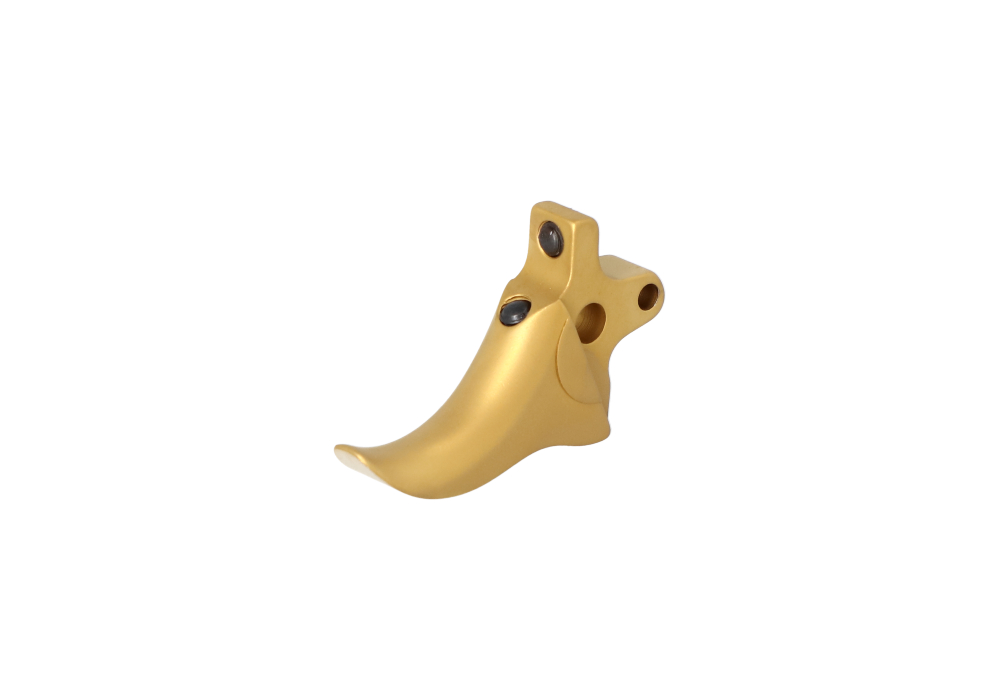
Adjustable trigger tools are specialized accessories designed to support careful, controlled work on firearm trigger systems. Depending on the platform and trigger design, the right tool may be a small hex or Allen key for turning set screws, a slotted adjustment driver shaped to match a factory trigger interface, a compact wrench for securing components, or a purpose-built tool included with an adjustable trigger assembly. Some trigger systems allow changes to pull weight, take-up, creep, overtravel, or reset travel, while others use a self-contained design with fewer user-adjustable points. Because screw sizes, adjustment ranges, and safe operating limits vary considerably, selecting a tool that matches the firearm and trigger manufacturer’s specifications is essential. A fractional hex key that fits one trigger’s set screw may be too large for another, and forcing an ill-fitting driver can damage the fastener or make future service more difficult. Product descriptions, compatibility charts, and included instructions should be reviewed before purchase, particularly when shopping for an AR-style rifle, bolt-action rifle, striker-fired pistol, hammer-fired pistol, or another platform with a distinct fire-control design. For shoppers comparing Adjustable Trigger Kits, it is useful to consider whether the system is intended for a professional installation, routine inspection, or user-accessible adjustment within the limits set by the manufacturer. A well-chosen tool should provide a precise fit, a comfortable grip, and enough control to make small changes without slipping. Compact tools are easy to keep in a range bag or maintenance case, while a more complete set may be useful for an enthusiast who works on several compatible firearms. During the cooler months, when many owners spend more time indoors cleaning, inspecting, and organizing their equipment, a dedicated trigger tool can help keep maintenance supplies together and ready for the next range session.
These tools may be used by experienced firearm owners, competitive shooters, hunters, instructors, armorers, and gunsmiths, with the appropriate level of training and oversight. A competition shooter may use a compatible adjustment tool to verify that a trigger remains within a preferred configuration after transport or routine cleaning. A hunter may value a dependable tool that fits inside a field or range kit, allowing inspection and service to be handled by a qualified professional rather than relying on improvised equipment. For a new firearm owner, an adjustable trigger tool can also be a practical addition to a cleaning kit, although it should not be treated as an invitation to experiment with unfamiliar settings. Trigger work affects the way a firearm fires, resets, and responds to the shooter, so even a small change can influence handling and performance. Before any inspection or adjustment, the firearm should be completely unloaded, all ammunition should be removed from the work area, and the manufacturer’s manual should be followed from beginning to end. The action should remain open whenever the design permits, and function checks should be performed only in a safe, controlled setting using the procedures specified for that firearm. If the instructions are unclear, the adjustment requires disassembly beyond the owner’s experience, or the desired result depends on changing safety-critical engagement surfaces, a qualified gunsmith is the appropriate resource. Tools such as modified grip screws with secondary adjustment points, small drivers for internal set screws, and dedicated trigger gauges or trainers may serve different purposes and should not be substituted for one another. A dry-fire hand trainer, for example, is intended to build finger strength and reinforce a consistent press away from the firearm; it does not adjust the firearm’s trigger and cannot replace a compatible service tool. Keeping these distinctions clear helps shoppers choose equipment that fits the intended task rather than relying on a generic multitool that may not provide the needed precision.
When comparing adjustable trigger tools, pay attention to compatibility, dimensions, construction, adjustment access, and storage. A tool made for a particular screw profile or factory adjustment slot should seat fully and turn smoothly, with minimal wobble. Hardened steel construction can be useful for repeated service, while a compact case or organized handle helps prevent small keys from disappearing at the bottom of a range bag. Buyers should also confirm whether the tool is intended for pull-weight adjustment, take-up or pre-travel, overtravel, reset travel, installation, or general maintenance, since these functions are not interchangeable. Some systems use accessible adjustment screws only when the action is open; others require removal of the trigger assembly or installation by a trained professional. A trigger gauge may help verify pull weight where appropriate, but measurements should be interpreted according to the firearm’s manual and any applicable competition or organizational rules. These considerations make adjustable trigger tools a thoughtful gift for a mechanically inclined shooter, a range partner who maintains several compatible firearms, or someone assembling a first maintenance kit. They are especially useful when paired with a secure storage case, quality lighting, and a clear commitment to safe handling rather than presented as a novelty accessory. As the weather warms and outdoor range visits become more frequent, having the correct tool available can make it easier to identify loose fasteners or arrange proper service before a planned practice session. During periods of heavier use, inspect tools for worn edges, bent shafts, or damaged tips, and replace anything that no longer fits securely. The best choice is the tool that matches the firearm, supports the intended maintenance task, and encourages deliberate work within the manufacturer’s stated limits.