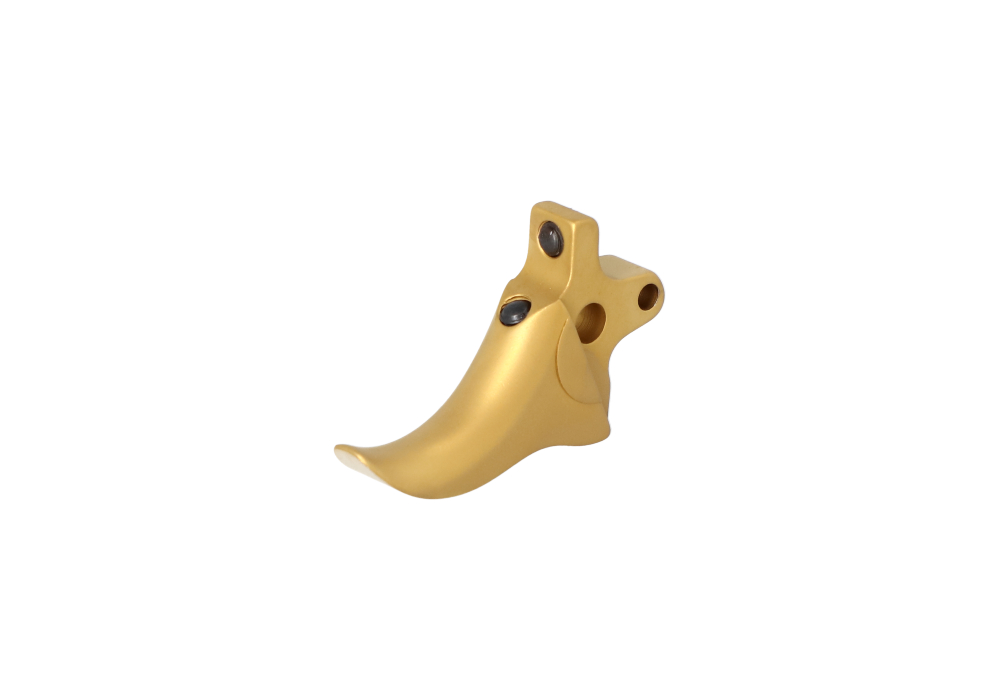
Adjustable trigger kits are popular upgrades for shooters who want a more personalized trigger feel without replacing the firearm itself. Unlike a fixed trigger that offers one factory-defined setup, an adjustable system may allow qualified users or a professional gunsmith to fine-tune characteristics such as pull weight, pre-travel, over-travel, and reset. Pull weight describes the pressure required to release the sear, while pre-travel is the movement before the trigger reaches the engagement point and over-travel is the movement after the shot breaks. Reset refers to the trigger’s return point between shots. These details can make a meaningful difference in how a firearm feels during slow, deliberate practice, rapid strings, competition stages, duty training, or ordinary range sessions. Some shooters prefer a smooth, predictable take-up followed by a crisp break; others value a clearly defined reset and a trigger shoe shape that places the finger in a consistent position. The right configuration depends on the firearm platform, the intended role, the shooter’s experience, and the balance between speed, control, and safe handling. When comparing options, begin by confirming exact compatibility with the firearm’s make, model, generation, action type, and internal components. Adjustable trigger kits are not universally interchangeable, even when two firearms appear similar from the outside. Review the manufacturer’s compatibility information carefully, including whether the kit is intended for a striker-fired pistol, a hammer-fired pistol, an AR-pattern rifle, a precision rifle, or a 1911-style platform. A kit that works well for a competition firearm may not be the appropriate choice for concealed carry, duty use, or a defensive application. Also consider whether the kit preserves factory safety features, whether it includes the necessary springs or adjustment hardware, and whether any specialized tools are required. Small differences in trigger geometry can affect function, reliability, and safe operation, so installation and adjustment should be handled only by someone with the proper training and a clear understanding of the firearm. If there is any uncertainty, consult a qualified gunsmith rather than relying on guesswork or forcing parts into place.
A well-chosen adjustable trigger kit can be useful for a broad range of shooting goals. Competitive shooters often look for a clean break and short, repeatable reset that help them move efficiently through timed stages while keeping the trigger press consistent. Precision-oriented shooters may appreciate the ability to refine pull weight and travel so the trigger press creates less disruption when firing from a supported position. Recreational range users may simply want a more comfortable interface, especially after discovering that the factory trigger shoe, reach, or movement does not suit the shape of their hand. The same considerations apply to shooters who spend time practicing from different positions or in changing conditions during the warmer and cooler parts of the year. A consistent trigger can make practice feel more familiar, but it should never encourage rushing, careless finger placement, or a lighter setup that exceeds the shooter’s ability to control the firearm. Pull weight is only one part of the experience. A very light trigger may feel fast in a quiet indoor range and less manageable when the shooter is wearing gloves, working from an awkward position, or operating under pressure. A defined wall, positive reset, and predictable movement may be more valuable than the lowest available pull weight. When evaluating an adjustable trigger kit, look for clear adjustment ranges, secure adjustment methods, durable materials, smooth contact surfaces, and documentation that explains how the system is intended to function. It is also worth considering the trigger shoe’s width, curvature, reach, and texture, since these features influence how the finger meets the trigger. Shooters with smaller or larger hands may notice the difference immediately, while someone who trains frequently may value a shape that feels the same from one session to the next. An adjustable trigger kit can also be a thoughtful gift for an experienced firearm owner who enjoys careful range work, competition preparation, or gradual upgrades to a familiar platform. Because fit and compatibility are so important, a gift card or a conversation about the recipient’s exact firearm may be more practical than choosing a kit without that information. For shoppers exploring the category, Adjustable Triggers provide a useful place to compare available configurations and identify options suited to a specific platform and shooting purpose.
Before purchase or installation, inspect the product description for the complete list of supported firearms and confirm whether the kit is intended for a factory-configured firearm or one that already includes aftermarket components. Changes to one internal part can influence the relationship between the trigger, sear, striker or hammer, disconnector, and safety mechanisms, so compatibility should be treated as a safety requirement rather than a convenience. After installation or adjustment, the firearm should remain unloaded while the work is checked, with ammunition stored separately from the work area. Follow the included instructions exactly and have the completed work inspected by a qualified professional when appropriate. Function checks should be performed in accordance with the manufacturer’s guidance, and live-fire testing should begin at a controlled range with the muzzle pointed in a safe direction, the firearm operated within its intended limits, and protective equipment in use. Watch for an inconsistent break, failure to reset, unintended movement, changes in safety engagement, or any other behavior that differs from normal operation; stop immediately if something does not feel correct. Adjustable settings should be recorded so the shooter can return to a known configuration after cleaning, maintenance, or future experimentation. It is also wise to review applicable federal, state, and local laws, as well as any rules governing competition, organized training, or defensive equipment. For many owners, the best result is not the most aggressive adjustment but a dependable, repeatable trigger that supports disciplined fundamentals. With the firearm unloaded during handling, the trigger finger indexed outside the guard until the sights are on target and a decision to fire has been made, and the four basic safety rules observed every time, an adjustable trigger kit can become a purposeful part of a carefully considered firearm setup.