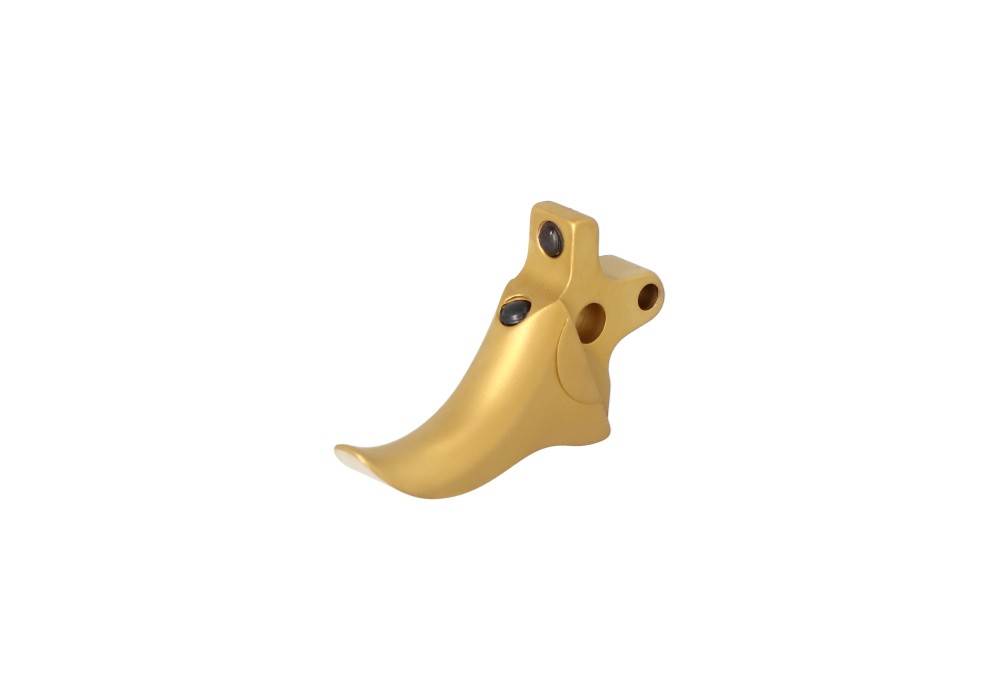
Gold trigger kits are firearm component sets distinguished by a gold-colored trigger or coordinated gold-finished parts. They offer a way to personalize a firearm’s appearance while selecting components with a particular shape, material, and platform compatibility. Against a dark frame, a gold trigger creates a distinct focal point; paired with other matching controls, it can give the firearm a more coordinated appearance. The finish, however, tells only part of the story. Gold coloring does not necessarily indicate solid gold, titanium nitride, or any particular treatment, and it does not establish pull weight, reset characteristics, or reliability. Those details depend on the underlying components and their documented specifications. Aluminum and steel serve different purposes within a trigger assembly: aluminum can provide a lightweight trigger shoe, while steel is common in parts that require strength and resistance to repeated contact. Depending on the component, a gold appearance may come from anodizing, a surface coating, or another finishing process. Titanium nitride, often abbreviated TiN, is one possible coating, but the color alone is not proof that a component uses it. Surface preparation, coating quality, and the base material all influence how the finish looks and wears. Trigger shape is another meaningful distinction. A flat face presents a different contact surface than a curved profile, while edge contours and shoe width can affect how the trigger feels against the finger. Neither shape is universally preferable, and a gold finish does not make one design more suitable for every shooter. The useful comparison is between clearly documented designs that fit the intended firearm and its role. For a broader view of this finish across trigger components, Gold Firearm Triggers provides a related category to consider alongside kits. The central distinction remains the same: appearance identifies the theme, while construction, fit, and specifications determine whether a particular configuration is appropriate.
Compatibility deserves the closest attention because trigger kits are not universal assemblies. Firearms that look nearly identical can use different internal geometries, attachment points, or safety arrangements. A shared model family or caliber is not enough to establish fit, and a component intended for one generation may not suit another. The exact model, generation, frame configuration, and any stated exclusions should match the manufacturer’s application information. Existing modifications also matter, since compatibility with an original configuration does not automatically establish compatibility with other aftermarket parts. Kit contents require an equally careful comparison. One package may center on a trigger shoe and associated hardware, while another may include a bar, springs, or additional assembly components. The word “kit” does not guarantee a complete replacement assembly or the same parts from one offering to another. A clear contents list helps distinguish a coordinated set from a single visible component with supporting hardware. Intended use adds another layer to the decision. A firearm used for recreational target shooting may have different requirements from one used for duty or personal protection, and cosmetic preference should never outweigh the manufacturer’s safety requirements. Competition participation can introduce equipment rules that affect which configurations are permitted. A different trigger shape or finish also does not guarantee a lighter pull, shorter travel, or a more distinct reset; any such characteristics need support in the component’s published specifications. For someone seeking a gold accent without an intended change in operating characteristics, that distinction is especially important. Installation requirements vary, and an apparently simple component can still interact with essential safety mechanisms. Professional installation and inspection by a qualified gunsmith or armorer can help establish proper fit and function without relying on appearance or assumptions. Any required checks should follow the firearm and component manufacturers’ procedures. A well-considered selection preserves the firearm’s safety functions and suits its documented application, rather than treating an attractive finish as evidence of mechanical suitability.
Long-term satisfaction with gold trigger kits depends on realistic expectations for finish durability and routine care. The trigger is a frequent contact point, so its appearance can reflect handling, cleaning habits, and use over time. Wear resistance varies by material and finish, and even a durable surface treatment is not immune to scratches, abrasion, or visible changes at contact areas. Gold tones can also differ between components, with shades ranging from pale champagne to deeper yellow. Separate parts described with the same color name may not match exactly, particularly when their base materials or finishing processes differ. For a firearm with several gold accents, consistent finish descriptions and clear photography are more useful than the color label alone. Under ordinary lighting, differences in sheen can be as noticeable as differences in hue: a satin trigger face will not reflect light like a polished surface. Care should follow the manufacturer’s directions for both the firearm and the finish. Compatible cleaning products and nonabrasive materials help avoid unnecessary cosmetic damage, while aggressive polishing can alter a surface treatment or affect critical dimensions. Before cleaning or inspecting components, confirm that the firearm is unloaded and follow its established safety procedures. Lubrication should remain within the manufacturer’s recommendations rather than being treated as a remedy for an unexplained change in trigger feel. Any irregular operation, looseness, or unexpected change warrants stopping use and arranging professional evaluation. For an experienced firearm owner, a gold trigger kit can also be a thoughtful gift when the exact firearm configuration and preferred design are already known. Coordination matters more than surprise: a visually appealing kit is useful only when its fit, contents, and intended application align with the recipient’s firearm. Keeping the packaging, compatibility information, and installation documentation together helps preserve those details for future service. The lasting appeal comes from a distinctive finish paired with appropriate materials, dependable fit, and responsible ownership—not from color alone.