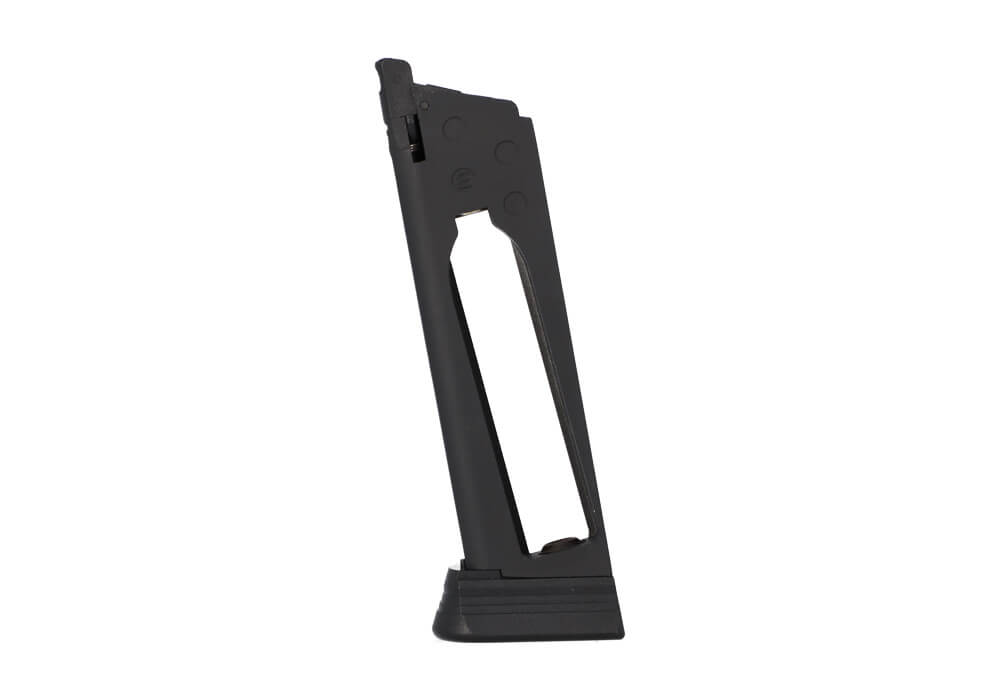
Airgun magazines for backyard plinking make casual target practice more fluid, organized, and enjoyable by reducing the pauses between shots. Instead of stopping to load each pellet individually, a compatible magazine can keep the session moving while you work on trigger control, sight alignment, and consistent groups. The right choice depends first on the airgun itself. Rotary magazines are common on many repeating pellet airguns and typically arrange pellets in a compact circular drum that indexes as the action is cycled. Belt-fed systems are found on some replica-style airguns and can provide a longer string of shots before reloading. Other platforms use linear clips, removable strips, or proprietary magazine formats. These designs are not interchangeable, even when they appear similar, so confirm the exact airgun model, caliber, ammunition type, and magazine configuration before placing an order. A magazine intended for pellets should not be confused with a BB magazine, and a magazine designed for one caliber may not function safely or reliably in another. For airguns that use BBs, explore BB Magazines for Backyard Plinking to find options suited to that ammunition style. Paying attention to the manufacturer’s specifications helps prevent indexing problems, feeding failures, and damage to the loading probe or action. It is also worth checking whether the magazine is designed for standard or extended capacity, how it is retained in the airgun, and whether the package includes one magazine or multiple magazines. A compact rotary magazine can be convenient for a quick practice session, while an extended-capacity option may be useful when several shooters are taking turns or when you want to spend more time on the range without stopping to reload as often.
Pellet selection matters just as much as magazine fit. Many rotary magazines perform best with clean, undamaged pellets of the length and profile recommended for the airgun. Domed pellets are often selected for general-purpose target practice, while wadcutter pellets can leave clean, easy-to-see holes in paper targets at modest distances. Pointed pellets may suit certain applications, but the magazine and airgun must be rated for them. Avoid mixing pellet types in the same magazine, and do not load pellets with bent skirts, crushed noses, heavy oxidation, or other visible damage. A deformed pellet can resist indexing, sit incorrectly in the chamber, or create a frustrating stoppage just as the afternoon gets going. Keeping pellets in their original container or a dedicated protective case helps them stay clean and round. When preparing a rotary magazine, load each chamber carefully and make sure the pellet is seated in the direction specified for that design; forcing a pellet into place can damage the drum. Before shooting, inspect the magazine for cracks, worn retention points, or debris, and remove it according to the airgun’s instructions. Having two or three compatible magazines preloaded can be especially practical for backyard plinking. One can remain in the airgun while another is ready on the bench, allowing a younger shooter, a visiting friend, or a family member to take a turn without fumbling with small pellets in the grass. During the cooler months, gloves may make small loading steps more difficult, so a simple magazine system and an organized loading routine can make the experience more comfortable. During warmer weather, a shaded table, a small parts tray, and a secure container for ammunition keep the setup tidy while providing a pleasant place to pause between groups.
These magazines appeal to a wide range of airgun owners, from someone enjoying quiet target practice after work to a family setting up a supervised plinking lane in a suitable backyard. They can also make a thoughtful gift for a shooter who already owns a compatible repeating airgun, particularly when the recipient appreciates practical accessories that get used rather than stored away. An extra magazine is a useful present for a new airgun owner learning the rhythm of loading, aiming, and firing, while an experienced shooter may value a spare for convenience or as a replacement for a worn component. Backyard use still calls for the same responsible habits applied to any projectile-shooting activity. Select a location with a solid, dependable backstop capable of stopping the specific pellets being used, and never rely on a thin fence, loose cardboard, or vegetation alone. Keep the shooting direction away from roads, homes, sidewalks, windows, and neighboring properties, and check applicable local rules before setting up. Everyone nearby should understand that the airgun is in use, and eye protection should be worn by the shooter and anyone watching. Treat the airgun as loaded until it has been safely checked, keep the muzzle pointed in a safe direction, and keep fingers outside the trigger guard until ready to fire. Store magazines and ammunition securely when the session ends, clear the airgun according to its instructions, and remove damaged pellets rather than trying to make them work. With a properly matched magazine, suitable ammunition, and a carefully arranged shooting area, backyard plinking can settle into an enjoyable routine: the quiet click of the action, the soft report, and the satisfying appearance of a neat cluster on the target as the day gradually cools.