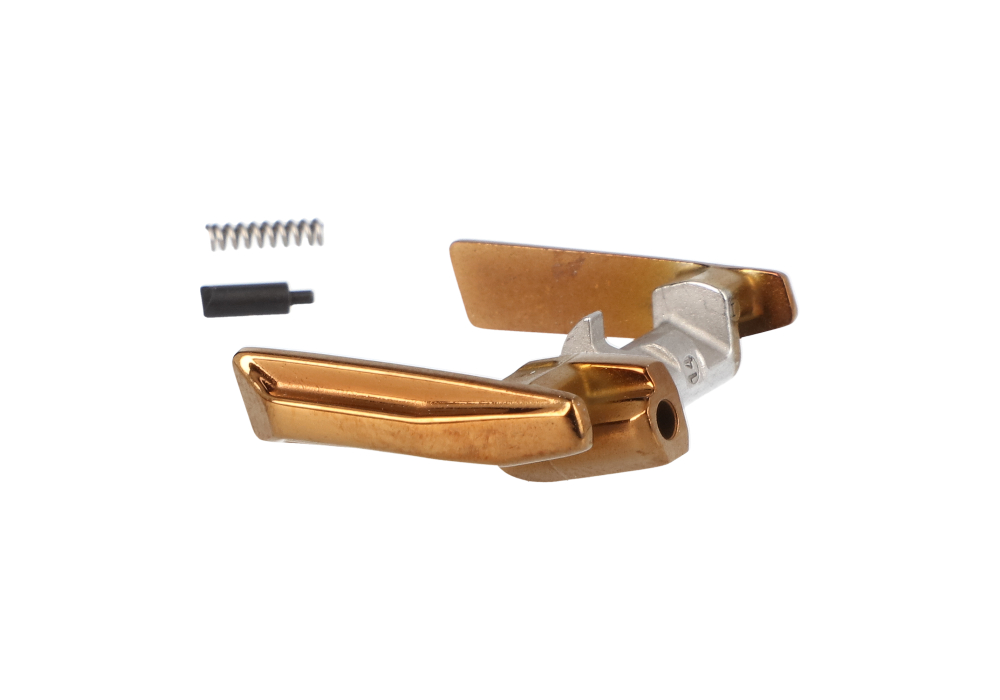
Ambidextrous safety levers give a rifle’s safety selector controls on both sides of the lower receiver, allowing the shooter to engage or disengage the safety with either hand. This configuration is especially useful for left-handed shooters, but its advantages extend to anyone who trains from different positions, transitions between shoulders, or works around barriers and other obstacles. A right-handed shooter who moves to the support side may find that a conventional one-sided lever is difficult to reach without shifting the firing grip; an ambidextrous setup keeps the control available on the opposite side, helping maintain a more consistent relationship with the rifle. That convenience can matter during range practice, competition, field use, or defensive training, where small changes in hand position can affect comfort and control. Many shooters also appreciate the straightforward tactile feedback of a selector that can be manipulated from either side. When the rifle is handled with the muzzle pointed in a safe direction and the action confirmed clear, the selector should move positively between its safe and fire positions without excessive looseness, binding, or uncertainty. The best choice depends on the firearm’s lower receiver, the shooter’s hand size, and the way the rifle is used. Before ordering, confirm that the lever is designed for the specific platform and receiver configuration, and review the manufacturer’s installation guidance. Some safety lever kits are intended as direct upgrades, while others may require fitting, specialized tools, or professional installation. A qualified gunsmith can help verify proper engagement and function, particularly when a replacement involves internal components or when the rifle has other aftermarket modifications.
One of the most important purchase considerations is the selector’s throw, meaning the amount of rotation required to move between safe and fire. A traditional 90-degree throw offers a familiar operating motion and is common on many rifles. A shorter 45-degree throw can reduce the movement needed to change positions, which some shooters prefer when practicing rapid, controlled manipulation. Neither configuration is universally right for every user; the appropriate choice comes down to training habits, hand placement, and compatibility with the receiver and trigger area. Lever shape and length deserve equal attention. A longer lever may provide a larger contact surface for the thumb, while a shorter lever on the opposite side can reduce crowding beneath the trigger finger or against the shooter’s knuckle. Kits that combine one long lever with one short lever are popular because they balance access with a clean, unobtrusive feel. Some designs allow the lever arrangement to be configured for the shooter’s preference, and modular systems may make it easier to change lever length or orientation during setup. Pay attention to the texture and edges as well: positive contact is valuable, but sharp or overly aggressive surfaces can become uncomfortable during extended practice or when the rifle is carried close to the body. Finish, material, fastener design, and resistance to wear are also worth reviewing, especially for a rifle that sees frequent transport, training in dusty conditions, or long days on the range. A carefully chosen ambidextrous selector should feel natural rather than distracting, with a clear, repeatable movement that supports safe handling instead of demanding constant attention.
Ambi safety levers can be a practical upgrade for an experienced rifle owner and a thoughtful gift for a shooter who values ergonomic improvements, provided the recipient’s firearm and preferences are known. They are particularly well suited to left-handed shooters, instructors who demonstrate from either side, competitors who practice shoulder transitions, and recreational shooters who want controls that feel consistent during different shooting positions. They may also appeal to someone assembling a rifle for training during the cooler months, when gloves or heavier clothing can make small controls more difficult to reach. Gift buyers should avoid guessing about compatibility: the rifle’s exact platform, lower receiver pattern, selector design, and preferred throw should be confirmed before selecting an upgrade. A useful approach is to compare the existing selector with the replacement’s specifications, paying attention to whether the kit includes both levers, mounting hardware, and any required tools. After installation, function checks should be performed with the firearm unloaded and in a safe, controlled environment. The selector should positively engage the safe position, prevent the trigger from releasing the hammer or striker when appropriate, and return to the intended fire position without interference; any unusual movement or failure to function is a reason to stop and seek qualified assistance. Shooters looking to compare compatible options can explore Safety Lever Kits while keeping platform fit, throw angle, lever combination, finish, and installation requirements in mind. With the right match, an ambidextrous safety lever can become one of those understated upgrades that disappears into the shooting experience: easy to reach, comfortable through repeated practice, and ready to support a consistent grip from either side.