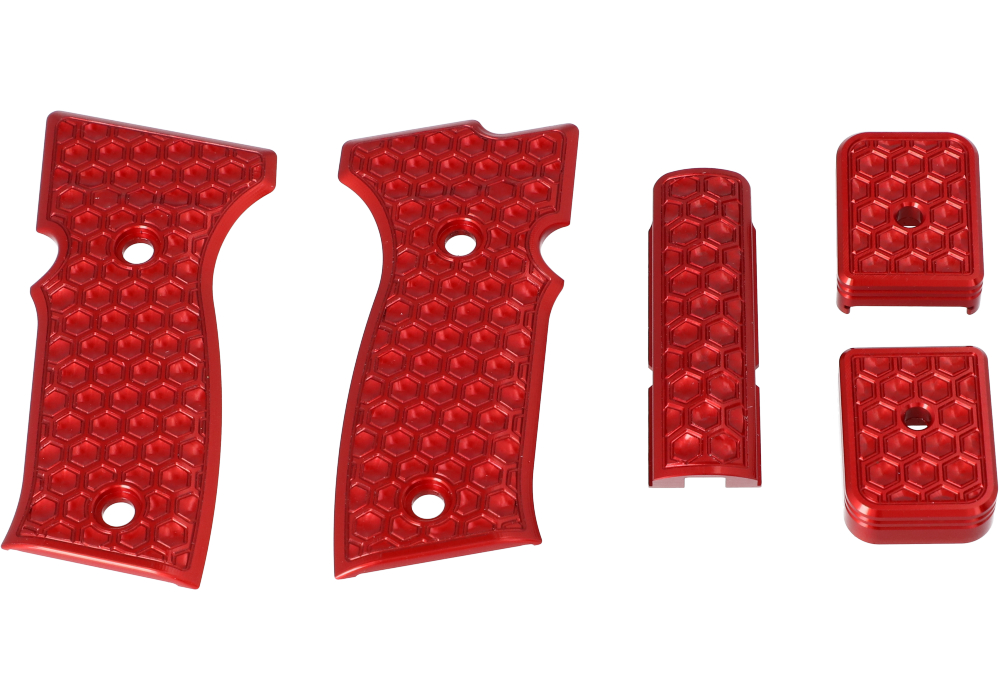
Colorful handgun grip modules are exterior grip assemblies for compatible modular pistols, combining a distinctive color or finish with the shape and texture that connect the handgun to the shooter’s hand. On platforms designed around a removable fire-control assembly, a compatible module can change the pistol’s appearance and gripping surface while retaining its existing internal operating components. That distinction separates a grip module from grip panels, sleeves, and other accessories that attach to an existing frame. Color is the most visible feature, but the best match also depends on construction, dimensions, texture, and compatibility with the complete handgun configuration. Palettes can range from understated gray, olive, tan, and brown to brighter blue, pink, red, and other expressive tones. Solid colors create a clean contrast against a darker slide, while patterned finishes introduce more visual detail around the grip and frame. A muted finish can suit someone who prefers a restrained appearance; a brighter shade can give a familiar range pistol a more personal look. Neither choice changes the need for responsible handling, and color should never be treated as an indication that a firearm is unloaded or harmless. Materials and finishing methods matter just as much as the shade itself. Molded polymer is common because it supports complex grip contours and textured surfaces at a relatively low weight. Some modules use pigment within the polymer, while others receive an applied surface finish. Those approaches can age differently: surface coatings may show wear at contact points, and colored polymer can develop scuffs or polished areas with repeated use. Finish descriptions help distinguish color treatment from structural material, since a colored exterior alone does not identify what lies beneath it. Depending on the construction, metal modules may offer a different balance and feel. The goal is a combination of appearance, durability, and ergonomics that suits how the handgun will be used, rather than color considered in isolation.
Fit begins with the exact handgun platform and configuration, not with a similar silhouette or a familiar color name. Grip modules are not universal, and compatibility can depend on the fire-control assembly, slide configuration, grip length, magazine type, and provisions for external controls. Two modules that look nearly identical in photographs may differ in dimensions or in the openings needed for a particular configuration. Manufacturer compatibility information should establish the match before aesthetic preferences narrow the choice. A compatible module is intended to work with the appropriate existing components; it should not be assumed to alter trigger characteristics or provide a performance improvement simply because it changes the grip. For shoppers comparing dimensions, grip length and circumference describe different aspects of fit. Length affects how much room the fingers have along the front of the grip, while circumference influences how naturally the hand wraps around it and reaches the controls. Palm swell, the rear contour, and the shape beneath the trigger guard can also affect comfort. A shooter with smaller hands may prefer less bulk, while someone with larger hands may appreciate a fuller contour or more room for the little finger. Neither preference can be settled by photographs alone. Texture deserves similar attention. Fine stippling can feel different from pronounced ridges, and an assertive gripping surface that feels reassuring during range practice may rub against clothing or skin during lawful concealed carry. A carry-focused choice should also account for the complete handgun’s fit in its holster; changes in frame contour or accessory-rail geometry can affect compatibility even when the slide remains the same. For recreational range use, comfort across repeated practice sessions may matter more than minimizing grip dimensions. In competition settings, consistent hand placement and compliance with the applicable equipment rules deserve consideration alongside appearance. These practical differences explain why two shooters can prefer very different colorful handgun grip modules for otherwise similar pistols. A satisfying choice feels natural in the hand and suits the intended setup, with color providing the finishing touch.
Care helps preserve both the finish and the gripping surface, particularly where hands, holsters, and cases repeatedly contact the module. Follow the manufacturer’s cleaning instructions, and confirm that any cleaner is appropriate for both the underlying material and its color treatment. A product suitable for one finish may not suit another, so aggressive solvents, abrasive pads, and improvised polishing are poor substitutes for material-specific guidance. After ordinary range use, residue and lint can collect in textured areas or around contours. Cleaning those surfaces as directed helps keep the texture distinct without unnecessarily scrubbing the finish. Before cleaning or inspection, ensure the firearm is unloaded and keep ammunition separate from the work area. Routine inspection can also reveal cracks, damaged edges, loose components, or unusual wear that deserves attention from a qualified professional. Cosmetic scuffing and structural damage are not the same thing, and a visually appealing finish should never distract from the condition of the module itself. Storage practices matter, too: hard contact with other equipment can mark surfaces, while a suitable protective case can help limit abrasion during transport. For shoppers considering a broader range of materials, contours, and textures, Aftermarket Handgun Grip Modules offers a related category to explore alongside color-focused choices. As a gift for an adult firearm owner, a grip module is most thoughtful when the recipient’s exact platform, preferred grip dimensions, and finish preferences are already known. A vivid color may suit someone who enjoys a distinctive range setup, whereas a subdued tone may appeal to someone who wants a quieter visual change. Matching the recipient’s taste is useful, but confirming compatibility is essential. Anyone unfamiliar with a modular pistol’s assembly requirements should consult the manufacturer’s instructions or a qualified gunsmith rather than treating a module swap as a purely cosmetic task. The lasting appeal of a colorful grip module comes from bringing personal style together with appropriate fit, reliable construction, and a texture the owner enjoys using.