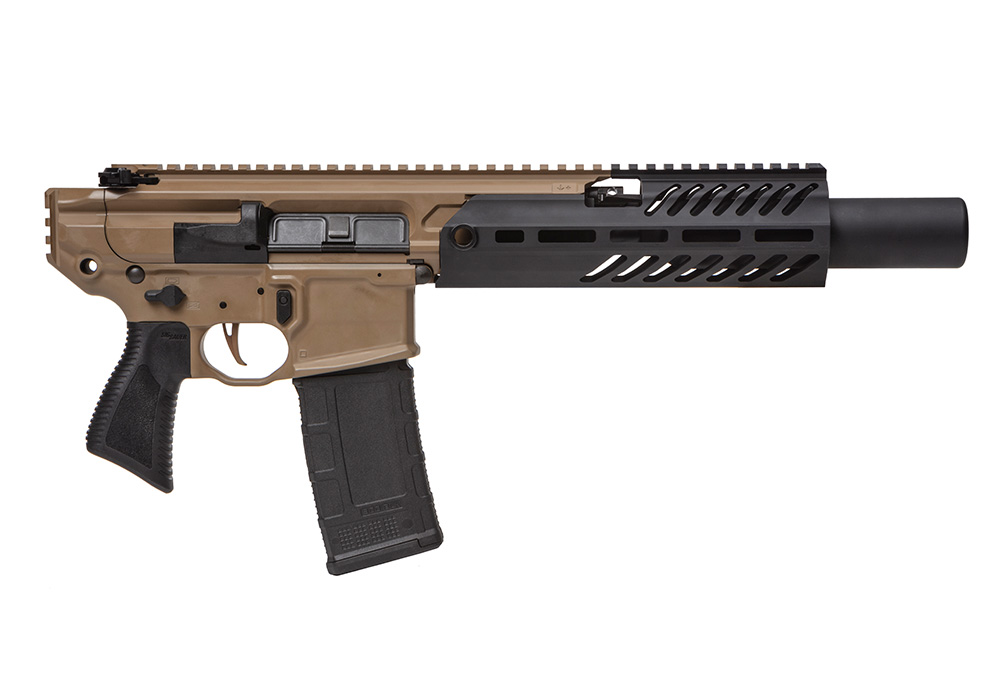
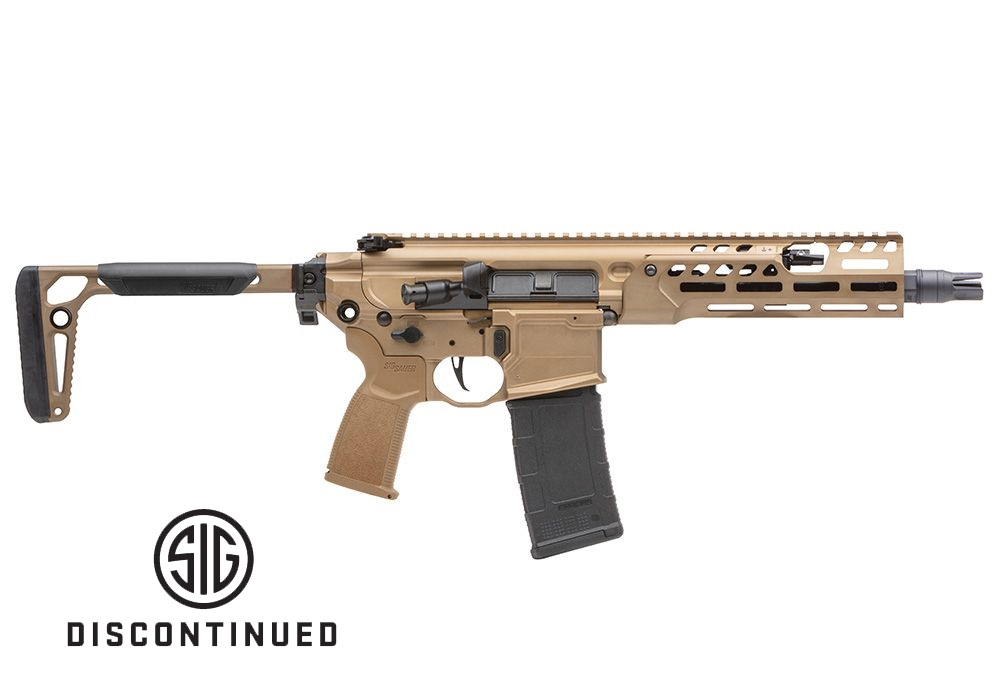
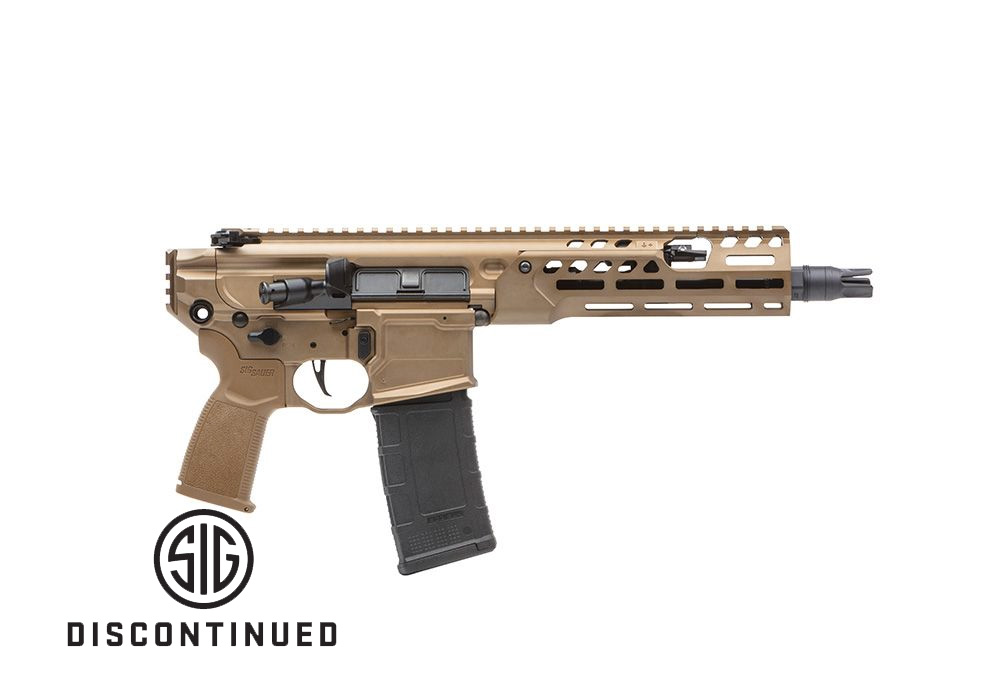
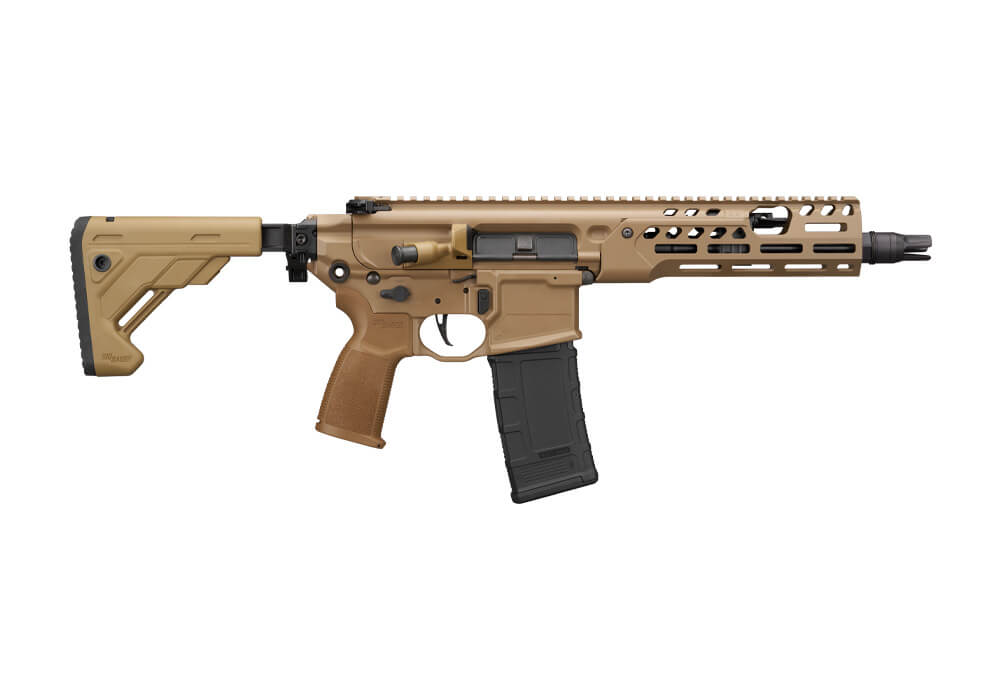
Compact 300 Blackout SBRs are built for shooters who value a short, balanced platform without giving up the versatility of a centerfire rifle cartridge. With barrel lengths commonly ranging from approximately 6 to 9 inches, these rifles are notably maneuverable in confined spaces, inside vehicles, around property, or on a crowded range. The .300 Blackout cartridge was designed to perform efficiently from shorter barrels, making it a natural match for compact rifle configurations. While exact performance varies by barrel length, ammunition, and firearm design, many loads deliver useful performance from a compact package that would be less practical with other rifle cartridges. A shorter barrel can also help offset the added length of a suppressor, keeping the overall setup more manageable than a suppressed rifle with a traditional-length barrel. These characteristics make compact .300 Blackout SBRs appealing to experienced recreational shooters, preparedness-minded owners, and professionals whose work requires a compact, capable rifle platform. They are also a thoughtful gift for a knowledgeable firearm enthusiast, provided the recipient is legally eligible and the transfer is completed through the proper process. Because an SBR is regulated under federal law and may be restricted by state or local law, buyers should confirm applicable requirements before placing an order. Depending on the configuration and jurisdiction, acquiring an SBR may involve registration, approval, a tax payment, and transfer through a properly licensed dealer. A gift should never be treated as an informal handoff; the recipient must be legally permitted to possess the firearm, and all required transfer procedures must be followed.
A major advantage of the .300 Blackout chambering is its ability to use both subsonic and supersonic ammunition. Subsonic loads generally use heavier projectiles and lower velocities, and they are often selected for use with a compatible suppressor to reduce the firearm’s sound signature. A suppressor does not make a firearm silent, and shooters should continue to use appropriate hearing protection while following all range and legal requirements. Supersonic loads typically provide a flatter trajectory and greater velocity, making them useful when a shooter needs more reach or a different ballistic profile. This two-load flexibility allows one compact rifle to serve different purposes, but it also makes ammunition selection especially important. Buyers should verify that the firearm cycles reliably with the intended loads, confirm the manufacturer’s recommendations, and understand that subsonic ammunition may not function reliably in every configuration, particularly when suppressed or unsuppressed conditions change. Gas system design, barrel length, projectile weight, and suppressor backpressure can all influence cycling. Some platforms offer adjustable gas systems that allow more refined tuning across different ammunition types, while others are configured for straightforward operation with a narrower range of loads. A suitable twist rate helps stabilize the heavy projectiles frequently associated with .300 Blackout, and a muzzle device or suppressor mount should match the intended setup. Shooters considering a suppressor should select one rated for the cartridge and understand that the suppressor requires its own legal purchase and registration process. Subsonic and supersonic ammunition should be clearly separated and identified in storage, and .300 Blackout cartridges should never be confused with ammunition for a different chambering.
When comparing compact 300 Blackout SBRs, start with the intended role and the complete configuration rather than looking only at barrel length. A 6-inch barrel may offer exceptional compactness, while a 7- to 9-inch barrel can provide a practical balance of maneuverability, velocity, and projectile stabilization for many users. The stock, handguard, controls, optic mounting surface, sling attachment points, and overall weight all affect how naturally the rifle handles. A compact platform should remain easy to control without feeling excessively front-heavy, particularly when paired with a suppressor, weapon light, or magnified optic. Buyers should also consider whether the rifle uses a familiar operating system, whether replacement parts and magazines are readily available, and whether the controls suit their training habits. A clearly marked .300 Blackout magazine can help prevent ammunition mix-ups when multiple rifle calibers are stored together. For range use, a compact red-dot optic may complement the rifle’s close-range role, while a low-power variable optic may suit shooters who want more aiming flexibility without adding unnecessary bulk. Regardless of configuration, every owner should read the operating manual, verify the chambering, practice safe loading and unloading, and establish a secure storage plan that keeps the firearm and ammunition away from unauthorized users. Those who prefer a similarly compact platform that is not configured as a rifle can also explore Compact 300 Blackout Pistols. During the cooler months, a compact .300 Blackout SBR can be especially convenient for range sessions when layered clothing, vehicle travel, or gear changes make a shorter setup more comfortable, but the fundamentals remain the same in every season: confirm the law, choose compatible ammunition, use the right accessories, and train with the exact configuration you intend to operate.