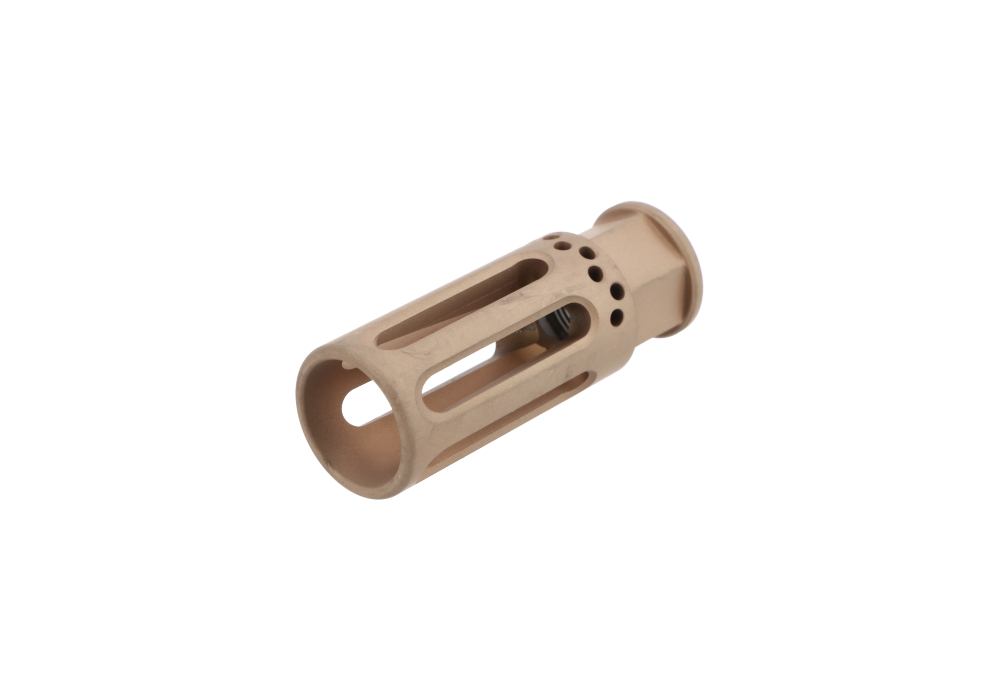
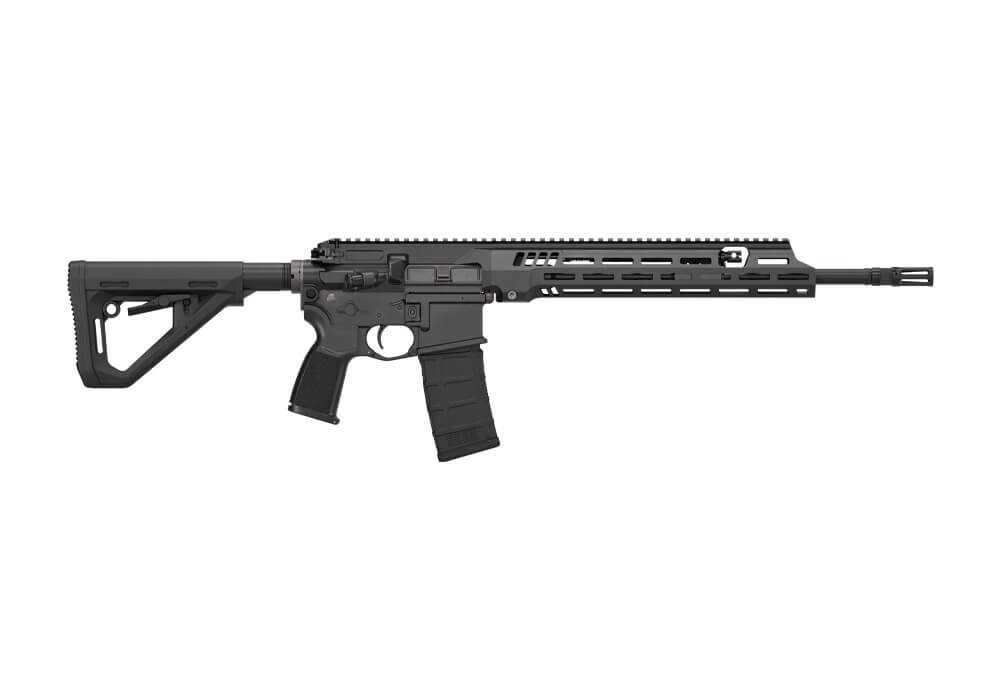
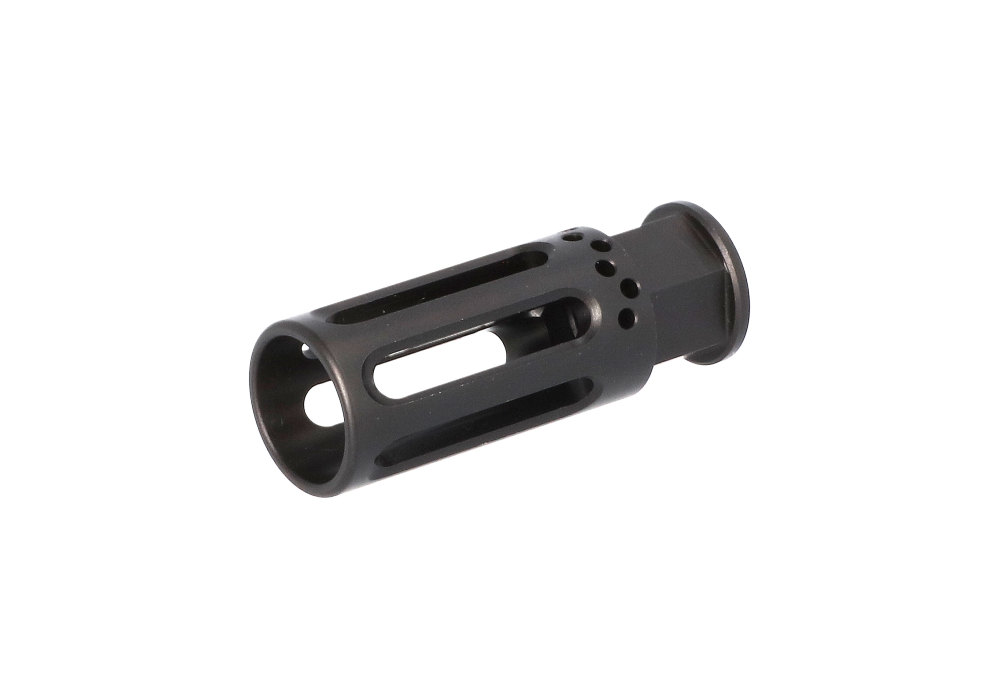
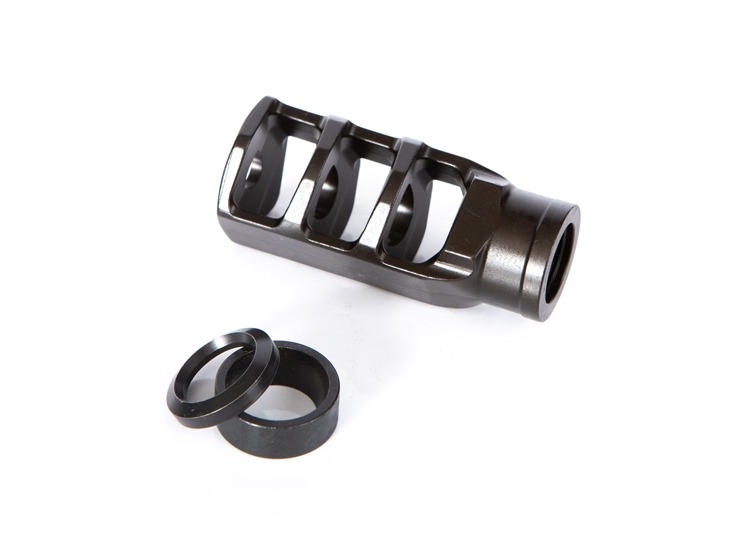
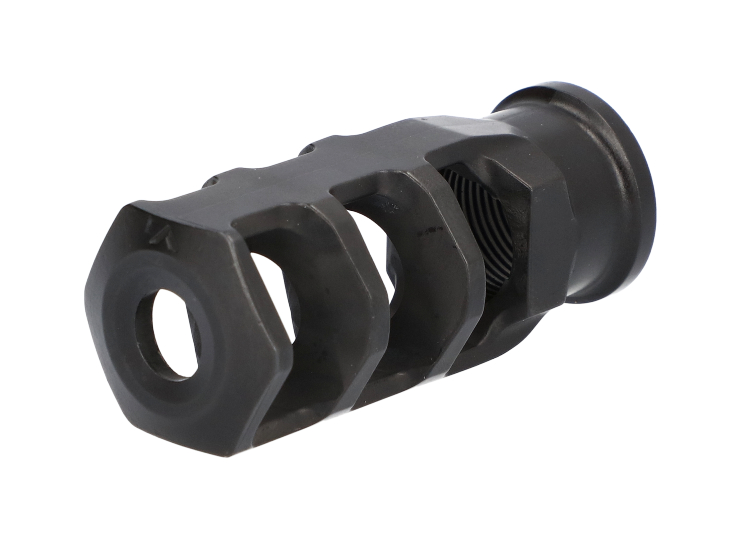
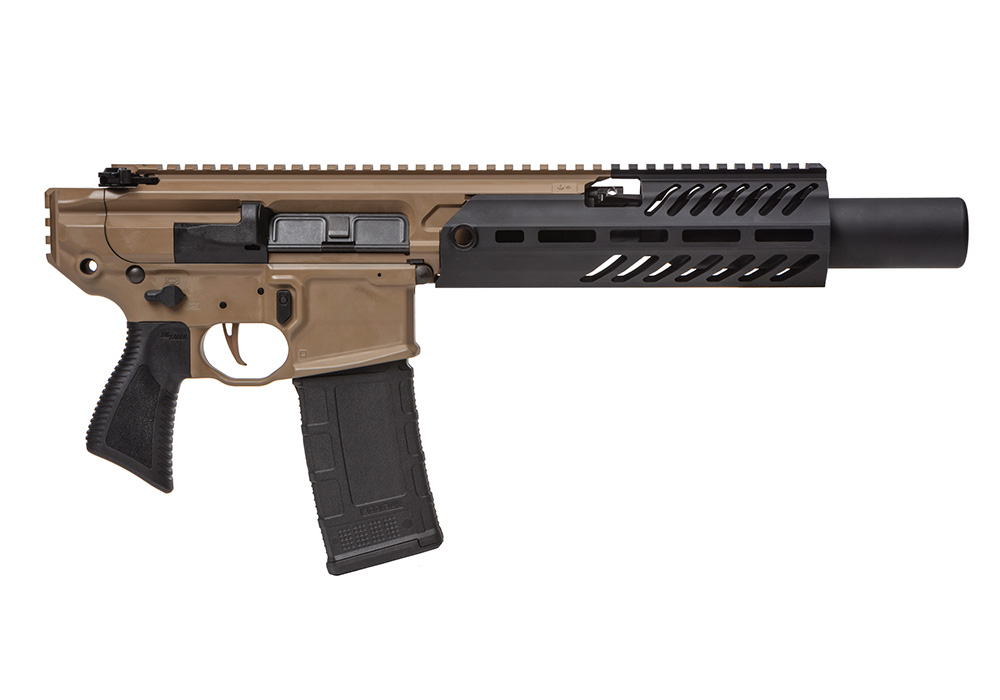
Rifle compensators and flash hiders are muzzle devices with different primary purposes: a compensator redirects propellant gases to help limit muzzle rise, while a flash hider reduces the visible flash produced as gases exit the barrel. Hybrid designs combine elements of both, offering a balance rather than necessarily matching the performance of a dedicated device in either role. These differences matter because two accessories with similar dimensions can create noticeably different shooting experiences. A compensator can help keep the muzzle steadier during a controlled string of shots, supporting a more consistent sight picture between shots. A flash hider emphasizes reduced visible muzzle flash, which can otherwise distract the shooter or briefly interfere with vision in low-light settings. Neither function should be confused with sound suppression. A flash hider is not a suppressor, and a compensator may direct more blast toward neighboring shooting positions even when the rifle feels easier to control. Muzzle brakes, another related category, primarily address rearward recoil; some devices combine braking and compensation, so the stated function deserves more attention than appearance alone. Barrel length, ammunition, firearm configuration, and device geometry all influence the result, and no muzzle accessory performs identically on every rifle. For a range-focused rifle, reduced muzzle movement may be a useful priority. For a rifle intended for hunting where permitted, overall length, weight, flash characteristics, and the effect on nearby companions may carry greater importance. Hybrid devices can appeal to shooters seeking several benefits from one accessory, provided their expectations reflect the compromises involved. External shape also has practical consequences: a long profile adds length at the muzzle, while a heavier design changes the rifle’s balance. Those details become noticeable when carrying a rifle between shooting stations, settling it on a supported rest, or fitting it into a protective case. A suitable choice brings the device’s intended function into line with the rifle’s role rather than treating every muzzle attachment as interchangeable.
Fit is the foundation of a dependable rifle muzzle device. Compatibility involves more than whether an accessory looks appropriate for a particular firearm. The manufacturer’s specified caliber range, bore clearance, barrel thread diameter and pitch, and mounting requirements all need to match the rifle. Barrel contours and the surfaces used to support the device can also affect suitability. An accessory described for one platform should not be assumed to fit another simply because their barrels appear similar. Manufacturer documentation and evaluation by a qualified gunsmith provide a sound basis for confirming compatibility, especially when the rifle has an unfamiliar barrel configuration or an existing muzzle attachment. If a device also serves as a suppressor mount, that function introduces separate requirements: the suppressor interface must be explicitly compatible, and resemblance between mounting systems is not proof of interchangeability. These details belong alongside material and construction quality when comparing rifle compensators and flash hiders. Hardened alloy steel and stainless steel are common material choices because muzzle accessories encounter heat, pressure, fouling, and repeated handling. Their properties differ, however, and corrosion resistance depends on the alloy, surface treatment, care, and exposure rather than a material name alone. Protective finishes can help resist surface wear and corrosion, but they do not eliminate the need for routine inspection. Edges, openings, and exposed projections should remain free of damage that could affect function or interfere with normal handling. Open-ended and enclosed profiles also differ in how they interact with cases and other gear, an everyday consideration that can be easy to overlook in a photograph. Shoppers whose main priority is reducing visible muzzle flash can explore Barrel Flash Hiders while comparing each design’s stated compatibility and intended purpose. Clear specifications are more useful than broad performance claims, particularly when evaluating dimensions, finish, mounting provisions, and any restrictions associated with the firearm or its intended use.
The most useful compensator or flash hider is one that suits the places a rifle will be used and the people who will be nearby. Recreational target shooters, competition participants, and hunters may value different characteristics, even when their rifles share similar dimensions. At a covered firing line, a device that redirects gases laterally can produce a sharper experience for the shooter in the next lane; that consideration remains relevant even if muzzle movement is reduced. During organized competition, equipment rules may limit device dimensions or configurations, so the applicable rules deserve attention before an accessory becomes part of a rifle setup. For hunting, local firearm requirements and the practical demands of carrying the rifle matter alongside performance. Added muzzle length can affect handling around a blind, a supported shooting position, or a storage case, while extra weight at the front can change how the rifle settles during deliberate aiming. Hearing and eye protection remain essential regardless of the device selected, and reduced visible flash should never be interpreted as reduced sound exposure. Care should follow the firearm and accessory manufacturers’ instructions, with inspection performed only after confirming that the firearm is unloaded and following safe handling practices. Carbon residue, debris, finish wear, and corrosion can accumulate around a muzzle accessory, particularly where openings and recessed surfaces are difficult to see. Suitable cleaning products and nonabrasive tools help protect finishes; aggressive scraping or unapproved chemicals can damage surfaces without improving function. Any looseness, visible damage, suspected obstruction, or change in operation warrants attention from a qualified gunsmith rather than continued use. For an experienced rifle owner receiving an accessory as a gift, confirmed compatibility and a clear understanding of personal preferences matter more than an eye-catching profile. A familiar rifle may already have a setup chosen for a particular range, event, or purpose. Across these uses, accurate fit, durable materials, manageable dimensions, and realistic performance expectations give rifle muzzle devices their practical value. A compensator, flash hider, or hybrid should complement a well-maintained firearm and responsible shooting habits, not substitute for them.