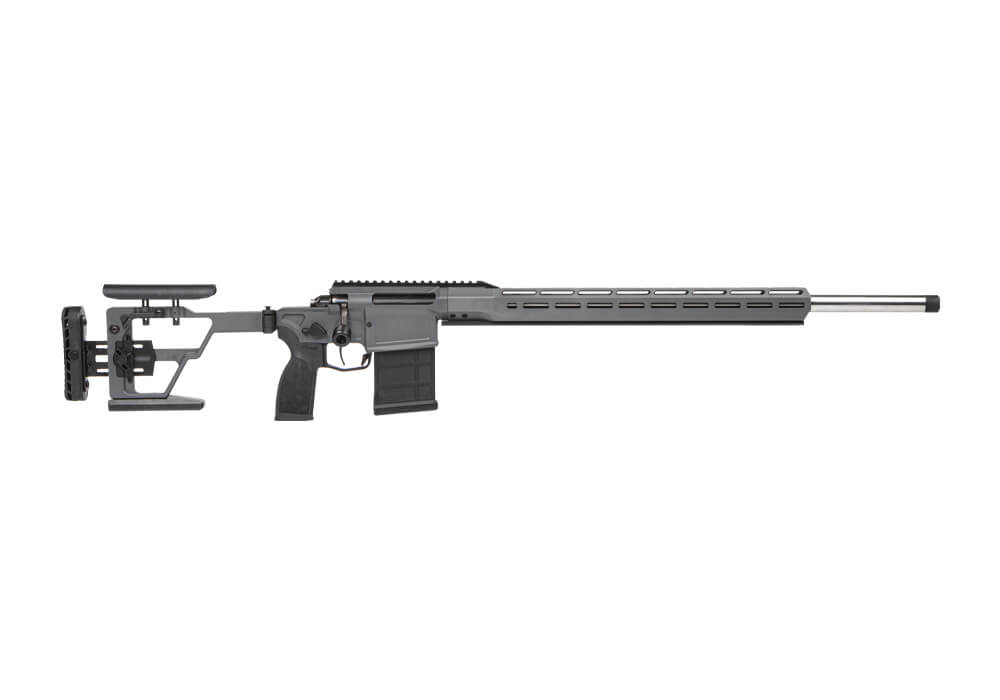
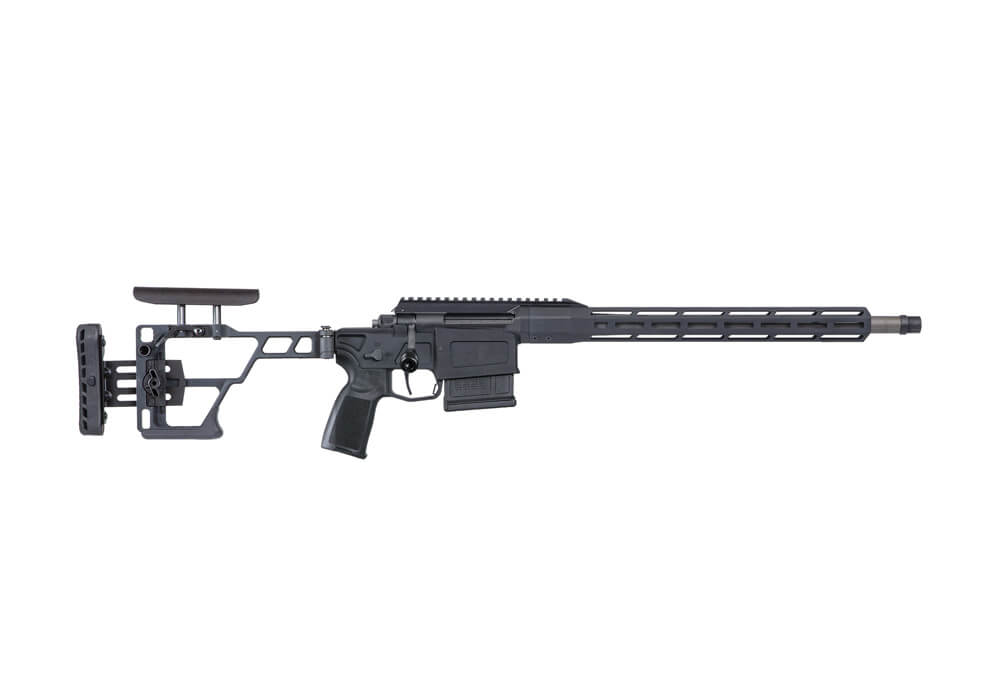
Creedmoor rounds are centerfire rifle cartridges associated with precision target shooting, long-range competition, and hunting. The name most often refers to 6.5 Creedmoor, a cartridge introduced in 2007 that uses bullets measuring .264 inch in diameter. Its appeal comes from a useful balance: streamlined bullets, manageable recoil in an appropriately configured rifle, and performance suited to both paper targets and hunting applications. Many rifles chambered for 6.5 Creedmoor use short-action designs, giving shooters a practical platform without requiring a longer cartridge. The related 6mm Creedmoor is a separate chambering, not an interchangeable version of the same ammunition. Exact cartridge markings on the rifle and ammunition packaging matter more than a shared family name. Within 6.5 Creedmoor ammunition, bullet weight and construction help distinguish loads intended for different purposes. Match loads often feature bullets in roughly the 130- to 147-grain range, although other weights exist. Their elongated profiles can provide high ballistic coefficients, a measure of how effectively a projectile overcomes air resistance. That aerodynamic efficiency helps bullets retain velocity and resist wind deflection, but it does not remove the need to understand distance, conditions, and the limits of the rifle-and-ammunition combination. Recoil is often described as moderate compared with larger hunting cartridges, though rifle weight, stock fit, and individual sensitivity influence the experience. For someone spending a full session evaluating groups on paper, that balance can make repeated practice more comfortable. For a competitor, consistent ammunition supports repeatable results across a course of fire. For a hunter, the same cartridge can offer a suitable option for deer and similar-size game when paired with an appropriate hunting projectile. The caliber name establishes the cartridge family; the details on the box establish what a particular load is intended to do. A familiar bullet weight alone does not establish suitability, and two loads with similar specifications can perform differently in the same rifle. Those distinctions give Creedmoor ammunition its versatility while keeping cartridge fit and intended use central to the selection.
The construction of Creedmoor ammunition matters as much as the numbers printed beside its name. A typical factory cartridge combines a metallic case, primer, propellant, and bullet, with brass cases common across target and hunting loads. Many projectiles use a lead core surrounded by a copper-alloy jacket, while some hunting designs use solid copper or another lead-free construction. Each approach serves a different purpose, and material choice can affect bullet length, expansion characteristics, and suitability for hunting areas with projectile restrictions. In match ammunition, closely controlled bullet dimensions, jacket consistency, and uniform assembly help support precision. Boat-tail profiles and carefully shaped tips are common features, but no single feature guarantees a tight group in every rifle. A rifle may group one load more closely than another of the same weight because barrel characteristics and other variables influence the result. Published velocity also deserves context: it reflects a particular test setup, and a different barrel length can produce a different result. On the range, a useful load is one that performs consistently in the actual rifle rather than simply carrying the highest velocity figure. Hunting rounds place additional emphasis on terminal performance. Bonded-core, polymer-tipped, and monolithic bullets can be engineered to expand while retaining enough integrity for penetration, although their behavior differs by design and impact velocity. A target projectile should not be assumed suitable for hunting merely because it is accurate. Matching the bullet to the animal, expected distance, and applicable regulations is more meaningful than treating all Creedmoor rounds as equivalent. A deer hunter walking to a stand and a target shooter settling behind a bench may share the same chambering, yet need different projectile characteristics. Bullet weight is part of that distinction, not a complete answer by itself. Heavier bullets are not automatically better for every purpose, and lighter bullets are not automatically less precise. Manufacturer specifications help clarify intended application, while actual results in the rifle establish whether the combination meets the shooter’s needs.
Fit, condition, and care remain important long after Creedmoor ammunition leaves its packaging. Compatibility starts with the complete cartridge designation specified for the firearm, not the diameter of the bullet alone. A rifle chambered for 6.5 Creedmoor requires ammunition identified for that chambering; cartridges with similar-looking cases or related names are not substitutes. Firearm manufacturer guidance also matters for action compatibility and any restrictions on ammunition type. The separate 30 06 Rounds collection concerns a different cartridge family and requires a rifle chambered accordingly. Keeping different calibers clearly separated preserves that distinction at home and at the range. Original packaging is useful because it retains the cartridge designation, bullet weight, intended application, and lot information together. Lot identification can also help a regular shooter keep track of ammunition used during practice or competition. Proper storage protects the cartridge components from corrosion, contamination, and physical damage. A clean, dry, secure location, away from children and unauthorized users, supports both ammunition care and responsible ownership. Packaging or protective containers should keep rounds from being crushed or exposed to cleaning chemicals and oils. Visible corrosion, damaged cases, or loose or visibly displaced bullets are reasons to set ammunition aside and seek manufacturer guidance rather than assume it remains suitable. Factory-loaded cartridges are complete assemblies, and altering their components is not part of routine care. For shooters who use Creedmoor rounds regularly, consistency in ammunition selection can make recorded range results more meaningful. Changing bullet design or load specifications may change the point of impact, even when the caliber and bullet weight remain the same. Hunters likewise benefit from confirming that their selected hunting load performs as expected before relying on it in the field. Quality ammunition supports the task, but it does not replace a sound rifle, suitable optics, responsible handling, or realistic expectations. Creedmoor rounds earn their place through that combination of cartridge compatibility, purposeful bullet design, and dependable performance suited to the application.