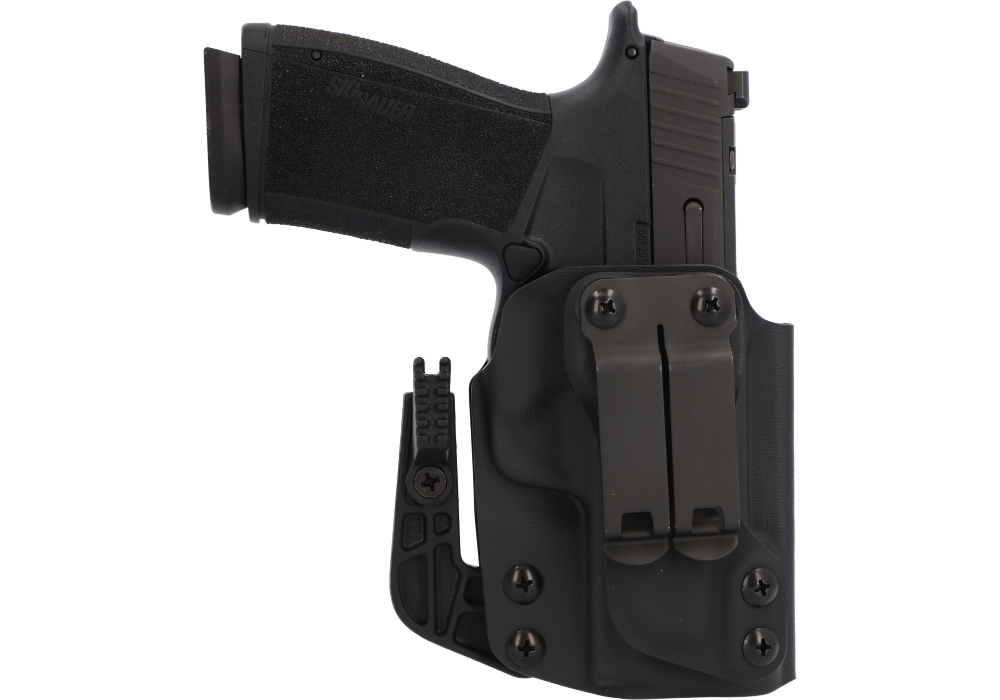
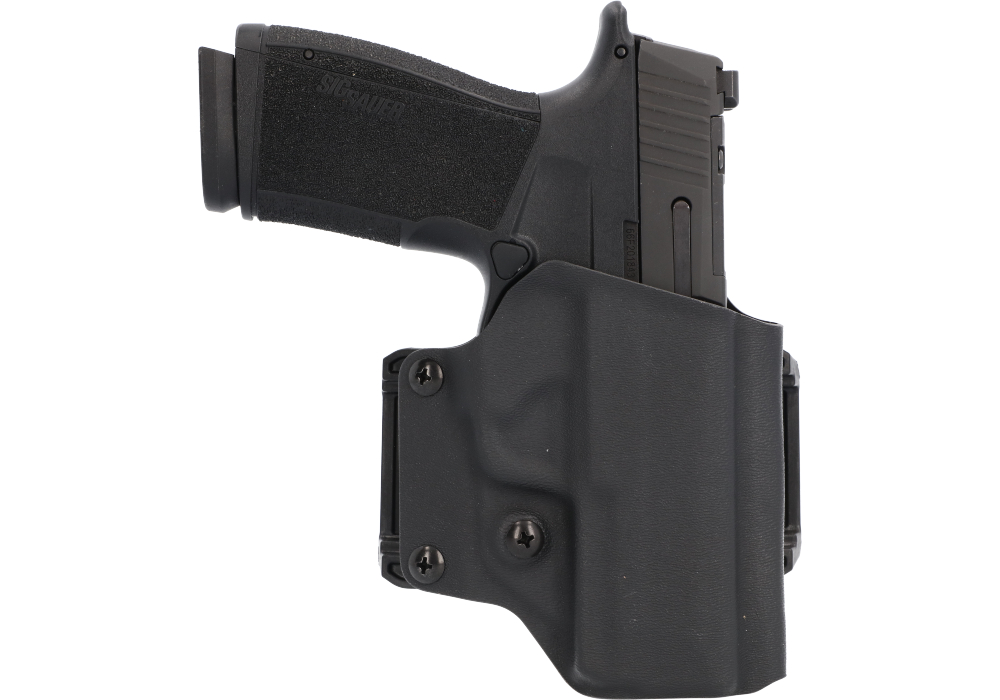
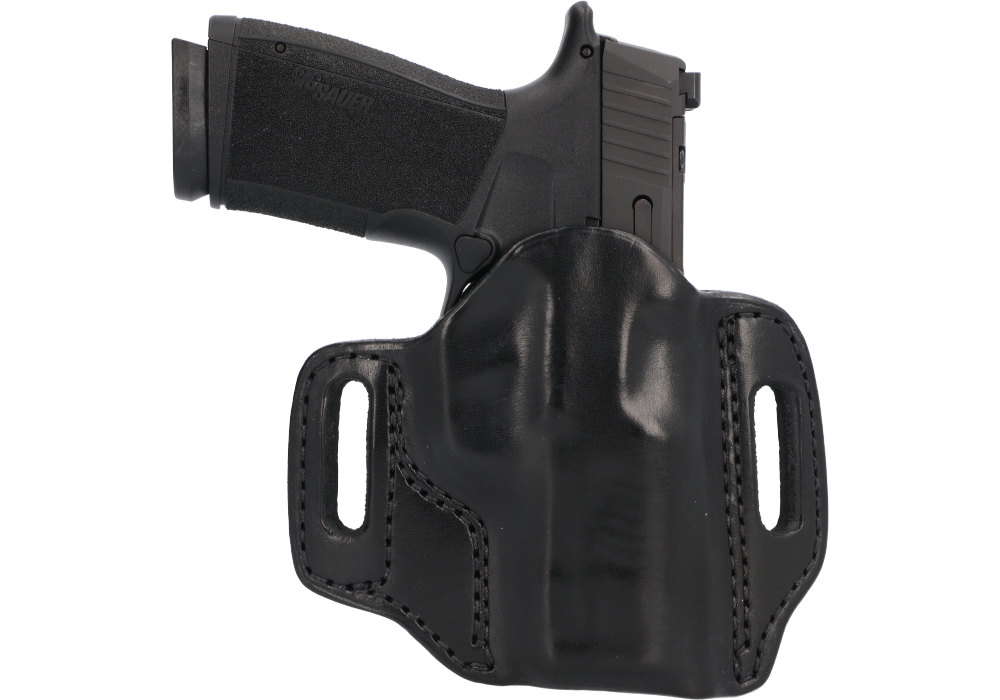
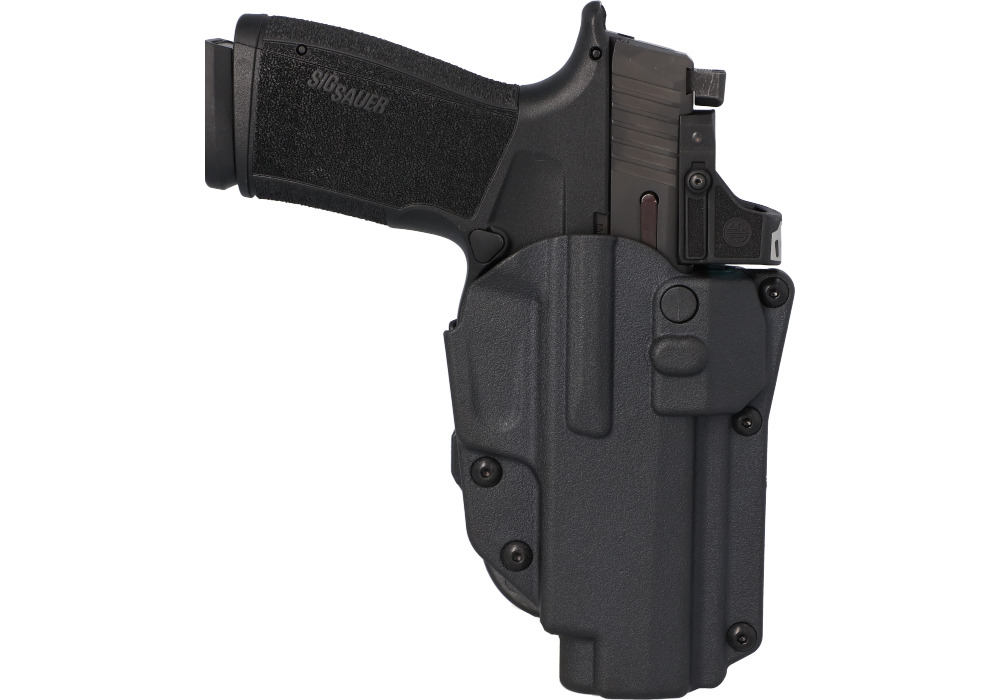
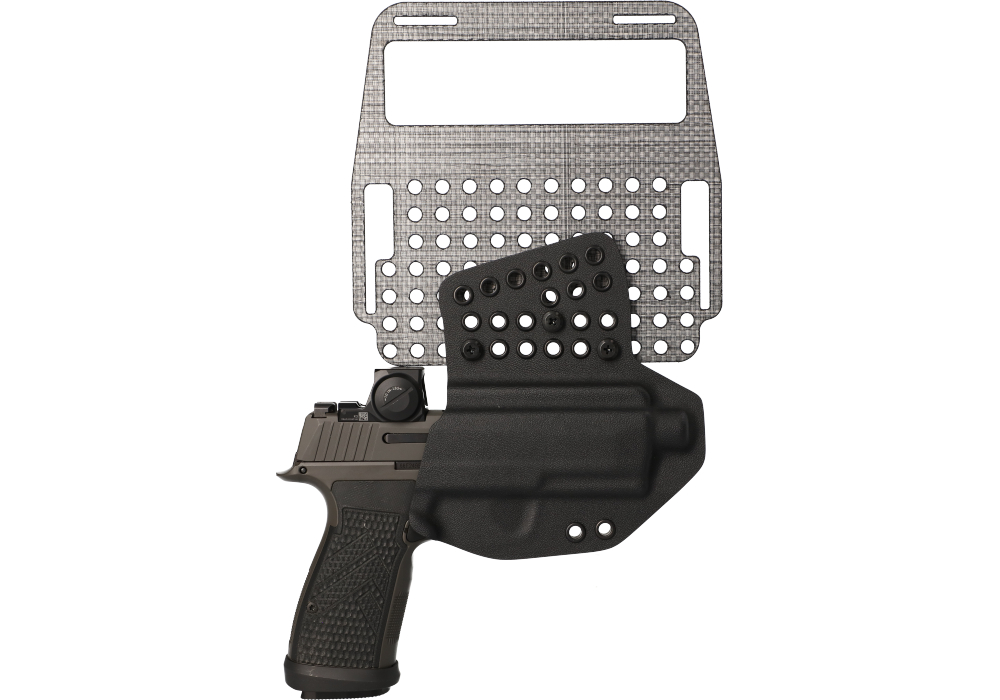
Easy reholstering holsters for the P365 XMacro are designed around one practical priority: returning the pistol to its holster smoothly, securely, and with minimal manipulation after the draw. A rigid holster body made from molded polymer or thermoplastic material helps keep the mouth open when the pistol is removed, unlike soft materials that may fold inward and require the support hand to reshape the opening. That open-mouth design supports one-handed reholstering when appropriate, allowing the user to guide the unloaded or safely handled pistol straight down into position while keeping the trigger finger indexed along the frame. For many carriers, the best fit is a holster with positive retention that produces a distinct click when the pistol is fully seated. Adjustable retention hardware can fine-tune the amount of resistance, helping the draw feel deliberate without making reholstering unnecessarily difficult. The right setting should hold the P365 XMacro securely during normal movement while still allowing a controlled return to the holster. A rigid sight channel, smooth interior, and carefully shaped edges can also reduce snagging as the slide and sights pass through the opening. These details matter during everyday use, whether the holster is worn around the house, during a range session, while working outdoors, or under layers of clothing during cooler months.
Fit and configuration are central to the reholstering experience. The P365 XMacro may be carried with a compact red dot optic, a weapon-mounted light, or other compatible accessories, and a holster should be molded for the exact setup rather than relying on a general shape. An optic-ready design provides a clear path over the rear of the slide, while a light-bearing model must match the specific light profile so the pistol does not bind or rock as it enters. Flared or relieved openings can help guide the firearm into place and prevent the optic or light from catching on the holster body. Inside-the-waistband options are often selected for concealment, with adjustable ride height, cant, and belt attachment points helping position the pistol comfortably against the body. Outside-the-waistband options may provide a more open presentation, easier access to the grip, and a stable platform for range use, training, duty-style applications, or outdoor carry. A secure belt connection is important in either position; a holster that shifts, tilts, or pulls away from the body can make both drawing and reholstering less consistent. Those comparing carry angles may also find value in Adjustable Angle Holsters for P365X, particularly when clothing, body shape, belt position, or seated comfort calls for a more personalized orientation.
Choosing among easy reholstering holsters for P365 XMacro also means considering daily routine, clothing, training habits, and the person who will use the holster. Someone who spends long hours seated may prefer an inside-the-waistband design with a low-profile clip and adjustable cant, while a person who frequently moves between vehicles, works outside, or trains at the range may favor an outside-the-waistband setup with a more substantial belt attachment. During the cooler months, heavier shirts, jackets, and layered clothing can change how the grip clears garments and how easily the holster can be accessed, making a consistent carry position especially valuable. Retention should be checked with the pistol unloaded and the holster mounted as intended, confirming that the firearm remains secure during normal movement and that the opening stays unobstructed. Before live-fire practice, users should rehearse the draw and return sequence slowly, keeping the trigger finger straight and clearing clothing or other material from the holster mouth. A holster with an audible re-locking point can make it easier to confirm that the pistol is fully seated without looking down. These holsters can also make a thoughtful gift for a P365 XMacro owner who is refining a carry setup, preparing for structured training, or replacing a worn soft holster with a more supportive design. The most useful choice is one that matches the recipient’s exact pistol configuration, preferred carry position, belt system, and optic or light setup, creating a dependable fit that feels natural through everyday movement.