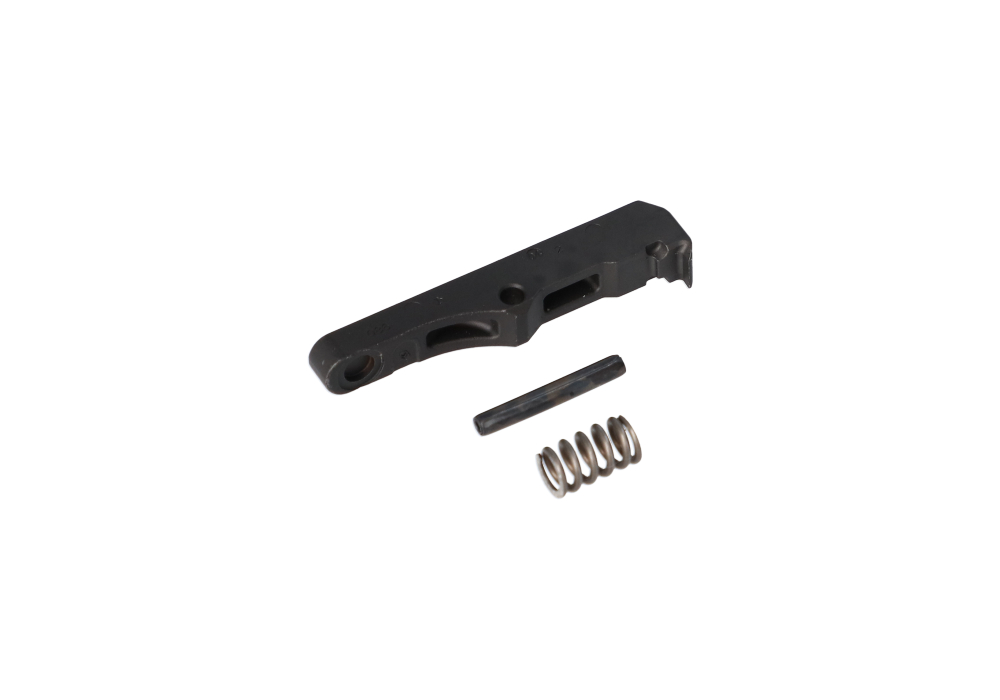
Ejector spring kits are compact firearm replacement components designed to help maintain consistent, dependable cartridge ejection in compatible pistol and rifle platforms. A typical kit may include an ejector spring along with related pieces such as a pin, plunger, or other small hardware needed to restore the ejector assembly to proper working order. Although these parts are easy to overlook, they perform an important role during every firing cycle: the extractor draws the spent casing from the chamber, and the ejector uses spring tension to push that casing clear of the ejection port. When the spring is worn, damaged, incorrectly sized, or weakened through extended use, ejection may become inconsistent. Brass can dribble out, strike the firearm, fail to clear the port, or remain partially in the action. Replacing the spring and associated components with a properly matched kit can help support smooth cycling and reliable operation, particularly on firearms that see regular range use, training, competition, duty, or field carry. These kits are commonly selected for maintenance on modern semi-automatic handguns and rifles, including platforms that use an ejector, spring, and retaining pin within the slide, bolt, or receiver assembly. Because ejector dimensions and installation methods vary widely, compatibility should always be confirmed against the exact firearm model, configuration, and applicable manufacturer specifications before ordering. A spring that appears similar may not provide the correct length, diameter, tension, or fit, and even a small mismatch can affect function.
When choosing an ejector spring kit, start with the firearm’s complete model designation and inspect the existing assembly if the firearm is unloaded and safely prepared for maintenance. Compare the replacement kit with the original components, paying attention to the spring’s overall dimensions, the ejector’s shape, and the type of retaining hardware used. Some owners choose a standard replacement kit to return a well-maintained firearm to its original operating condition, while others may seek an upgraded or heavy-duty spring for a frequently used platform, provided the replacement is intended for that specific application. An ejector spring is not a universal accessory, and a stronger spring is not automatically a better choice; the ejector, extractor, slide or bolt, ammunition, and overall action must work together as a balanced system. It is also wise to examine related parts for peening, deformation, corrosion, fouling, or unusual wear rather than replacing only the spring when the complete assembly shows damage. Small components can be difficult to handle, especially when spring tension causes them to move unexpectedly during disassembly. Use appropriate tools, eye protection, and a clean, well-lit work area where tiny pins and plungers can be located easily if dropped. Owners who are not familiar with firearm disassembly should use a qualified gunsmith or trained armorer. After installation, function checks should be performed according to the firearm manufacturer’s instructions, followed by responsible testing with suitable ammunition at an approved range. Reliable ejection is one part of overall firearm function, so any persistent malfunction should be evaluated by a qualified professional rather than corrected through trial-and-error part changes.
Ejector spring kits are practical additions to a firearm maintenance plan because they take up little storage space and can help keep commonly used replacement components organized. A range regular may keep a compatible kit in a cleaning or spare-parts case alongside other service items, while a recreational owner may appreciate having the correct components available before a worn spring interrupts a scheduled training session during the cooler months. They can also be a thoughtful gift for a responsible firearm owner who enjoys careful maintenance, builds a dedicated repair kit, or spends time tuning and inspecting a favorite platform. For anyone assembling a spare-parts drawer, it is helpful to label each kit with the firearm model and keep springs, pins, and plungers together in a small compartment so similar-looking pieces are not mixed. Storage in a dry environment helps protect metal components from moisture and surface corrosion, while a periodic inspection can reveal discoloration, distortion, or loss of tension before a part is needed. Buyers who are unsure which configuration is appropriate can narrow their search by identifying the firearm type, exact model, generation, caliber, and whether the assembly is intended as a direct replacement or a performance-oriented service part. For related options, browse Firearm Coiled Ejector Pin Kits and review the listed compatibility details carefully. With the correct fit and professional installation when needed, these small components can support clean extraction, positive ejection, and dependable cycling across routine maintenance and regular use.