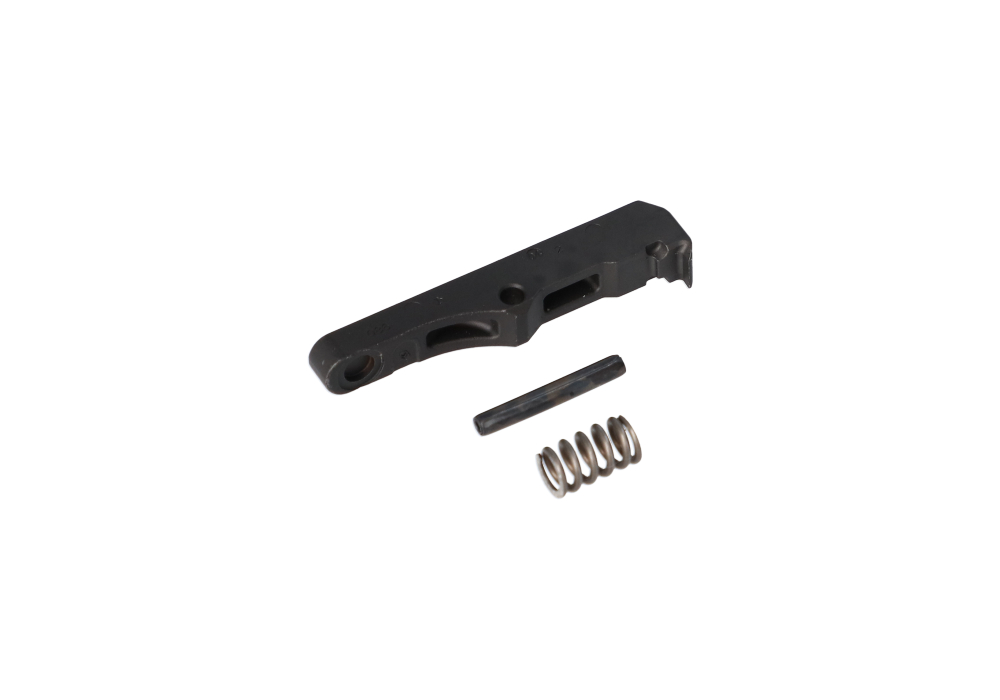
Extractor pin kits for military firearms group small retention components used in the extractor assemblies of compatible service rifles, pistols, and related platforms. Depending on the firearm’s design, an extractor pin retains the extractor within a bolt or slide and may also serve as its pivot. The extractor engages the cartridge case rim and helps withdraw the case from the chamber as the action cycles; the pin supports that function by keeping the assembly properly located. Kit contents vary, so an extractor pin kit should not automatically be understood to include every component associated with extraction. Some packages contain pins alone, while others include compatible springs, plungers, inserts, or additional retention hardware. The component list and stated application are more useful than a broad category name when evaluating what belongs with a particular firearm. These parts serve a practical role in routine armorer support, professional gunsmithing, and the upkeep of compatible privately owned firearms, including certain military-surplus models. Their small size can obscure how specific their fit requirements are: two pins that look nearly identical in a compartment tray may have different dimensions or retention features. A military designation, shared platform ancestry, or similar external appearance does not establish interchangeability. The exact model, production variation, and bolt or slide configuration remain important reference points. For an owner maintaining a service-pattern rifle or a gunsmith organizing parts for several firearm families, clearly identified components help keep those distinctions visible. Extractor pin kits are best understood as model-specific maintenance parts rather than universal accessories or performance upgrades. A suitable replacement preserves the intended relationship among the extractor and its supporting components; it does not, by itself, establish that the entire firearm is ready for use. That distinction is especially relevant with older firearms whose service history, replacement assemblies, or previous alterations may not be fully documented.
Material quality and dimensional consistency are central considerations for extractor retention hardware. Steel is common because these components must withstand repeated mechanical stress within a compact assembly, but the word “steel” alone does not describe a pin’s suitability. Alloy selection, heat treatment, surface finish, and manufacturing tolerances can all influence wear resistance and long-term durability. Where those details are provided, they should be considered alongside the firearm manufacturer’s requirements rather than treated as independent signs of an upgrade. Hardness must suit the application; a harder component is not necessarily a better match for the surrounding parts. Likewise, a dark finish or polished surface cannot confirm the underlying material specification. Protective finishes may help resist corrosion, but they do not eliminate the need for appropriate care. Fit involves more than overall length and diameter, since the pin’s geometry and retention method must correspond to the assembly it serves. Solid pins and other pin designs should not be treated as interchangeable merely because they occupy a similar position. Supporting components deserve the same attention. Springs, plungers, and inserts are not universal across firearm families, and their inclusion in a package does not establish compatibility with every variation of a platform. Descriptions such as service-grade or military-pattern provide context, but documented specifications offer a firmer basis for selection. Even a stated military specification should identify a relevant standard before it is taken as evidence of a particular requirement. For shoppers comparing related categories, Extractor Pin Plus for Gunsmithing Kits provides another focused reference point for extractor-related hardware, with compatibility still governed by the application listed for each component. Clear contents, identifiable part references, and precise fit information matter more than an expansive description. For a professional working across several configurations, that clarity helps distinguish an appropriate service part from a visually similar piece intended for a different assembly. For an individual owner, it supports a more deliberate choice without relying on assumptions about shared names or appearances.
Care and organization are equally important once small firearm components become part of a maintenance supply. Pins and associated hardware benefit from clean, labeled storage that protects their surfaces and keeps different applications separate. A shallow compartment containing several nearly identical pins can quickly become difficult to interpret if the original packaging and identification are lost. Retaining those references helps preserve useful information about intended fit and package contents, particularly when more than one firearm variant is involved. Storage should also protect steel components from moisture and corrosive residue; finish alone is not a substitute for suitable handling and the care specified by the manufacturer. During routine professional inspection, visible deformation, corrosion, or unusual wear can warrant further evaluation, but appearance cannot establish the condition of every working surface or supporting part. An extraction problem may involve factors beyond the retention pin, so a replacement kit should not be presented as a guaranteed remedy for every cycling concern. Firearms with suspected mechanical problems should remain out of use pending assessment by a qualified gunsmith or armorer. Installation and service decisions belong within the manufacturer’s procedures and the technician’s qualifications, particularly where a firearm’s configuration or history is uncertain. For military-surplus collectors, the priority may include preserving the correct configuration as well as functional condition. For range users and owners of service-pattern firearms, the emphasis is often on documented compatibility and consistent maintenance records. Professional armorers may also value packaging that keeps related components identifiable throughout storage and service work. In each setting, durability depends on the whole application: a suitable material, correct dimensions, compatible supporting hardware, and appropriate care all contribute. No small-parts kit replaces inspection of the complete assembly or the firearm’s broader maintenance requirements. The most useful extractor pin kits bring clarity to a narrow but important maintenance need, providing clearly specified components for the intended platform without suggesting that similar-looking hardware offers the same fit. That practical focus supports informed selection for firearms whose upkeep calls for precision rather than guesswork.