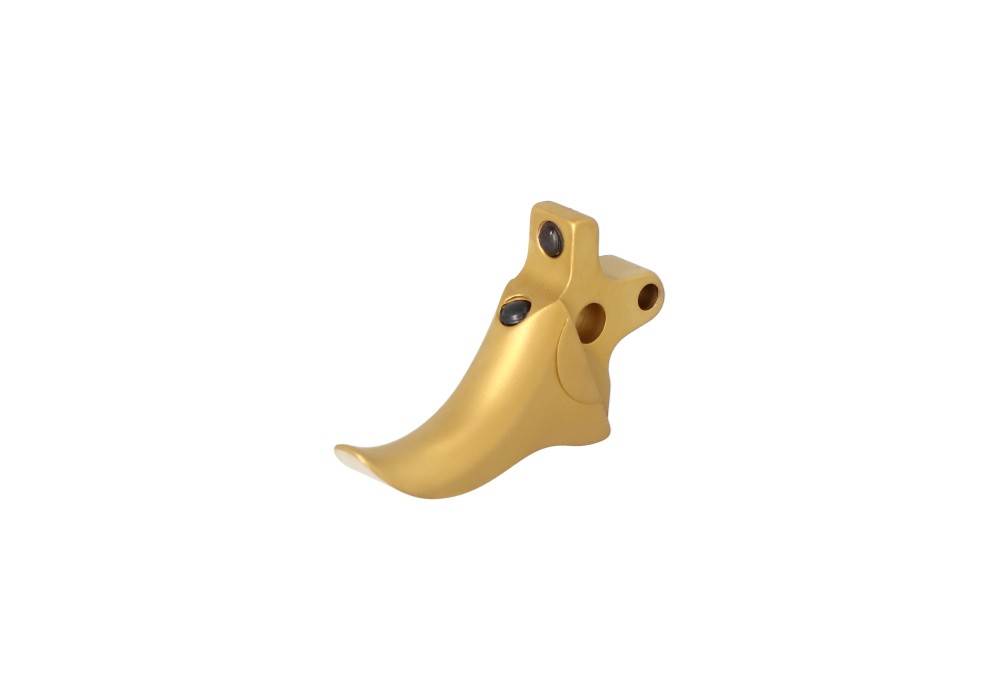
Firearm triggers are the mechanical controls that initiate a firearm’s firing sequence through its internal fire-control mechanism. The visible part touched by the finger is often called the trigger shoe, while a trigger assembly may include additional components that interact with the hammer, striker, or sear. Those distinctions matter when comparing replacement firearm triggers: a different shoe changes the contact surface, while a complete assembly may involve more of the mechanism. Trigger terminology also describes several separate characteristics. A single-stage trigger has one principal stage of resistance before the mechanism releases, although some designs can still have initial movement. A two-stage trigger has an initial stage of travel followed by a distinct increase in resistance, commonly called the wall, before the final break. Neither design is universally better; each offers a different feel that may suit a particular firearm and intended use. Single-action and double-action describe mechanical functions rather than the number of pull stages. A single-action trigger releases a previously cocked hammer or firing mechanism, while a traditional double-action trigger both cocks and releases the hammer during one pull. Striker-fired mechanisms vary and should be evaluated according to their documented design rather than assumed to fit neatly into either category. Pull weight is the force needed to operate the trigger, take-up is movement before the main resistance, creep is perceptible movement under resistance before release, and reset is the return movement needed for the mechanism to engage for another pull. Together, these characteristics influence how a trigger feels, but none replaces proper fit or dependable operation. A clear, consistent feel can help a shooter recognize what the mechanism is doing without making an unusually light pull the goal. Understanding these terms makes it easier to compare descriptions accurately, whether the intended use is recreational target shooting, organized competition, hunting, or lawful personal protection.
Compatibility is the starting point for selecting any replacement trigger. Firearms that look similar can differ internally, and a shared platform name does not necessarily establish compatibility across every model, generation, frame configuration, or action type. The relevant details include the exact firearm designation, the manufacturer’s fit information, and whether the component is a trigger shoe, an individual mechanical part, or a larger assembly. A shoe intended to work with an existing mechanism is not equivalent to a complete replacement system, and neither should be assumed to retain every original operating characteristic without confirmation. Intended use deserves equal attention. A firearm carried for lawful personal protection calls for an appropriate balance of deliberate operation, reliability, and compatibility with its safety systems. A rifle used for carefully paced target shooting may call for a different feel than a handgun used in a structured competition, where equipment rules can also affect the choice. Hunters may value a clearly defined break, but dependable operation and an appropriate pull remain more important than an exceptionally low pull-weight figure. Trigger shape is another practical consideration. A curved shoe presents a rounded contact surface, while a flat shoe offers a straighter face; comfort depends on finger length, hand size, grip geometry, and the dimensions of the firearm. A broad face may distribute contact differently from a narrow one, and pronounced edges or surface texture can become more noticeable over a long practice session. Imagine an afternoon of deliberate shots at paper targets: a trigger that initially seems comfortable can feel different after repeated handling. Familiarity and consistency therefore matter more than appearance alone. Replacement triggers cannot compensate for an unsuitable grip, poor firearm fit, or inconsistent fundamentals, and advertised feel should not be treated as a guarantee of accuracy. The strongest comparison combines documented compatibility, suitable operating characteristics, and a contact surface that feels natural within the firearm’s existing design.
Materials, construction, and care help determine how a firearm trigger holds up over time. Hardened steel is commonly used for mechanical surfaces that bear repeated loads, while some designs use aluminum or other suitable materials for the trigger shoe. The material name alone does not establish quality: dimensions, heat treatment, surface finish, and the way components work together are equally important. A smooth external finish may be comfortable against the finger, but the condition and consistency of the internal engagement surfaces are essential to reliable operation. Protective finishes can help resist corrosion and routine wear, although no finish eliminates the need for appropriate care. Frequent range use, repeated handling, perspiration, and residue can all affect a firearm’s condition. Care should follow the firearm and component manufacturers’ directions, including their guidance on cleaning products and lubrication; excessive lubricant or unsuitable chemicals can create problems rather than solve them. Cleaning or inspection should take place only with the firearm unloaded and handled according to its safety instructions. Changes in trigger feel, visible damage, corrosion, or inconsistent operation warrant evaluation by a qualified gunsmith or authorized armorer instead of continued use or improvised correction. Professional installation and the prescribed safety checks are particularly important whenever replacement components interact with the firearm’s safety mechanisms. For purchases involving more than the trigger itself, Firearm Trigger System Parts Kits provide a related category for comparing grouped components, with package contents and compatibility requiring the same attention as an individual trigger. A kit should not be assumed to contain every part needed for every firearm configuration. Clear documentation helps distinguish a replacement for a worn component from a broader assembly purchase and supports informed discussions with an armorer. For experienced owners, new enthusiasts, and competitive shooters alike, lasting value comes from correct fit, dependable materials, appropriate care, and operating characteristics suited to the firearm’s role. A well-chosen trigger belongs within a reliable system, preserving the firearm’s intended safety features while providing a consistent, comfortable point of contact.