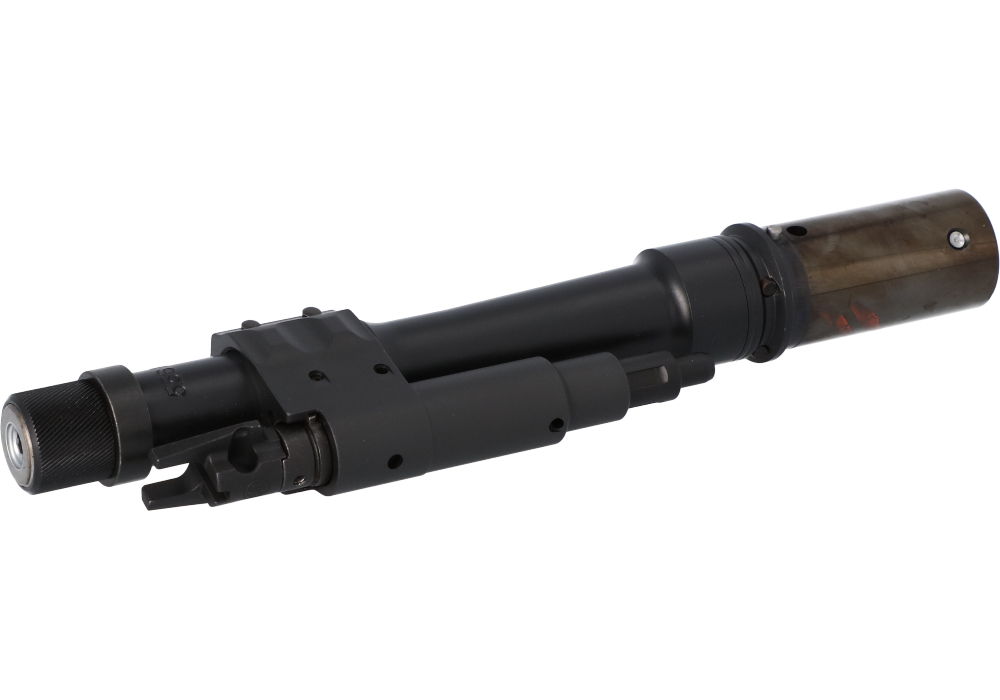
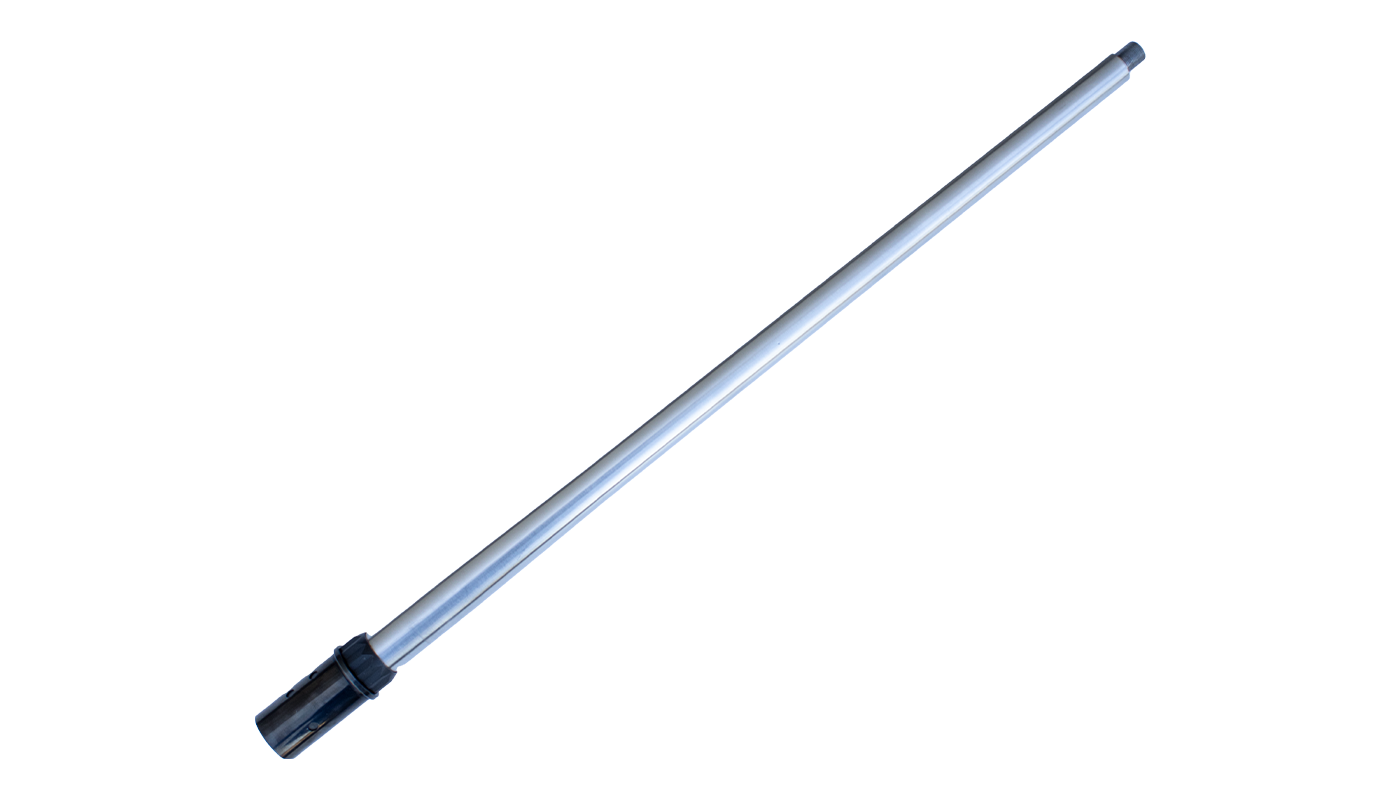
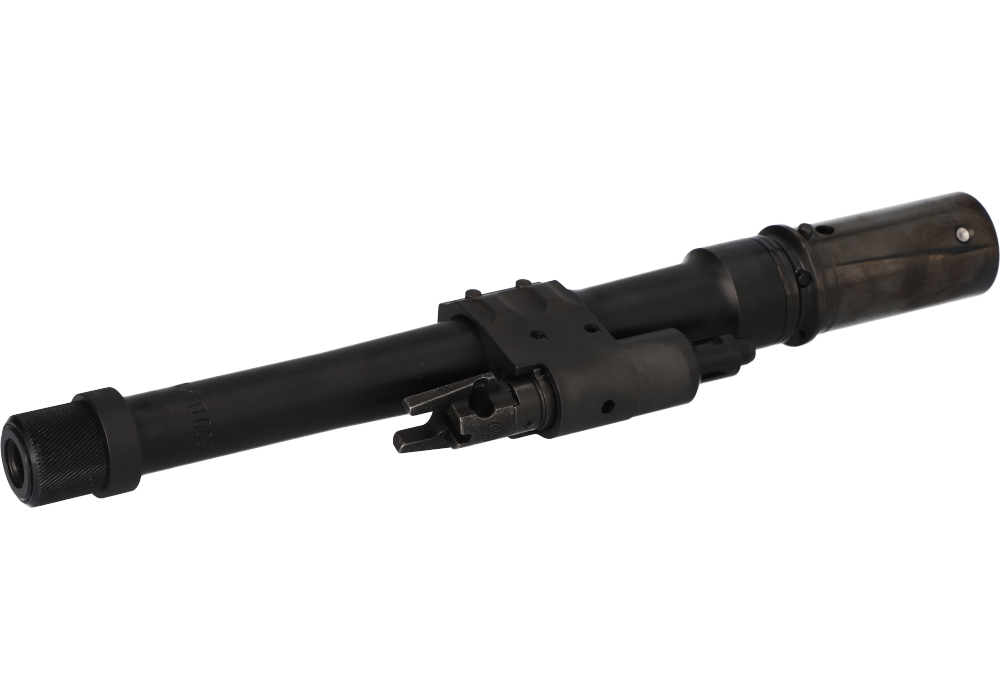
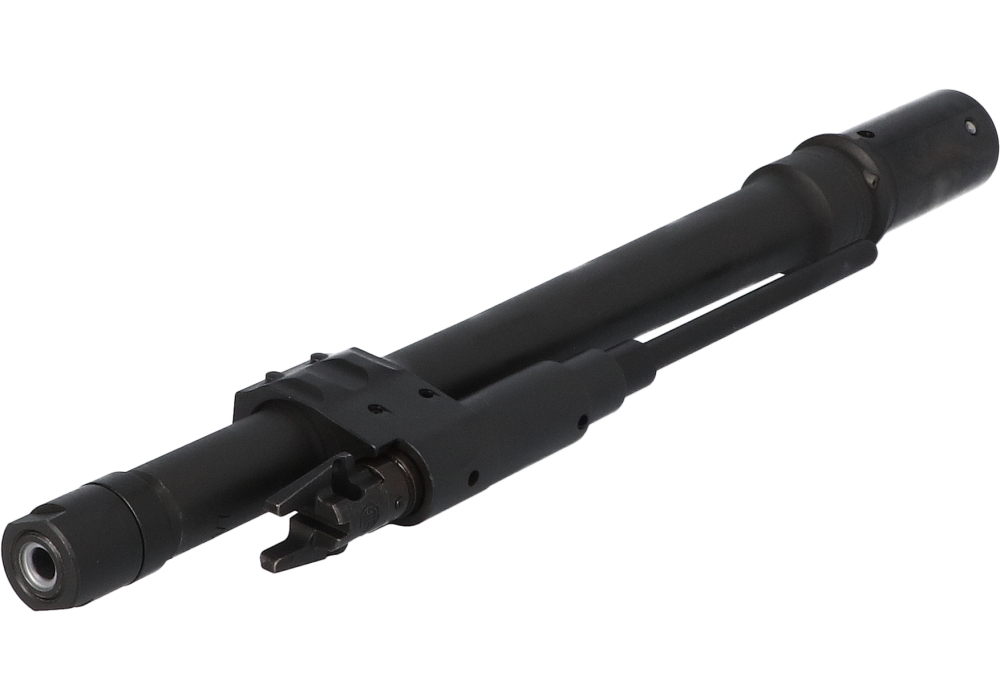
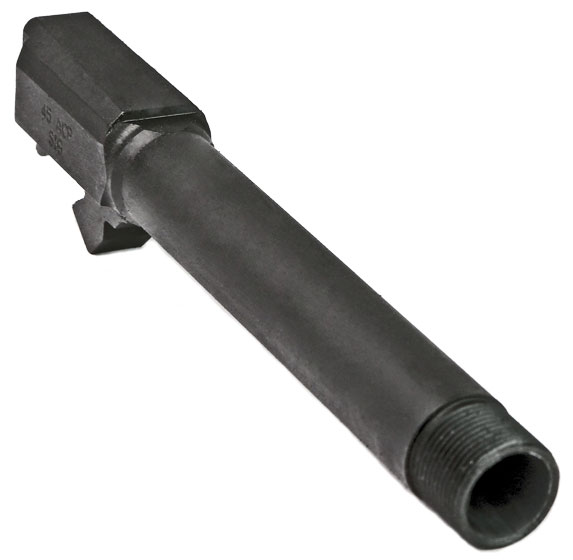
Gun barrel assemblies bring together the components that guide a projectile and support the operating system of a compatible firearm. At the center is the barrel itself: a precisely machined metal tube with an interior bore, rifling, and chamber. The bore is the channel through which the projectile travels, while the chamber supports the cartridge before firing. Rifling consists of carefully formed lands and grooves that impart rotation for stable flight. Depending on the firearm platform and configuration, a barrel assembly may also include a barrel extension, gas block, gas tube, handguard interface, and a threaded muzzle or attached muzzle device. On many semiautomatic rifle platforms, the barrel extension contains locking lugs that work with the bolt, while the gas system uses a port, block, and tube to direct expanding gas and cycle the action. A threaded muzzle can provide a mounting point for compatible accessories, including a flash hider, compensator, muzzle brake, or suppressor, when permitted by applicable law. Because these parts work together as one system, selecting an assembly is less about appearance alone and more about matching the barrel to the receiver, bolt, caliber, gas system, handguard, and intended use. Customers comparing Gun Barrels will find that specifications such as chambering, length, profile, twist rate, material, finish, and muzzle threading all deserve careful attention before purchase. A barrel assembly intended for a compact firearm may prioritize maneuverability, while a longer configuration can provide a longer sight radius and support a different balance in the hands. Shorter barrels can also involve additional legal requirements depending on the firearm configuration and local regulations, so buyers should verify federal, state, and local rules before ordering or installing any component.
Barrel length and profile have a noticeable effect on how a firearm handles. Compact pistol-length and carbine-length configurations may feel quick and easy to move, particularly in confined spaces or during range drills that involve transitions between targets. Mid-length and full-length rifle configurations can offer a steadier feel and may be preferred for precision-oriented practice, field use, or extended shooting sessions. Common lengths span from roughly 7.5 to 10.5 inches on some compact configurations, approximately 14.5 to 16 inches for many carbine setups, and 18 to 20 inches or more for full-length rifles, though compatibility and legal considerations vary by platform. A lightweight or pencil profile reduces overall weight and can make a rifle more comfortable to carry during a long day outdoors, while a heavy or match profile adds material that may help manage heat and maintain a consistent point of impact during sustained range work. Fluted profiles sit between those approaches for some users, adding surface area and visual distinction while keeping weight in check. Twist rate should be matched to the bullet weights and projectile types the firearm is designed to use, and the chamber designation must correspond exactly to the ammunition selected. Muzzle threading is another practical detail: thread pitch and diameter need to match the intended muzzle device, and the device must be installed and aligned correctly. These are not interchangeable details, and a mismatch can affect function, accuracy, or safety. Before purchasing, compare the assembly’s specifications with the host firearm’s manual and confirm whether the receiver, bolt, gas system length, handguard, and sights or optics will work together. If a build or replacement involves headspace, gas alignment, torque values, or specialized tools, professional installation and inspection are sensible choices. A qualified gunsmith can check fit and function, helping avoid the frustration of discovering that a carefully chosen component does not suit the rest of the setup.
Gun barrel assemblies may appeal to experienced shooters maintaining a trusted firearm, builders completing a compatible project, or owners looking to tailor handling for a particular kind of practice. A replacement assembly can refresh a worn component, support a different caliber configuration where the platform allows it, or provide a new balance between portability and stability. It can also be a thoughtful gift for an enthusiast, but only when the recipient’s exact firearm platform, chambering, barrel length, and legal requirements are already known. A gift chosen by appearance alone may not fit the intended receiver or bolt, so many shoppers prefer to confirm specifications with the recipient first or choose an approved accessory or gift card instead. For anyone spending time at the range during the cooler months, a well-matched barrel assembly can become the foundation of a comfortable, dependable setup, whether the day involves slow groups from a bench, practical drills with a carbine, or careful zeroing before an outdoor trip. Store firearms unloaded and secured, keep ammunition separate during installation or maintenance, and follow the manufacturer’s instructions throughout the process. After installation, inspect the assembly for proper fit, verify that the bore is clear, and have the completed firearm checked by a qualified professional when any part of the fit or function is uncertain. With attention to compatibility, intended use, handling preferences, and responsible ownership, shoppers can narrow the selection to a barrel assembly that suits both the firearm and the person behind it.