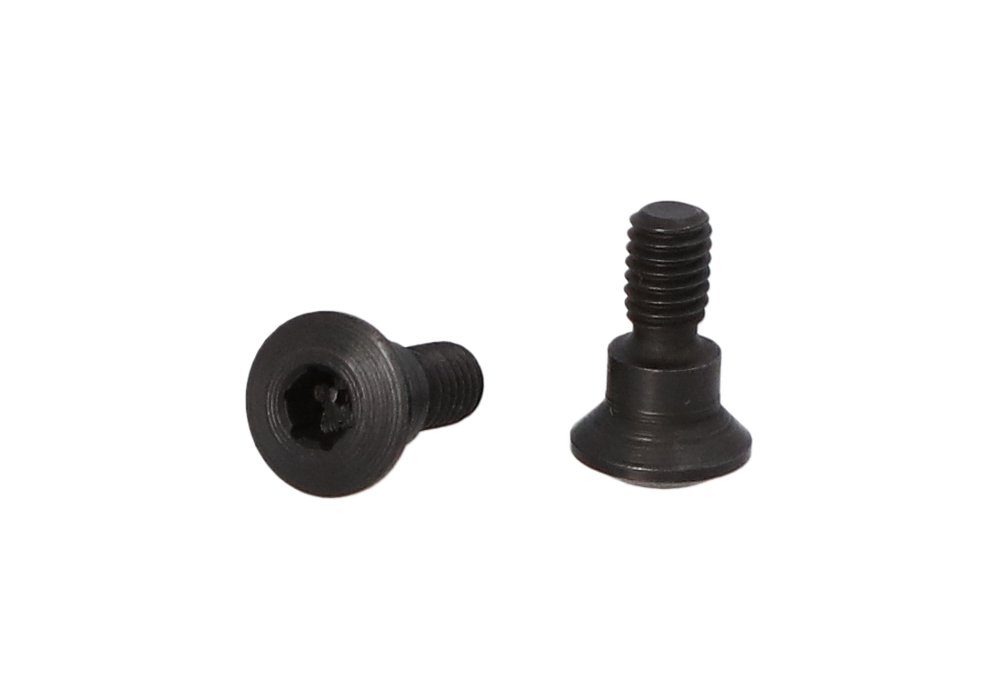
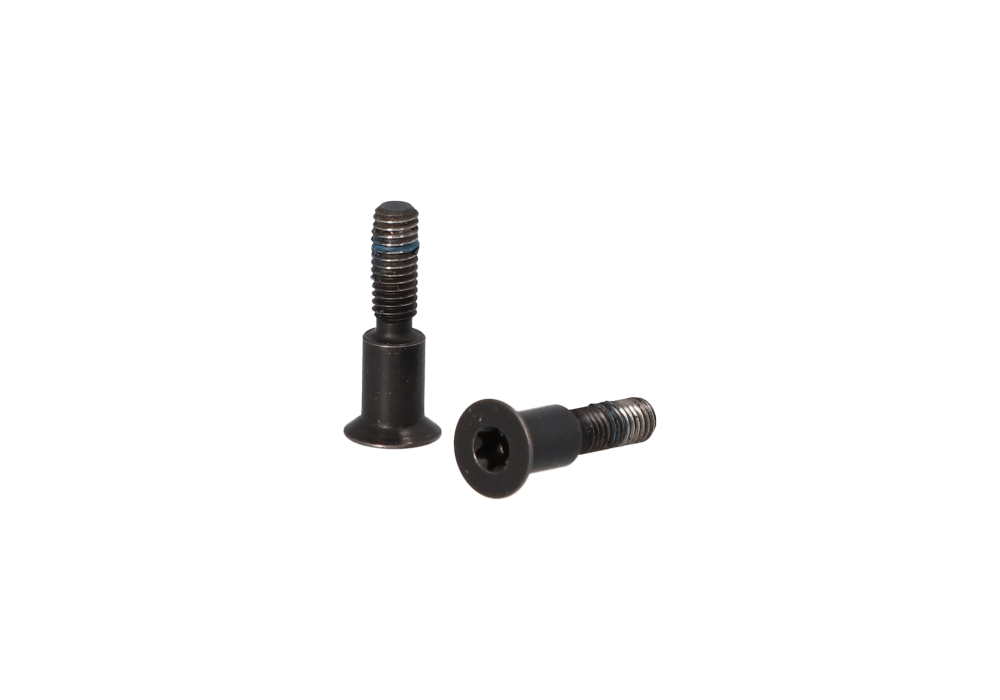
Handgun factory screws are original equipment manufacturer (OEM) fasteners specified for particular pistol components, including grip panels, mounting plates, and certain sight assemblies. Their purpose is to secure those components with the thread engagement, head profile, and seating geometry intended for the assembly. Although these fasteners can look similar when viewed side by side, they are not interchangeable simply because they share a color or accept the same tool. Thread diameter, thread pitch, overall length, and the shape beneath the head all influence fit. Some applications also depend on a shoulder, an unthreaded section, or a specific bearing surface that positions the component correctly. A screw that begins threading into an opening is not necessarily the correct replacement; a mismatched pitch can damage the receiving threads, while an unsuitable length can prevent the head from seating as intended. Factory specifications therefore matter more than a close visual resemblance or a comparison with general-purpose hardware. Grip-panel screws illustrate this distinction clearly. The fastener must suit the handgun’s mounting arrangement as well as the panel’s thickness and screw recess. Where a separate grip bushing is present, compatibility with that bushing matters too. Mounting-plate hardware has its own requirements, and a screw intended for one plate arrangement should not be assumed suitable for another. Even within a single handgun family, design revisions and component configurations may call for different hardware. Useful fitment information identifies the intended model, mounting position, and compatible assembly rather than relying on broad descriptions such as “pistol screw.” For an owner replacing a missing fastener or restoring an original configuration, that specificity helps distinguish an appropriate factory replacement from a part that merely looks familiar. The most relevant comparison is between the documented requirements of the handgun and the replacement hardware’s specifications, with manufacturer documentation providing the reference when dimensions or applications are uncertain.
Materials and surface treatments affect how handgun screws tolerate handling, cleaning, and repeated maintenance. Steel and alloy steel are common choices for small firearm fasteners because they can provide the strength needed for compact threaded connections, although the exact material and treatment depend on the application. A dark finish may complement surrounding components, but appearance alone does not establish the underlying material, hardness, or level of corrosion resistance. Those details belong in the manufacturer’s specifications. Durability also involves the condition of the screw head and threads. A crisp hex recess or other drive interface allows the correct tool to engage securely; rounded corners, distorted slots, and damaged threads can make a fastener unsuitable for continued service. When comparing Pistol Hex Grip Screws, the hex drive identifies the tool interface, not universal compatibility with every grip panel or handgun. Tool size, screw dimensions, and the intended mounting location remain separate considerations. A properly fitting driver helps protect the head, while the manufacturer’s tightening specification governs the connection. More force is not a substitute for correct fit, and excessive tightening can harm threads, bushings, or the component being secured. Thread treatment is another application-specific detail. Some factory hardware includes a preapplied treatment, while other installations have separate requirements or restrictions. Whether a thread-locking compound is appropriate, and which type is acceptable, should follow the instructions for the exact assembly rather than a general habit applied to every screw. Care also includes attention to cleaning products and residue around the head or mounting surface. Solvent compatibility matters wherever a fastener sits next to coated metal, polymer, or finished grip material. During routine maintenance, visible corrosion, a damaged drive recess, or a component that no longer sits securely warrants closer assessment. Factory replacement hardware can address a worn or missing screw, but it cannot correct damaged receiving threads or an unsuitable adjoining component. A qualified gunsmith can evaluate those conditions when the source of the problem is unclear.
Factory handgun screws serve owners who want to maintain an existing pistol configuration, replace hardware affected by wear, or keep correctly identified spare parts for routine service. They are relevant to recreational shooters, competition participants, professional armorers, and anyone responsible for maintaining a handgun according to its manufacturer’s requirements. Intended use influences which assembly needs attention, but it does not change the need for exact compatibility. A pistol used frequently at the range may receive more regular inspection, while one handled less often still benefits from checks during scheduled maintenance. In either case, a screw should be considered part of a complete connection rather than an isolated piece of metal. The surrounding panel, plate, bushing, and threaded opening all contribute to whether the assembly seats and remains secure. This is particularly important when a handgun has a mixture of original and replacement components: factory hardware for the pistol may not automatically suit an accessory with different mounting requirements. Keeping replacement screws labeled by their documented application helps avoid confusion later. In a parts organizer, two short black fasteners can be difficult to distinguish, especially when the meaningful difference is beneath the head or within the thread pitch. Original packaging, fitment notes, and the relevant component documentation are more useful than memory alone. Maintenance also offers an opportunity to notice changes without treating every fastener as something that needs frequent removal. Repeated unnecessary handling can wear the drive interface or disturb a connection that is otherwise functioning correctly. Inspection intervals and replacement expectations should follow manufacturer guidance and the condition of the assembly. Any firearm maintenance belongs in a controlled workspace with the handgun unloaded and ammunition kept separate. For owners seeking dependable replacement hardware, the central considerations are documented fit, sound materials, intact threads, and care appropriate to the component. Those qualities support the practical purpose of factory screws: preserving the intended attachment of handgun components without relying on improvised hardware or assumptions about interchangeability.