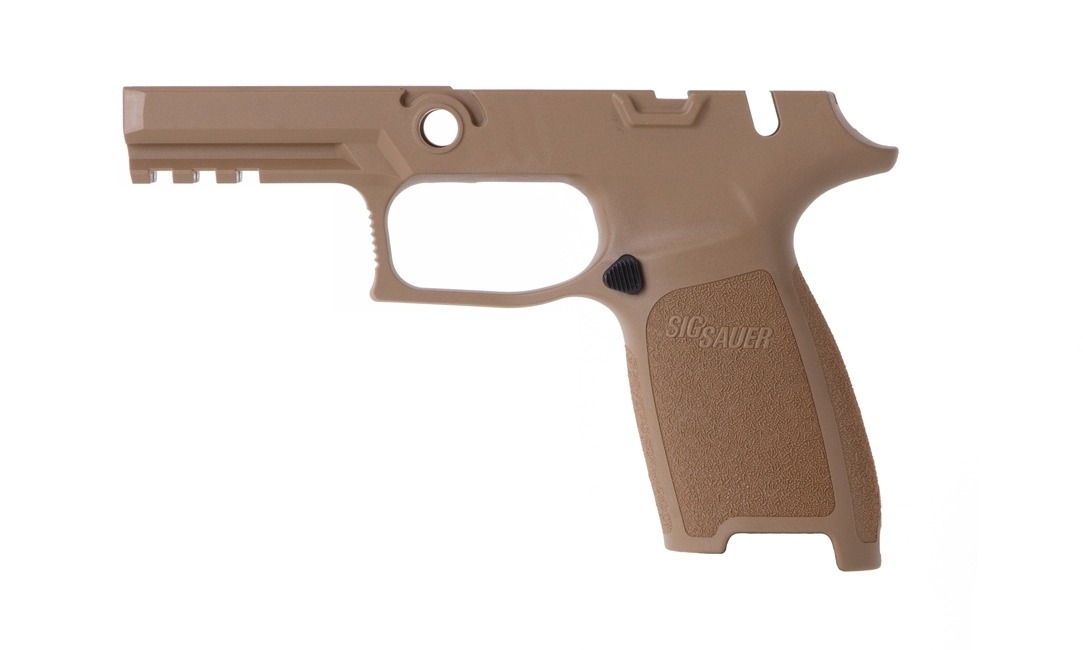
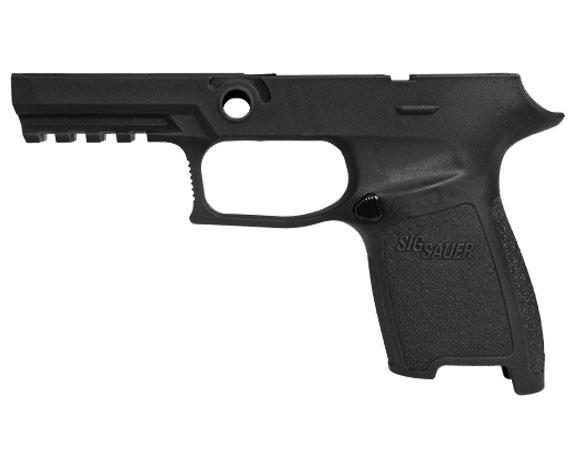
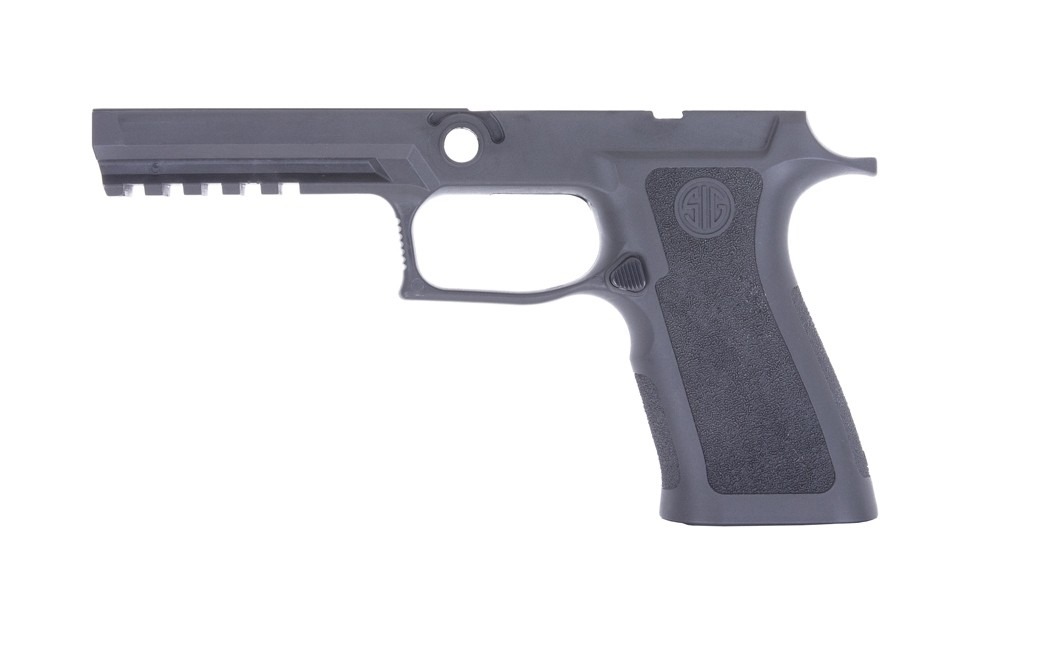
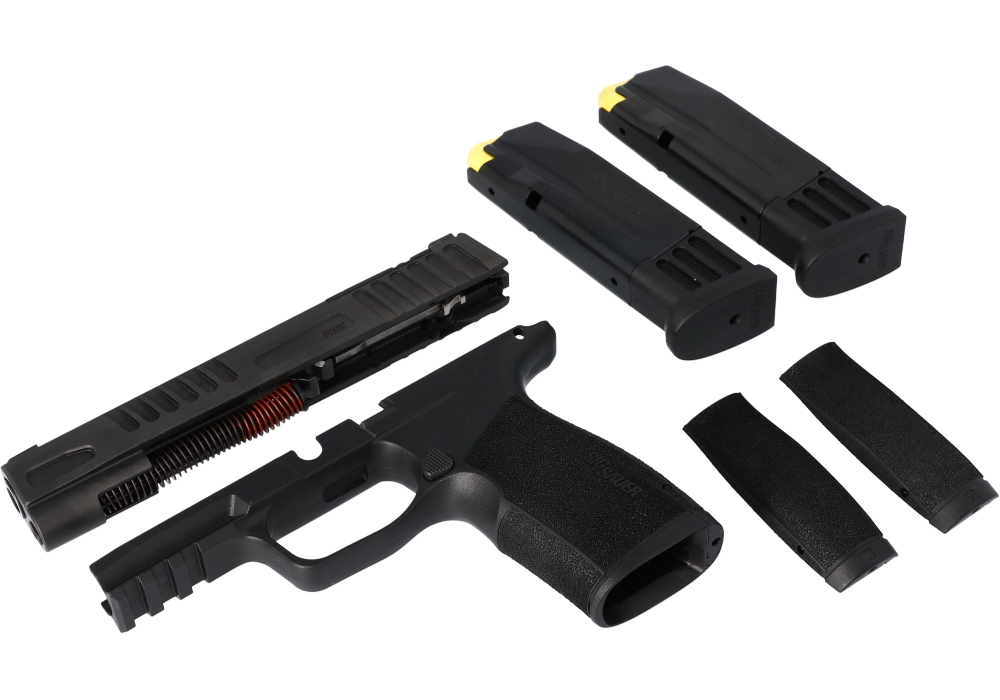
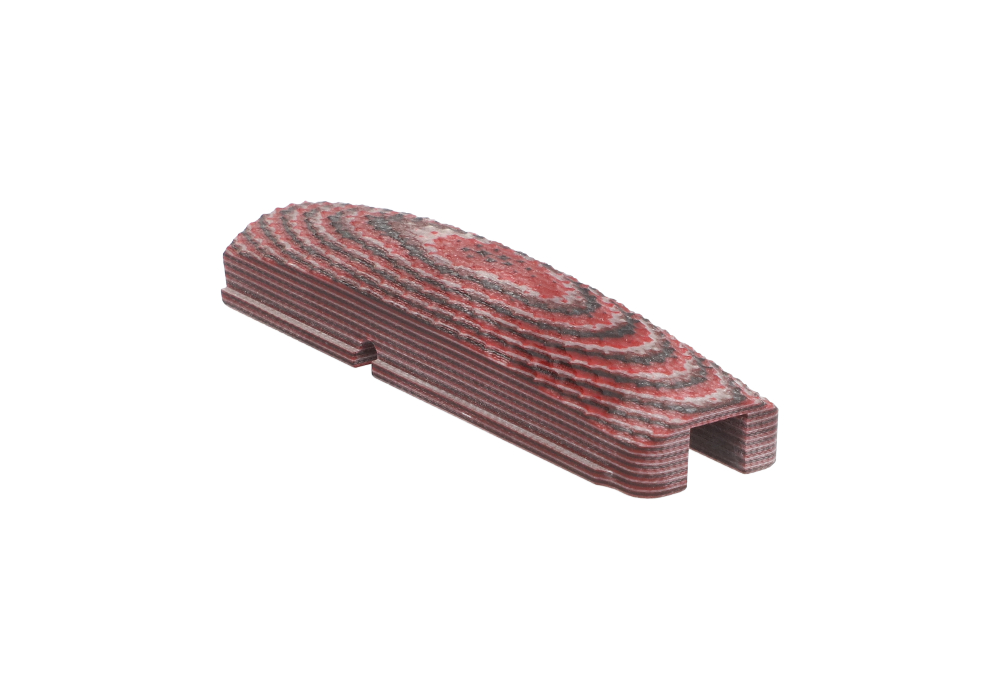
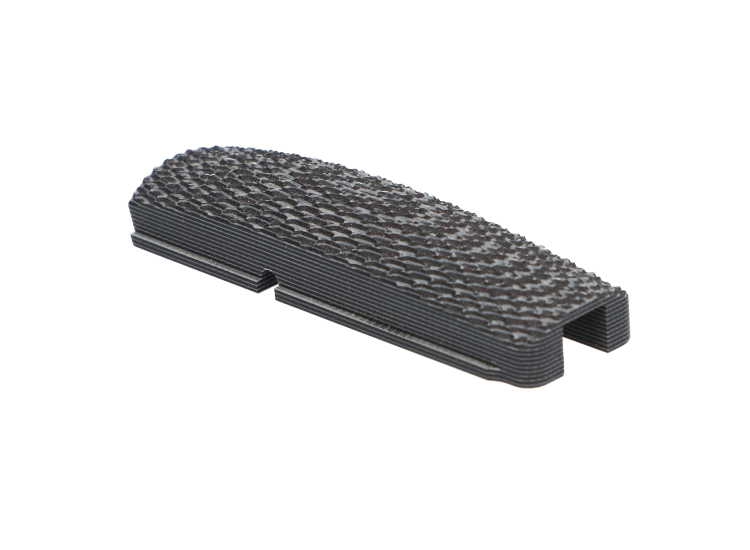
Large backstrap grip modules for handguns are designed to give the shooting hand more surface area, a fuller palm swell, and a more natural connection to the frame. For people with larger hands, a standard grip can leave noticeable space between the palm and the rear of the handgun, allowing the frame to shift during recoil. A larger backstrap or grip module fills that space and can help the shooter maintain a consistent hold from the first round to the last. The change may be subtle when viewed on a workbench, but it can feel significant in the hand: the rear of the grip meets the palm more completely, the fingers wrap around the front strap with less crowding, and the handgun settles more securely after each shot. These components are especially useful for shooters who find that compact or modular handguns feel narrow, short, or difficult to control. They may also benefit those with long fingers who need the grip to position the hand slightly farther from the trigger, creating a cleaner trigger reach and helping the index finger contact the trigger shoe in a more perpendicular manner. Fit remains personal, however. Hand size, finger length, shooting stance, and the shape of the individual grip all influence whether a large profile feels supportive or overly bulky. Comparing the circumference, palm swell, grip angle, and texture before purchasing can make the difference between a modification that disappears naturally into the hand and one that creates new pressure points.
When selecting a large backstrap grip module, begin with exact compatibility. Modular handgun systems may use interchangeable backstraps, complete grip modules, or frame components that are specific to a particular model, frame size, slide length, and control configuration. A part intended for a compact frame may not fit a subcompact or full-size frame, even when the handguns appear similar at a glance. Check the manufacturer’s fitment information, including whether the component is intended for a standard, compact, carry, or extended frame, and confirm that it accommodates the handgun’s internal chassis, magazine release, safety configuration, and other controls. It is also important to distinguish between a replacement backstrap that changes only the rear contour and a complete grip module that may alter the front strap, dust cover, beavertail, or overall frame profile. Texture deserves close attention as well. A pronounced pattern can provide a confident hold during extended range sessions or when hands are damp, while a smoother surface may be more comfortable for daily carry or repeated handling. Materials range from lightweight polymers to denser specialty materials, and added weight at the rear of the handgun can influence balance and perceived muzzle movement. Some shooters prefer a light, neutral feel that makes the handgun easy to carry, while others appreciate a more substantial rear profile that helps keep the sights tracking straight up and down. Any installation should be performed with the handgun unloaded and cleared, following the manufacturer’s instructions. After installation, inspect the fit, verify that controls operate normally, and confirm safe function at an approved range. If the installation requires tools or removal of pins, a qualified gunsmith can provide an added measure of confidence.
Large backstrap grip modules can be a practical upgrade for training, recreational shooting, duty use, or as a thoughtful gift for an experienced handgun owner who already knows what grip profile suits their hands. They are also useful for households where shooters with different hand sizes use compatible modular platforms, allowing the grip to be tailored without replacing the entire handgun. A shooter who spends cooler months practicing from a covered range or indoor lane may notice that a better-fitting grip reduces hand fatigue during longer sessions, particularly when working through repeated draw, presentation, and accuracy drills under proper supervision. The benefit is not simply comfort. A grip that fills the palm can reduce unwanted movement, improve recoil control, and help the shooter return the sights to the target with less effort. It may also make it easier to maintain a repeatable grip under stress, though no accessory replaces instruction, practice, or safe handling habits. When comparing options, consider hand circumference, glove use, preferred grip angle, trigger reach, texture, material, weight, and the way the module interacts with holsters and magazines. Confirm that the finished handgun remains secure in its intended holster and that the grip does not interfere with access to the magazine release or other controls. For shoppers exploring related upgrades, Long Lasting Grip Modules for Compact Pistols can provide another useful point of comparison. The best choice is the one that feels stable without forcing the hand into an awkward position, supports a consistent shooting grip, and matches the handgun’s intended role, training routine, and storage plan.