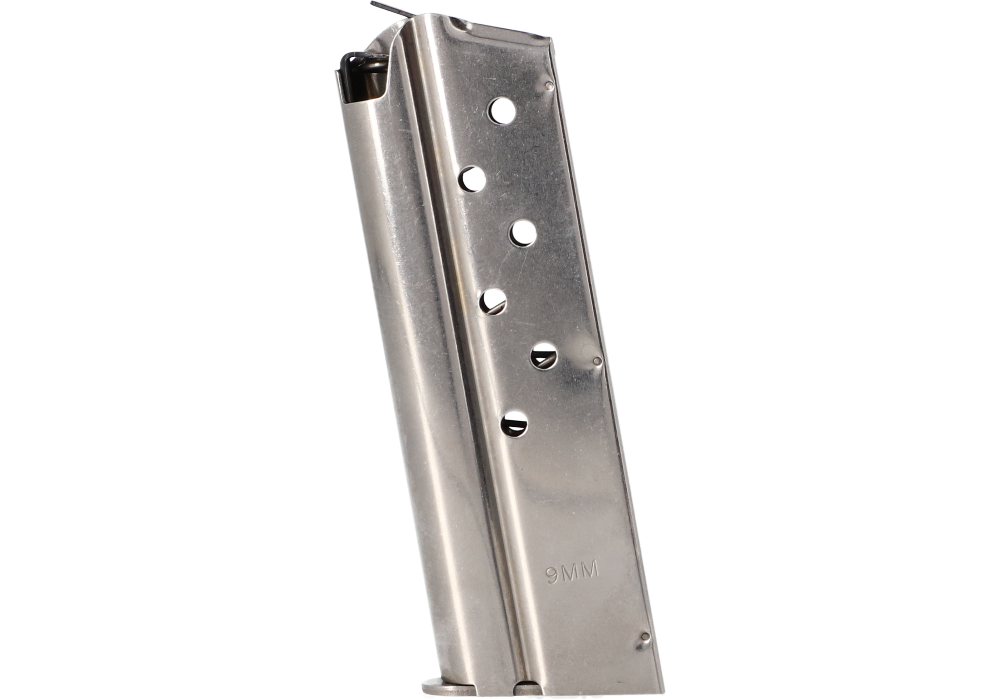
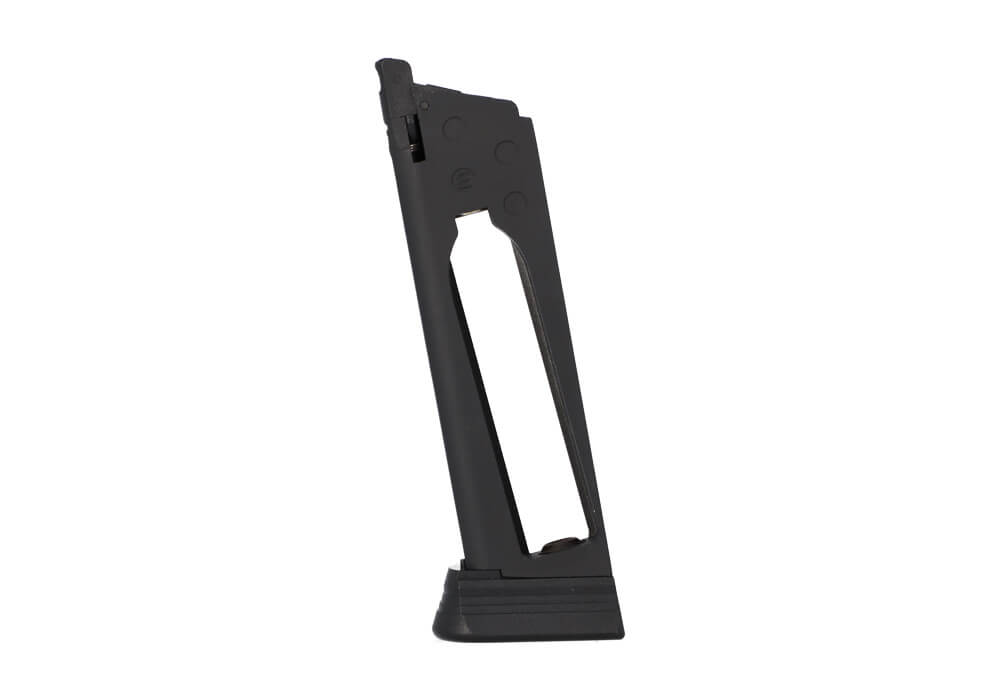
Magazines for 1911 pistols are purpose-built components designed to hold and feed cartridges through the pistol’s magazine well, and choosing the right one starts with confirming the details of your firearm. Most 1911 magazines use a single-stack design, giving the pistol its familiar slim grip profile while providing dependable cartridge alignment from the first round to the last. Government-size 1911 models with five-inch barrels commonly use magazines with standard capacities of seven or eight rounds in .45 ACP, while 9mm versions often accommodate nine or ten rounds. Commander-size pistols with 4.25-inch barrels frequently accept full-size magazines, although the base pad may extend below the grip. Officers and other compact 1911 variants generally require shorter magazines, often with standard capacities around six or seven rounds, and should not be assumed to accept every full-size option. Caliber is equally important: a .45 ACP magazine is not interchangeable with a 9mm or 10mm magazine simply because the exterior dimensions look similar. Before ordering, check the pistol’s marked caliber, frame size, and manufacturer’s specifications, then compare those details with the magazine listing. A careful fit at the magazine catch, proper seating, and smooth movement in and out of the magazine well all contribute to a setup that feels predictable at the range, during training, or when a 1911 is being carried in accordance with local laws and personal safety practices.
The best magazine choice also depends on how the 1911 will be used. A flush-fit magazine keeps the base close to the bottom of the grip, which can be useful for concealed carry, compact pistols, or anyone who prefers a clean profile under a covering garment. An extended magazine may offer standard or extended capacity, a larger gripping surface, or a protective base pad that makes seating the magazine easier with a firm, positive motion. That added length can be welcome during range practice and competition, where fast, consistent reloads matter, but it may be less comfortable for discreet carry. Base pads can also help protect the magazine body if it is repeatedly dropped onto a hard shooting surface. Inside the magazine, the spring, follower, and feed lips work together to present each cartridge at the correct angle. Traditional followers remain common, while anti-tilt designs are intended to maintain steadier movement as the magazine empties. Feed lips control how cartridges release toward the chamber, so their shape and construction should be matched to the 1911 platform and caliber rather than selected by appearance alone. When comparing options, look for durable materials, a properly formed body, a smooth-running follower, and a spring that returns the follower positively. A magazine that seats cleanly, drops free when released, and feeds ammunition consistently during testing is a better choice than one selected only for its advertised round count. Keeping several magazines on hand can also make a range session more efficient: loaded magazines can be organized in a pouch, while unloaded ones remain available for inspection, cleaning, or troubleshooting without interrupting practice.
1911 magazines can be practical additions for new owners, experienced shooters, and anyone assembling a thoughtful range kit. They make a useful gift for a 1911 enthusiast when the recipient’s caliber and frame size are known, especially when paired with a magazine pouch, storage case, or other compatible accessory. A new owner may appreciate having spare magazines for familiarization and practice, while a seasoned shooter may value dedicated magazines for training, competition, carry rotation, or backup use. For those preparing for organized matches, the selection of 1911 45ACP Magazines For Competition can help narrow the search toward options suited to .45 ACP competition setups. Regardless of the intended role, inspect each magazine before use and test it with the ammunition and pistol combination for which it was selected. Check for smooth insertion, secure locking, proper feeding, and any signs of damaged feed lips, weakened springs, dents, or corrosion. Magazines are consumable components, and their condition can change with heavy use, repeated drops, long-term storage, or exposure to dirt and moisture. Store them unloaded or as recommended by the manufacturer, keep debris out of the magazine body, and replace worn parts when necessary. During the warmer seasons and cooler months alike, a clean, correctly matched magazine helps a 1911 remain ready for the kind of use its owner has planned, from an unhurried afternoon at the range to structured practice focused on safe, repeatable handling.