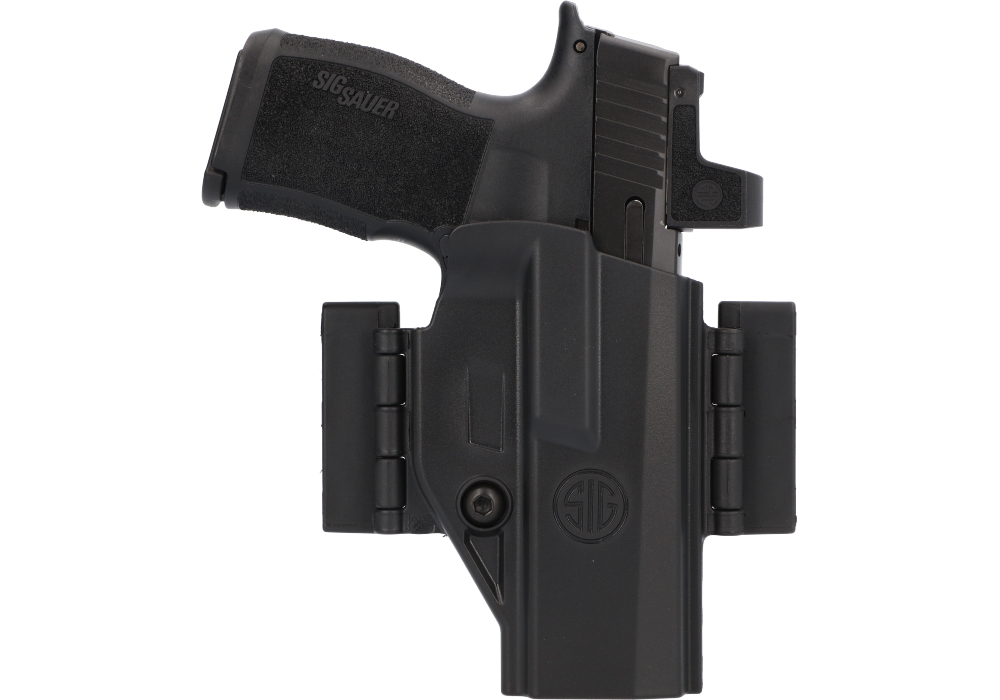
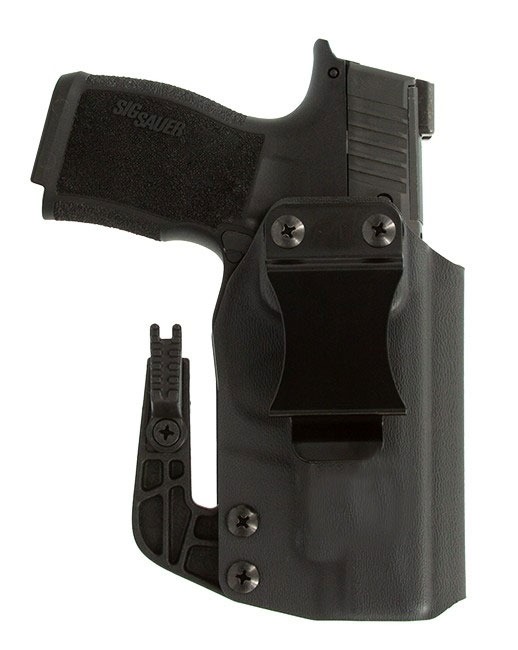
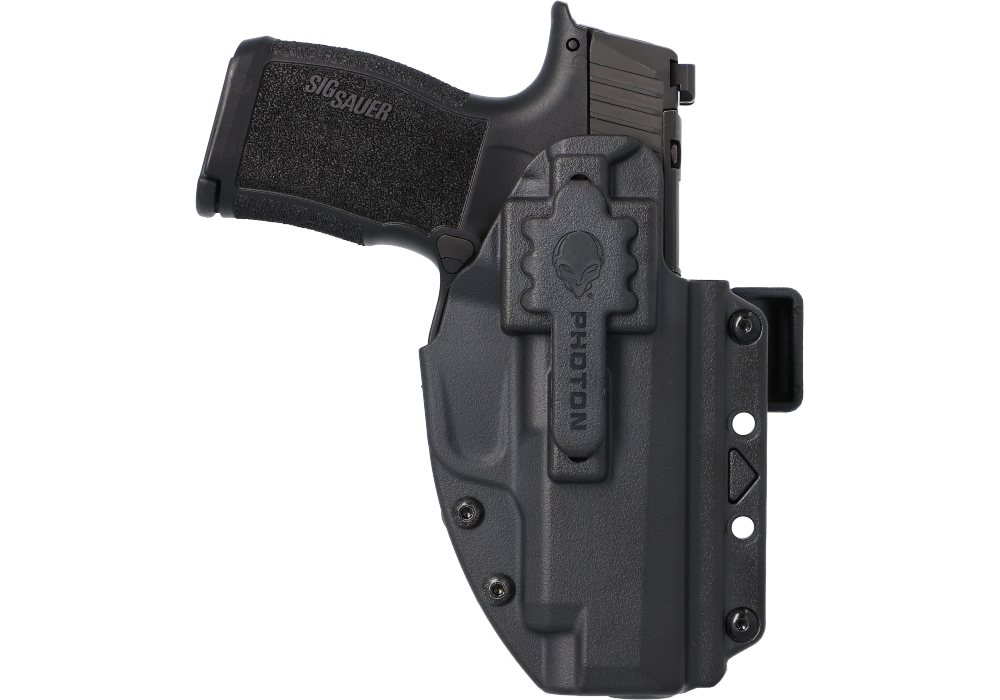
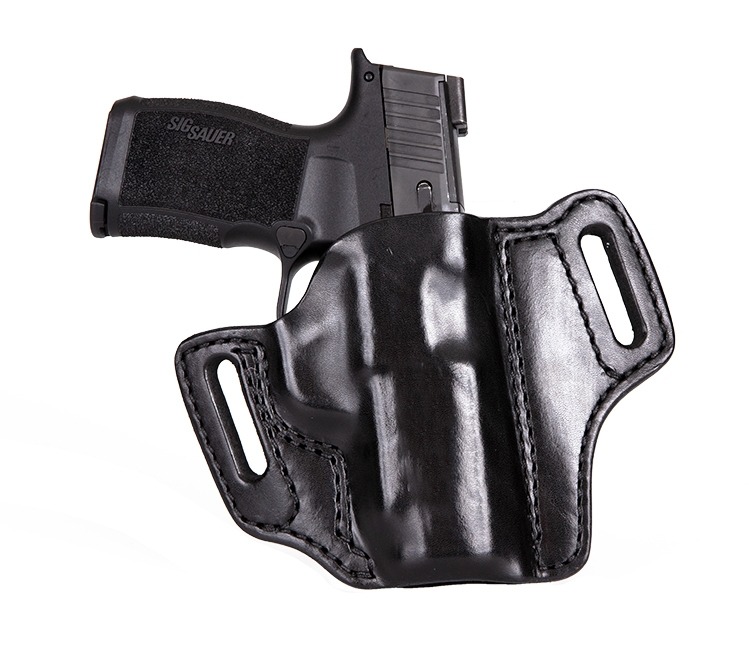
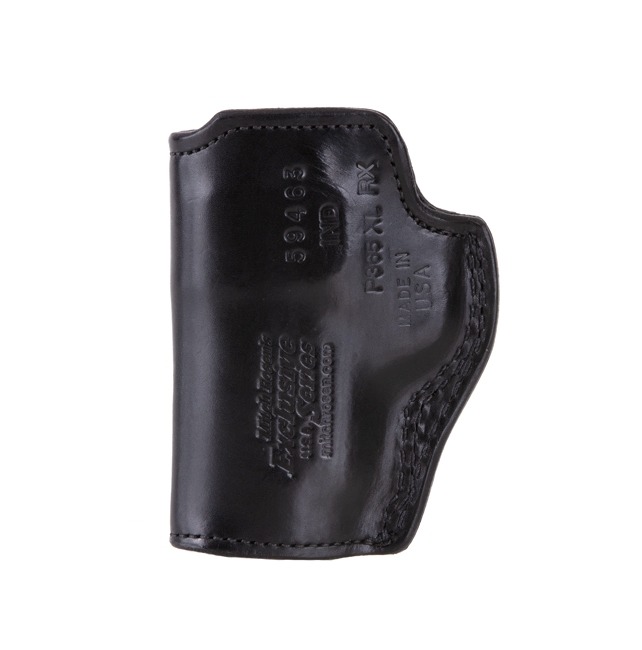
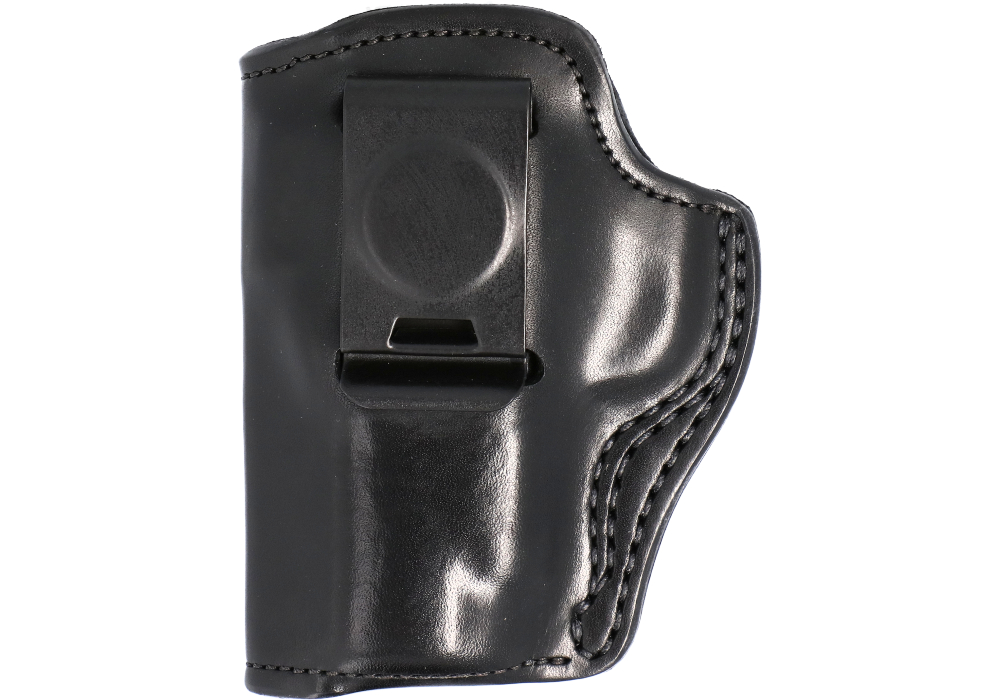
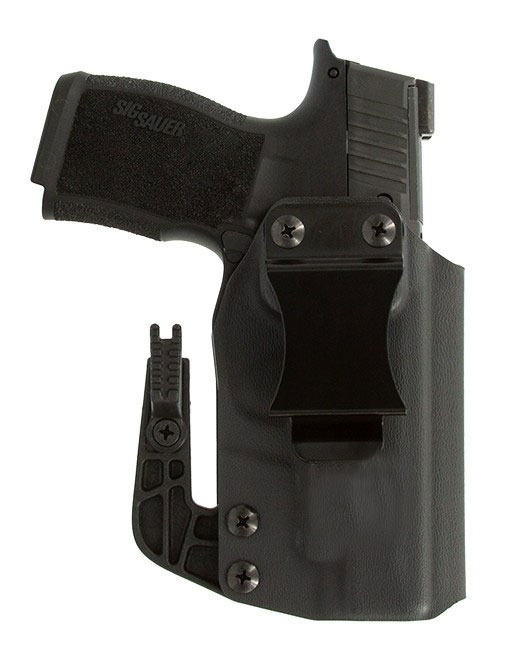
P365XL adjustable holsters give owners a practical way to fine-tune how their pistol sits, draws, and stays secured throughout the day. Rather than treating fit as a one-size-fits-all decision, an adjustable design lets the wearer account for body shape, clothing, carry position, and personal preference. Common adjustments include cant, ride height, and retention. Cant changes the angle of the pistol in relation to the belt line: a straight-drop position is often preferred for appendix carry, while a forward cant in the range of roughly 15 to 30 degrees can help align the grip more naturally for strong-side hip carry. Ride-height adjustment allows the pistol to sit deeper beneath the waistband for added concealment or slightly higher for easier access to the grip. Retention adjustment controls the tension holding the pistol in the molded shell, creating a secure fit while still allowing a deliberate draw. These details matter during ordinary moments—a long drive, a walk across a parking lot, time spent at a workbench, or the simple act of bending to pick something up. A well-adjusted holster should remain stable without shifting, printing excessively, or creating unnecessary pressure against the body. When comparing P365XL adjustable holsters, confirm that the holster is specifically molded for the P365XL and compatible with the exact configuration being carried, including an optic, manual safety, or other installed accessories. A holster made for a similar-looking compact pistol may not provide the proper trigger coverage, retention, or clearance. Look for a rigid shell that fully protects the trigger guard, dependable hardware, smooth edges, and a clip or attachment system that stays anchored to the belt or waistband. For additional options in an inside-the-waistband setup, browse P365XL IWB Holsters.
Adjustability is especially useful for people whose preferred carry position changes with clothing or daily routine. Appendix carry may work well with a straight drop and a slightly lower ride height under a loose overshirt, while strong-side carry can benefit from a forward cant that places the grip at a comfortable angle near the hip. Some users prefer a higher ride height when wearing heavier layers during the cooler months, since the additional clearance can make it easier to establish a consistent grip without pulling the garment tightly against the holster. Others may choose a deeper position with lighter clothing when concealment is the priority. The right setting is personal, but it should always support the same fundamentals: the trigger must remain covered, the pistol should stay secured during normal movement, and the draw should be repeatable without wrestling the firearm free. Retention screws should be adjusted carefully and checked regularly, since excessive tension can make the draw unnecessarily difficult while insufficient tension may allow unwanted movement. Hardware with a locking nut or another anti-shift feature can help preserve the selected cant and ride height as the holster is worn and removed. Reversible clips may also provide flexibility for right- or left-handed carry, though users should verify that the specific configuration supports their preferred side and position. Before carrying, practice with an unloaded firearm in a controlled setting and inspect the holster for cracks, loosened fasteners, or wear around the clip and retention area. It is also helpful to test the setup while seated, standing, walking, and reaching overhead, because a position that feels comfortable in front of a mirror may behave differently during a full day of movement. A dependable P365XL adjustable holster should work quietly in the background, keeping the pistol close and protected while allowing the wearer to focus on work, travel, errands, or time outdoors.
These holsters can be a thoughtful gift for a new P365XL owner, an experienced concealed carrier refining a daily setup, or anyone who has changed belts, clothing habits, or carry position and needs a more adaptable solution. They are also useful for households where different adults have different body types and preferences, provided the recipient already owns the correctly matched firearm and understands safe storage and handling practices. When selecting a gift, pay close attention to carry side, intended position, optic compatibility, and whether the recipient prefers inside- or outside-the-waistband carry; adjustable features cannot compensate for a shell that is not designed around the correct pistol and accessories. Comfort deserves equal consideration. A compact holster may be unobtrusive under a casual shirt, yet the clip, wedge, sweat guard, and edge profile can make a noticeable difference over several hours. Those who spend much of the day seated may favor a position that reduces pressure when driving or working at a desk, while active users may place greater emphasis on a secure attachment point and stable retention during frequent movement. Belt compatibility should not be overlooked, since even a well-designed holster can shift when paired with a soft, narrow, or poorly fitted belt. During seasonal changes, heavier outer layers may provide additional concealment but can also affect access to the grip, while lighter layers call for closer attention to printing and garment clearance. Regardless of the season, carry only where lawful, follow all applicable regulations, and use a holster that completely covers the trigger guard. Store the firearm securely when it is not under the user’s direct control, and confirm that any holster adjustment preserves safe function before relying on it for daily carry. With the right combination of fit, retention, ride height, cant, attachment security, and accessory clearance, P365XL adjustable holsters offer a personalized foundation for comfortable, consistent, and responsible carry.