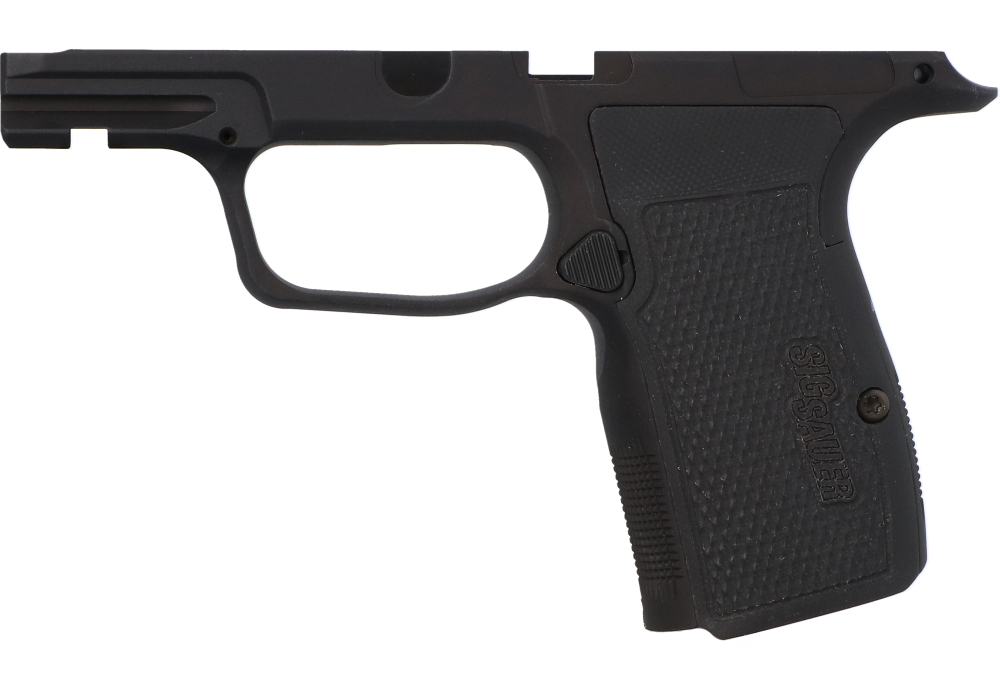
P365XL grip upgrades include replacement grip modules, textured overlays, and compatible extensions that change how the pistol fits the hand. The main differences are grip shape, surface texture, material, and compatibility with the existing setup. A compatible replacement module changes the exterior housing around the serialized fire control unit rather than replacing that unit, so the focus is on ergonomics and the gripping surface. An overlay adds texture to an existing grip without substantially changing its contours, while an extension can provide additional support at the bottom of the grip. Each category addresses a different need: a broader palm swell for a fuller hand fit, a more defined surface for traction, or additional room for fingers that feel crowded. Polymer modules generally offer a lighter feel, with molded contours and textured panels that vary from one design to another. Machined aluminum modules typically feel more rigid and can add weight, changing the balance of a compact pistol. That difference may appeal to someone who prefers a more substantial feel at the range, but added weight is also noticeable during everyday carry. Material alone does not determine comfort or durability; the shape of the backstrap, the radius of the edges, and the placement of textured areas are just as important. Adhesive overlays offer another approach, with rubberized surfaces emphasizing a softer feel and more abrasive textures emphasizing traction. Their fit depends on coverage of the intended grip surfaces, and their edges deserve attention because clothing and repeated handling can wear them over time. When comparing P365XL grip upgrades, the distinction between changing the grip’s shape and changing its texture matters. A surface treatment can improve contact, but it cannot create the palm swell or finger room of a differently shaped module. A module can reshape the fit substantially, yet its texture still needs to suit the hand and the way the pistol is used.
Grip comfort comes from several contact points working together, not simply from choosing the roughest surface. Someone with larger hands may appreciate additional palm support or a contour that leaves the fingers less crowded. Someone with smaller hands may prefer a slimmer profile that preserves comfortable access to the controls. The area beneath the trigger guard, the curve of the backstrap, and the transition into the beavertail all influence how the grip settles into the hand. During a longer range session, a sharply textured panel can feel quite different than it does during a brief fit check. For concealed carry, that same panel may rub against clothing or skin, making texture placement and smooth edges particularly relevant. A useful balance is a secure gripping surface where the hand needs it without unnecessary abrasion elsewhere. Added finger support is a separate consideration from palm contour. Compatible P365XL Grip Extensions can be relevant when the lower fingers need more room, while a replacement module addresses the broader shape of the grip. Extensions and magazine base components must match the intended magazine configuration as well as the pistol; similar names do not establish compatibility. Changes near the bottom of the grip can also affect concealment because the grip is often the part most likely to show through a cover garment. Fit extends beyond the hand, too. A different module profile, trigger guard shape, or accessory rail can affect holster compatibility, even when the slide remains unchanged. Manual-safety provisions, magazine seating, and clearance around controls are essential details in the stated specifications. An existing holster should not be assumed to fit solely because an upgrade is described for the same pistol family. The strongest match is an accessory whose documented compatibility, dimensions, and intended use agree with the complete setup, rather than one selected for appearance alone.
Durability and care depend on both the material and the type of gripping surface. Polymer can show polished areas where the hand repeatedly contacts the texture, while coated metal may develop finish wear along edges and other frequent contact points. These changes do not necessarily indicate the same kind of wear, and the condition of the surface matters more than a material label by itself. Deep texture can collect lint, skin oils, and residue, especially on a pistol carried regularly. Rubberized overlays may become less secure if their adhesive backing is exposed to incompatible cleaners, and abrasive overlays can wear clothing where the surfaces repeatedly meet. Manufacturer care recommendations are important because a cleaner suitable for one component may not suit another component’s finish, polymer, or adhesive. Routine care should preserve the texture without rounding it off, damaging the finish, or loosening an overlay. Any cleaning or inspection should take place with the firearm unloaded and ammunition separate from the work area. Installation requirements also vary across accessory types, and a qualified gunsmith can address uncertain fit or a configuration that requires professional attention. For frequent range use, a comfortable contour and durable texture can matter more than a dramatic visual change. For everyday concealed carry, overall dimensions, holster fit, garment contact, and weight tend to be equally important. An occasional range visitor may prefer an upgrade that keeps the familiar outline while refining the feel of the gripping surface. These accessories can also be thoughtful gifts for a knowledgeable firearm owner, provided the recipient’s exact configuration and preferences are known. Hand size alone is not enough to predict a good match: two people with similar hands may favor very different textures or backstrap shapes. A gift that respects an established setup is more useful than an unfamiliar accessory chosen only for its finish. Across these uses, well-matched P365XL grip upgrades offer a practical way to refine hand contact, comfort, and handling without treating every shooter’s needs as identical.