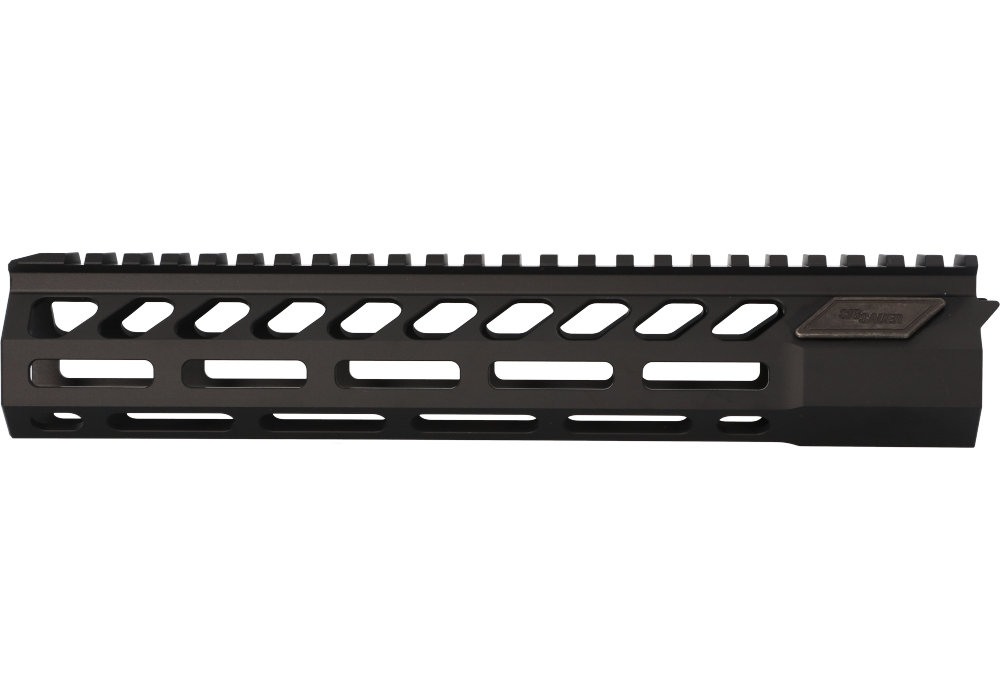
Picatinny rails for target shooting provide a standardized interface between a firearm and compatible optics, rings, mounts, or shooting supports. Defined by MIL-STD-1913, the Picatinny profile uses a series of transverse slots and raised sections that allow compatible accessories to attach at different positions along the rail. That flexibility matters on a target firearm, where comfortable eye relief, clear sight alignment, and an uncluttered shooting position can influence how naturally a setup handles. A scope positioned for a relaxed view from a bench may need different spacing than an optic used primarily for standing practice. Rail length and slot placement give compatible mounts room to accommodate those differences, although the optic, stock geometry, and shooter’s position still determine the final fit. For recreational target shooters, club competitors, and dedicated bench shooters, a suitable rail provides a practical foundation for organizing equipment around its intended use. Receiver-mounted scope rails generally serve a different purpose than short accessory sections attached to a compatible handguard: one supports the sighting system, while the other can provide an attachment point for a bipod or another range accessory. The standardized accessory interface does not mean every rail fits every firearm. The underside of a receiver rail must match the intended mounting surface, and its attachment pattern must correspond to the firearm’s specifications. Likewise, an accessory rail section needs hardware and an attachment system appropriate for the surface beneath it. Picatinny and Weaver interfaces can look similar, but their slot dimensions and spacing differ, so interchangeability should never be assumed. Product descriptions that clearly identify the mounting standard, intended firearm fit, dimensions, and included hardware offer more useful information than broad compatibility claims. The most relevant choice is not necessarily the longest or heaviest rail, but the one that supports the intended accessory without creating unnecessary bulk, interference, or awkward positioning during a familiar range routine.
Fit begins with the exact firearm configuration, including model, action length where applicable, receiver geometry, mounting-hole pattern, and any restrictions identified by the firearm or rail manufacturer. Similar-looking receivers can use different fasteners or mounting arrangements, and a rail intended for one variation may not suit another. Screw specifications and engagement requirements are part of that compatibility assessment, not details to resolve by appearance alone. Rail height also deserves attention because it contributes to the overall height of the optic above the firearm. Combined with the rings or mount, it can affect cheek contact, clearance, and the ease of finding a full sight picture. A setup that requires the shooter to lift away from the stock between shots may feel less consistent than one that supports a comfortable, repeatable position. Rail inclination is another useful distinction. A 0 MOA rail has no built-in angular offset and is commonly considered for general target applications. A 20 MOA rail incorporates an angle that can help preserve more of a compatible scope’s elevation adjustment for longer-distance shooting. Neither specification establishes a universal shooting-distance limit. The appropriate inclination depends on the scope’s adjustment range, mounting geometry, intended zero, and the demands of the firearm and ammunition combination. An angled rail can also affect whether a particular scope can achieve the desired shorter-distance zero, so compatibility matters more than a simple distance rule. Length should be evaluated with the same care: additional slots may offer positioning flexibility, but overhang can create clearance concerns around other components. Shooters comparing receiver arrangements and accessory mounting options can also explore Picatinny Rails for AR Platforms for platform-specific context. Across configurations, a rail’s interface, attachment method, and intended role should align with the equipment it will support. Manufacturer documentation or a qualified gunsmith can help resolve uncertain fitment before a mismatched component becomes part of a range setup.
Materials and construction influence weight, rigidity, surface wear, and the feel of the finished assembly. Aluminum rails are common because they offer a useful balance of strength and low weight, especially when a firearm is carried between shooting positions or used for extended practice sessions. Alloy and temper designations provide additional context: 6061-T6 and 7075-T6 aluminum have different mechanical properties, with 7075-T6 generally offering greater strength. That distinction is only part of the evaluation, since dimensions, machining quality, attachment design, and the intended application also affect suitability. Steel rails bring different weight and wear characteristics and may appeal where additional mass is acceptable. Neither material alone guarantees better performance. Cleanly defined slots, consistent dimensions, appropriate hardware, and a finish suited to repeated handling are equally relevant. Anodized aluminum and protective finishes on steel can help resist surface wear and corrosion, but no finish eliminates the need for care. Range dust, cleaning residue, and repeated accessory changes can leave contamination around slots and contact surfaces. Care should follow the manufacturer’s recommendations, with attention to compatible cleaning products, visible wear, and signs that hardware or mounted equipment has shifted. Installation requirements also vary; there is no single screw specification, tightening value, or thread-treatment recommendation that applies to every rail. The correct requirements come from the documentation for the rail, firearm, and associated mounting components. A rail should not be treated as a substitute for sound installation or as a guarantee that an optic will retain its zero after removal and reattachment. For a shooter who spends practice sessions checking groups from a bench, dependable fit and straightforward inspection may matter more than extra attachment space. For someone moving among supported and unsupported positions, lower weight and freedom from interference may be more noticeable. Rails can also be thoughtful gifts for an established target shooter when the recipient’s exact firearm configuration and intended accessory are known. In every case, the strongest purchasing decision starts with verified compatibility and ends with a durable, appropriately sized mounting foundation that suits the way the firearm is used.