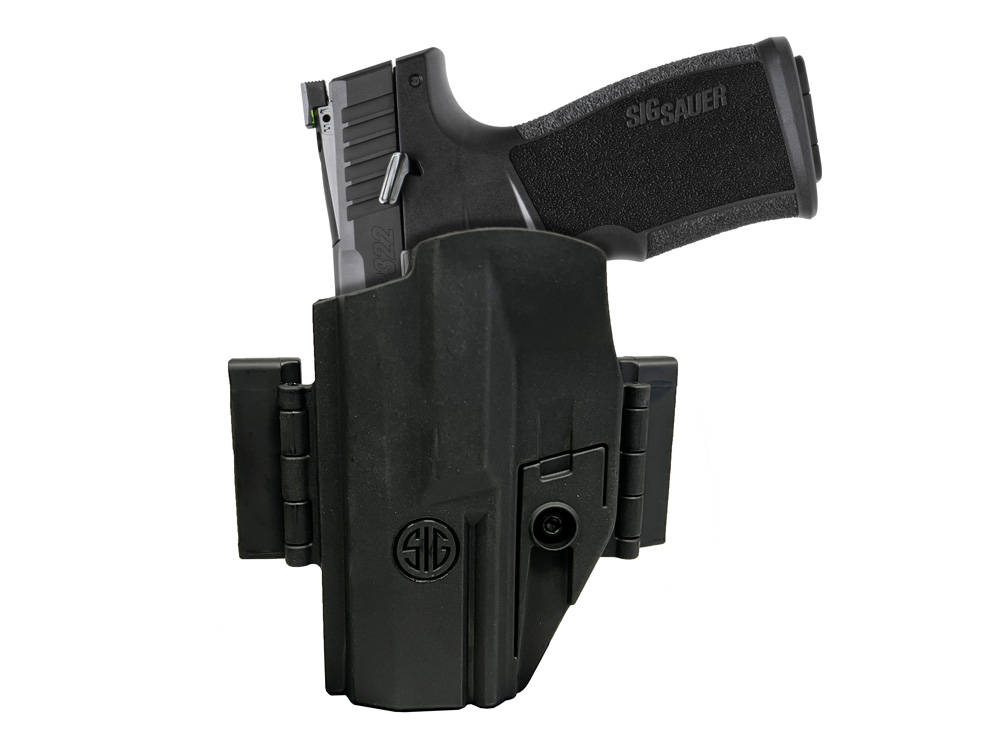
Pistol accessories include holsters, magazine pouches, grip accessories, protective cases, cleaning supplies, and other equipment that supports responsible ownership, carry, storage, and range use. The most useful choices suit both the pistol and the way its owner spends time with it. A handgun carried regularly presents different demands than one transported in a locked case for occasional practice, even when both share the same dimensions. Fit begins with the exact firearm model, size, and configuration rather than a general description such as compact or full-size. Holster compatibility may also depend on sight height, an attached accessory, or other external features, while carry comfort depends on the relationship between the holster, belt, clothing, and wearer. A holster that feels comfortable while standing can feel different during a long drive or an afternoon spent seated, making shape, edge finishing, and placement meaningful considerations. Secure retention, full trigger coverage, and a stable attachment system are essential characteristics, not simply preferences in appearance. Molded polymer offers a defined shape and a surface that is generally straightforward to wipe clean; leather has a different feel and requires care suited to its finish and construction. Reinforced fabric can be useful for certain storage and transport applications, though material alone does not establish suitability for a particular purpose. Stitching, hardware, seams, and overall design matter just as much. Magazine pouches and belt accessories deserve similar attention to fit, retention, and everyday comfort. Gear that stays positioned predictably is less distracting than equipment that shifts, rubs, or catches against clothing. For range visits, a thoughtfully organized bag or case keeps protective equipment, maintenance supplies, and personal essentials separated rather than crowded into one compartment. Durable handles, secure closures, and interior dividers can make routine transport more orderly without adding unnecessary bulk. Across these categories, practical value comes from matching the accessory to a real task: protecting the pistol, supporting safe handling, keeping equipment organized, or making a familiar setup more comfortable to live with.
Personal preference also plays a role in how a pistol feels in the hand and how its supporting equipment fits into a regular routine. Grip-related accessories vary in texture, contour, and material, with some emphasizing a softer feel and others offering a firmer surface. An aggressive texture may feel reassuring during a brief range session yet become uncomfortable against clothing during extended wear. A larger profile may suit one hand while making another person’s grip feel crowded, so dimensions and compatibility deserve more attention than appearance alone. Any accessory should preserve access to controls and support safe operation in accordance with the firearm manufacturer’s requirements. The same principle applies to sighting accessories and their supporting components: an apparently similar shape does not establish that parts are interchangeable. Model designation, mounting interface, and clearance requirements can all matter, and compatibility information should be specific enough to resolve those differences. For a related category, Pistol Customization Parts provides a separate place to explore components associated with personalizing a compatible pistol. Accessories that affect fit or operation warrant particular care, and questions about installation or function belong with the manufacturer or a qualified gunsmith. Material choices bring their own tradeoffs. Aluminum components can offer rigidity with relatively little weight, while steel is often selected where strength and wear resistance are priorities. Polymers vary in formulation and construction, so their suitability depends on more than a lightweight feel. Surface finishes can influence cleaning requirements, corrosion resistance, and how visible ordinary handling marks become. Smooth edges, consistent machining, sound fasteners, and clear care information are useful details to consider alongside the stated specifications. A coordinated appearance can be appealing, but a finish that looks good in a display is only one part of the decision. Comfort, compatibility, durability, and a clear purpose give an accessory lasting relevance beyond its first impression.
Maintenance and storage accessories help preserve that investment between range visits and throughout regular ownership. Cleaning equipment should match the firearm’s specifications, and brushes, patches, cloths, and cleaning solutions should be appropriate for the surfaces they contact. A solvent suitable for one material may not be suitable for another, especially around polymer, coated finishes, adhesives, or optical surfaces. Manufacturer directions are the best reference for compatible care products and maintenance intervals; more force or a stronger chemical is not automatically better. Well-organized cleaning supplies also make it easier to recognize worn tools, keep small components contained, and maintain a dedicated workspace separate from ammunition. Protective cases serve a different but complementary purpose. A padded interior can limit contact with surrounding gear, while a rigid exterior can provide additional protection during transport. Interior dimensions should account for the pistol’s complete configuration without forcing pressure against sights or attached accessories. Soft linings and foam also need attention over time, since accumulated debris and trapped moisture can undermine the protection a case is intended to provide. A transport case is not automatically a substitute for secure storage. Locking features, access control, household circumstances, and applicable laws all belong in that decision, especially wherever children or unauthorized people could gain access. Eye and hearing protection, practical organizers, and care supplies can also be thoughtful gifts for a responsible firearm owner when the recipient’s needs are understood. Model-specific accessories require exact compatibility information, while storage dimensions, preferred materials, and established routines help narrow broader choices. An experienced range visitor may appreciate a replacement for worn equipment more than an unfamiliar accessory that changes a trusted setup. Someone building a first collection of supporting gear may place greater value on protection, organization, and straightforward upkeep. In either case, pistol accessories are most useful when they solve an identifiable problem rather than simply adding another component. A comfortable carry arrangement, an orderly range bag, a properly fitted case, and suitable maintenance supplies each support a different part of responsible ownership, with careful selection helping those pieces work together.