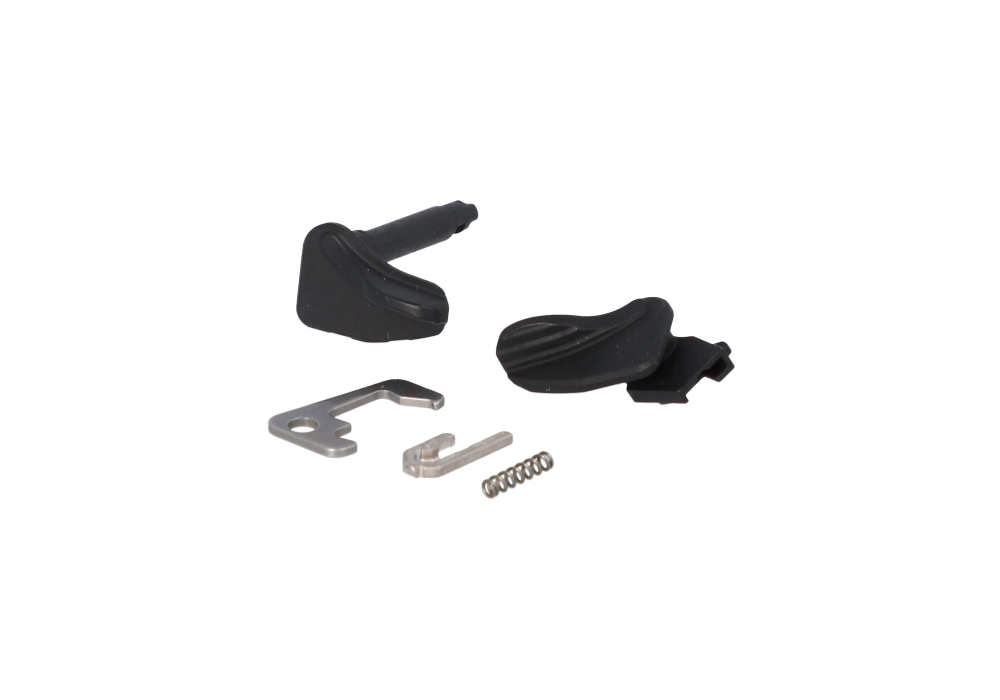
Right-hand safety selectors are firearm controls configured for operation by a right-handed shooter, typically with the thumb of the firing hand. On many conventional rifle layouts, the primary lever sits on the left side of the receiver, within reach of a right-handed thumb. That distinction matters: a control intended for right-handed operation is not necessarily a lever mounted on the right side of the firearm. Component names can describe either the intended user or the physical position of a part, so the manufacturer’s description is an important part of understanding fit. Within this category, differences in lever length, profile, surface texture, and travel can affect how a control feels alongside the grip and surrounding receiver surfaces. A broad, textured contact area may feel more distinct beneath a gloved thumb, while a lower-profile shape may suit someone who prefers less projection near the hand. Neither characteristic tells the whole story on its own. Hand size, grip shape, and the firearm’s original control layout all influence comfort, and an oversized lever is not automatically easier for every shooter to use. Single-sided and ambidextrous configurations also serve different preferences. A right-handed owner may favor the simplicity of one operating lever, while another may prefer controls accessible from either side. Conventional and shorter-travel designs differ in the distance between their designated positions, but that travel must match the firearm’s supported configuration rather than simply reflect personal preference. Clear position markings and a distinct, consistent feel can help make the control’s status easier to recognize. The purpose remains the same across these variations: providing a mechanical means of selecting the firearm’s designated operating setting. A safety selector is one part of a larger safety system, not a substitute for keeping the muzzle pointed in a safe direction, keeping the finger away from the trigger until ready to fire, or following the firearm manufacturer’s handling instructions. Thoughtful selection starts with that role, then considers the shape and configuration that suit the intended firearm and its owner.
Compatibility deserves more attention than a similar appearance or a familiar category name. Right-hand safety selectors can differ in their relationship to the receiver, trigger mechanism, retention components, and other controls, even when their external levers look much alike. A matching finish or comparable outline does not establish interchangeability. The most useful product information identifies the supported firearm family, any model or generation restrictions, the intended operating configuration, and whether the listing describes a complete assembly or an individual component. Those distinctions are especially important when replacing an existing part, because a separate lever may depend on other compatible components already present in the firearm. Selectors and trigger mechanisms also need to function together as intended; compatibility with the receiver alone is not enough to establish suitability. Where the documentation leaves uncertainty, confirmation from the manufacturer or assessment by a qualified gunsmith is more dependable than an assumption based on photographs. Materials are another consideration, though their value depends on the role each component performs. Steel may be used for internal working components, while aluminum alloys may appear in external levers, depending on the design. Material names alone do not establish quality. Dimensional consistency, appropriate surface treatment, and the fit between matching components all contribute to service life and reliable operation. Exterior finishes can help resist corrosion and routine handling wear, but they do not eliminate the need for care. Texture deserves similar attention: pronounced edges can provide a noticeable contact surface, yet their position relative to the hand matters as much as their appearance. For owners comparing this right-handed category with a broader range of compatible operating controls, Semi Auto Safety Selectors provides related category context. The distinction is useful when browsing, but the firearm’s own specifications remain the deciding reference. Whether the intended setting is recreational target shooting, organized competition, or lawful hunting, the appropriate choice is a compatible control suited to the owner’s normal handling needs, not simply the most prominent shape or the shortest movement.
Durability becomes meaningful through ordinary ownership: repeated handling at the range, contact with a protective case, routine cleaning, and the small amounts of residue that can collect around exposed controls. A well-fitted selector should retain its intended relationship with the surrounding components, rather than developing interference or an unfamiliar feel. Cosmetic wear and functional concerns are not the same thing. Light surface marks may reflect normal use, while a change in movement, uncertain position engagement, looseness, or visible damage warrants attention from a qualified professional before further use. Care should follow the firearm manufacturer’s instructions, including guidance on cleaning products, lubrication, and inspection. Aggressive solvents, abrasive treatment, or attempts to reshape a lever can affect finishes or alter a component in ways its appearance does not reveal. Routine care is about preserving the intended condition, not changing the geometry or trying to correct a compatibility problem through alteration. For an owner who spends long sessions practicing on a supervised range, the practical appeal may be a contact surface that feels comfortable throughout familiar handling routines. For a hunter, it may be a profile that works comfortably with the firearm’s existing grip and normal field equipment. Someone maintaining an established setup may place the greatest value on retaining the original control arrangement and replacing a worn component with the correct supported equivalent. These are different priorities, but all depend on accurate identification and proper fit. A right-hand safety selector can also be a considered accessory gift for an experienced firearm owner when the recipient’s exact firearm configuration and preferences are already known. Guessing from appearance is less useful than confirming those details beforehand, particularly when several similar-looking versions exist. Across these situations, the strongest basis for selection is straightforward: documented compatibility, suitable materials, comfortable contact surfaces, and a design that preserves the firearm’s intended operation. Those qualities give this small control its significance, connecting an owner’s everyday handling preferences with the mechanical requirements of the firearm itself.