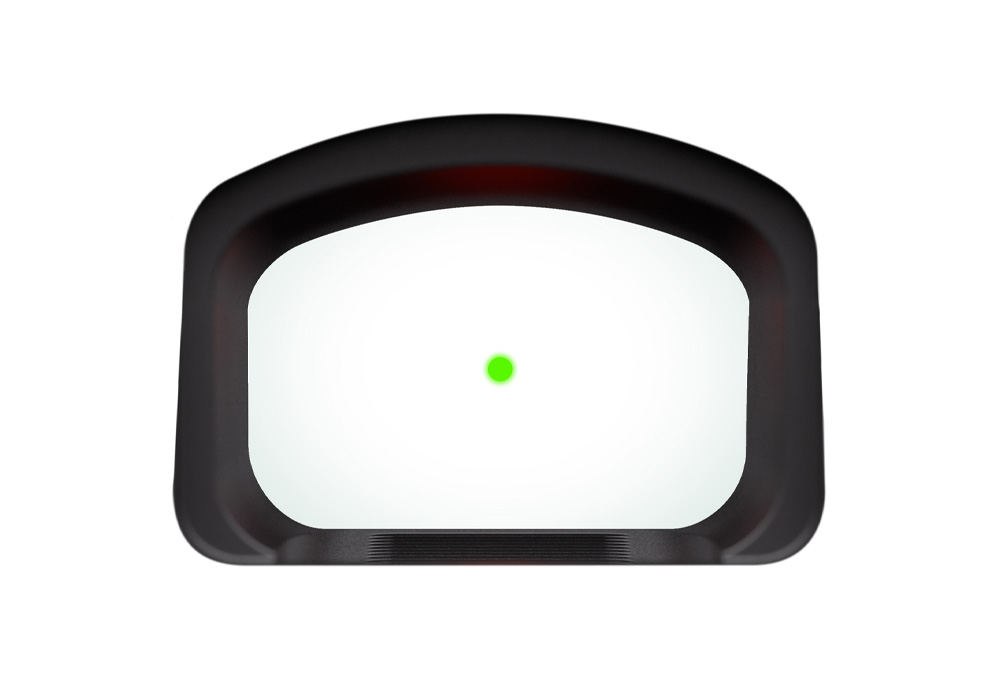
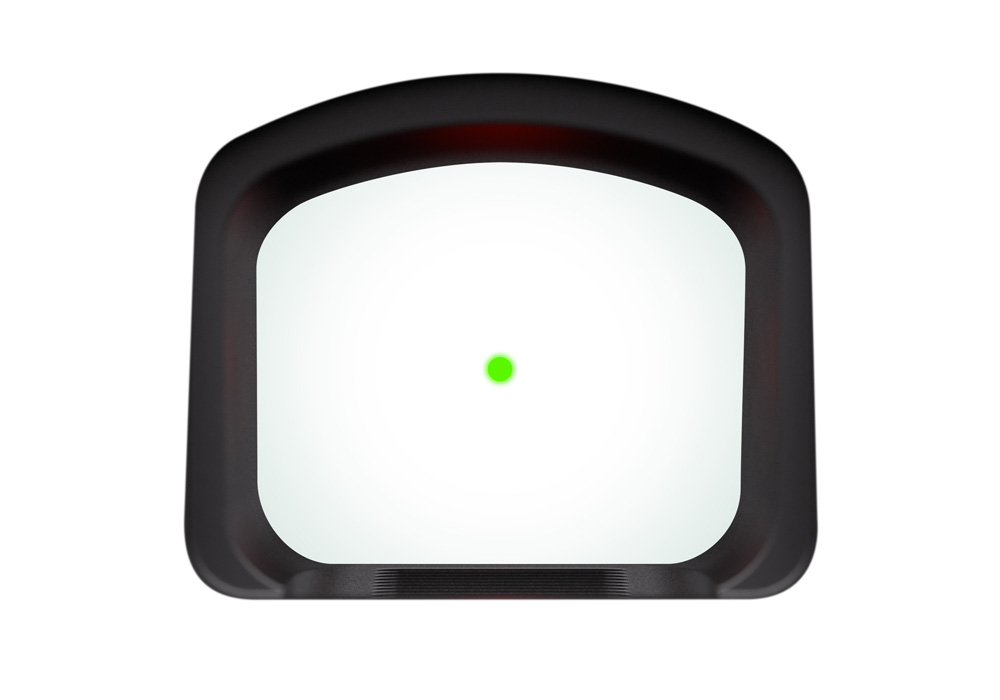
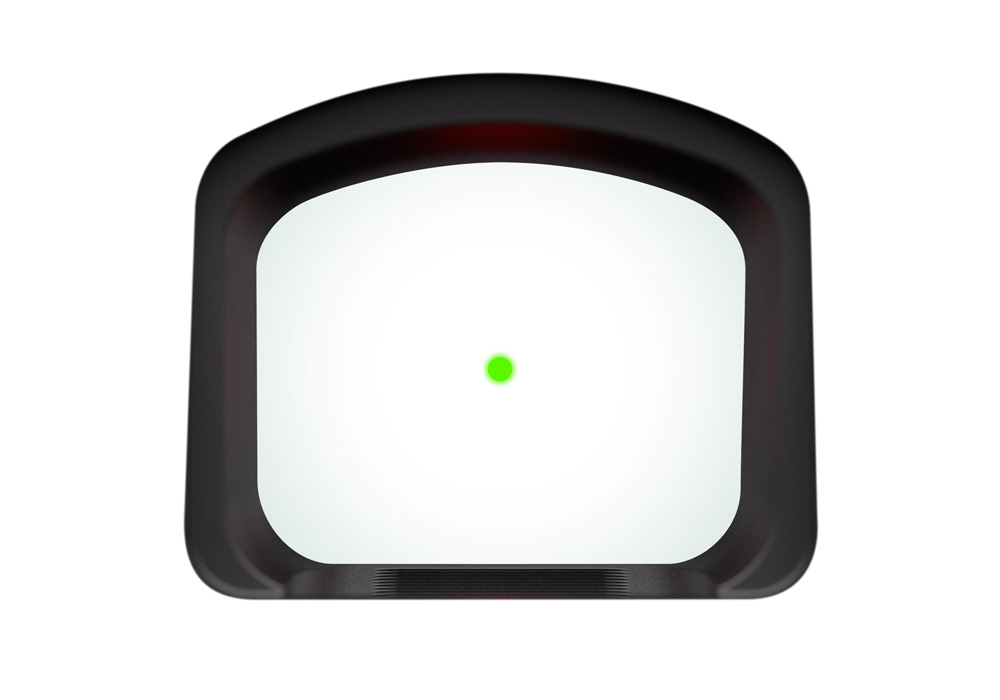
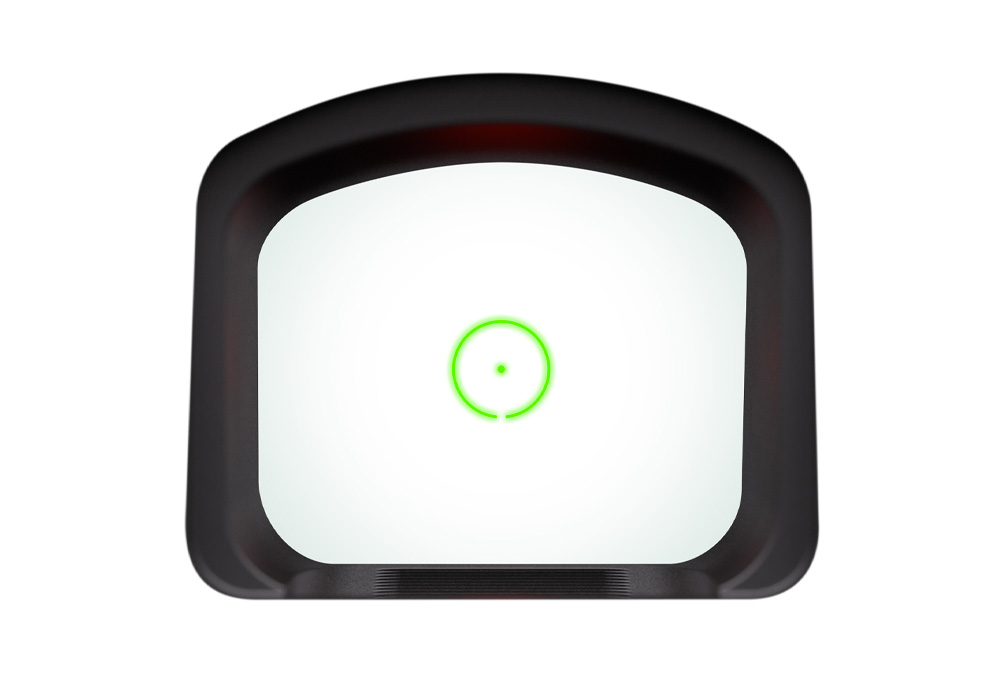
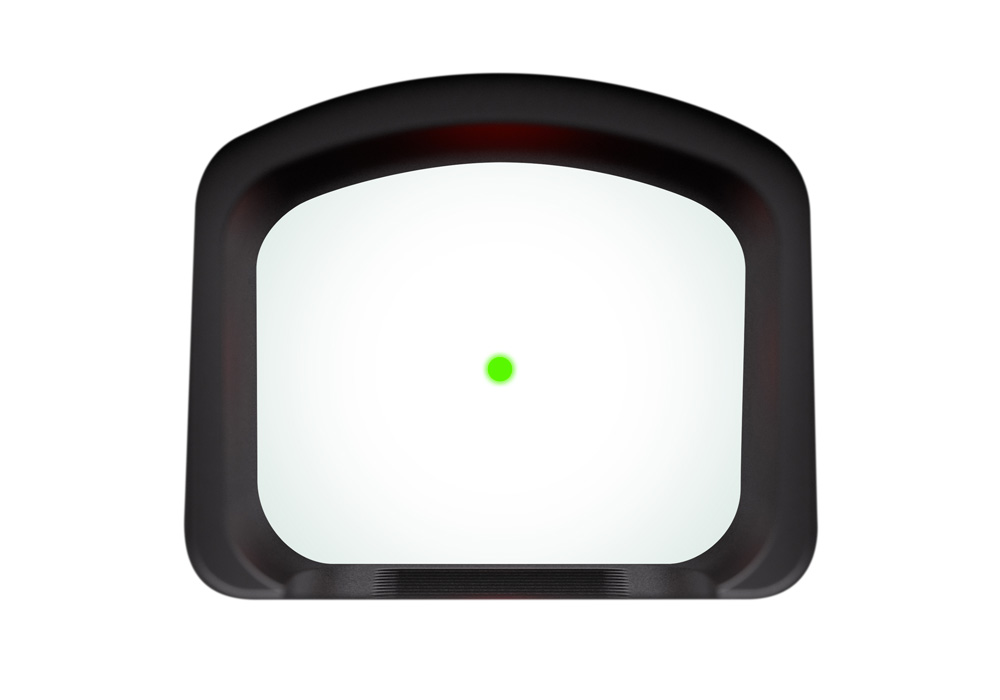
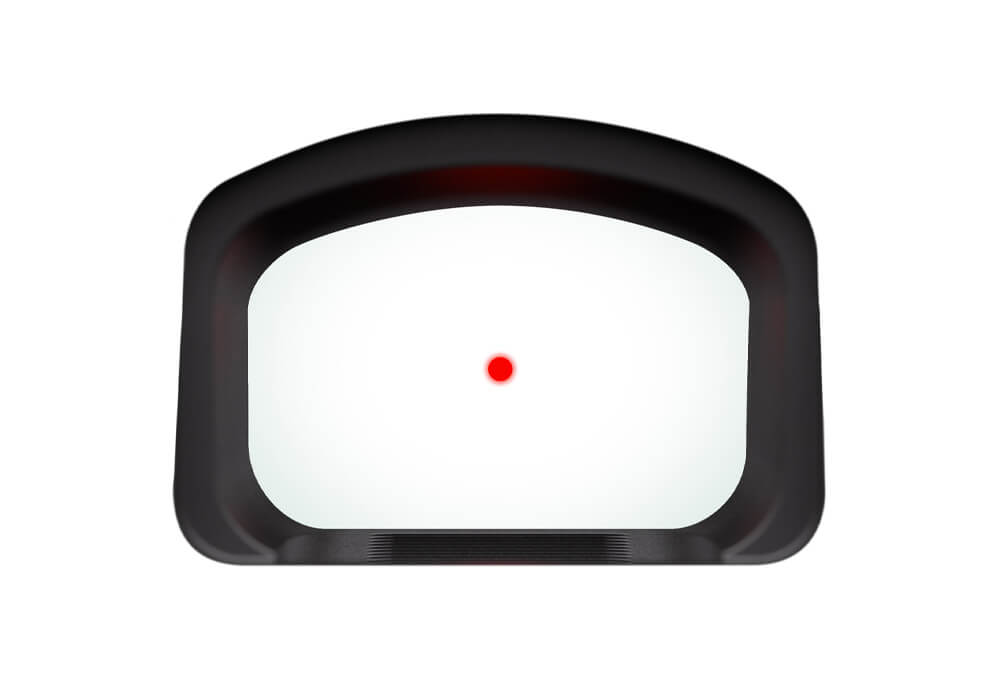
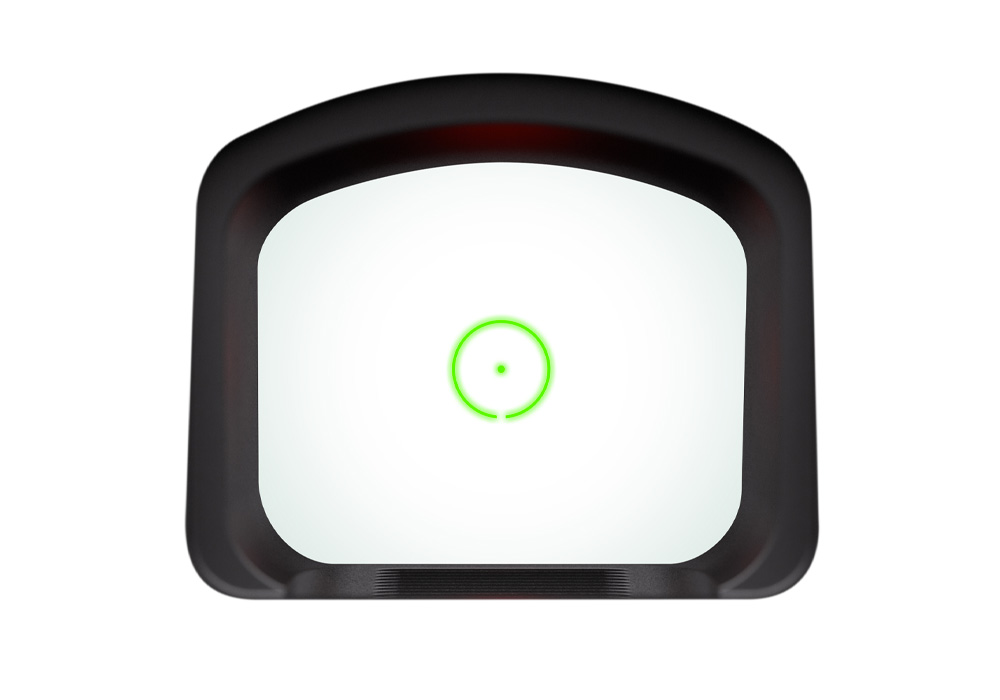
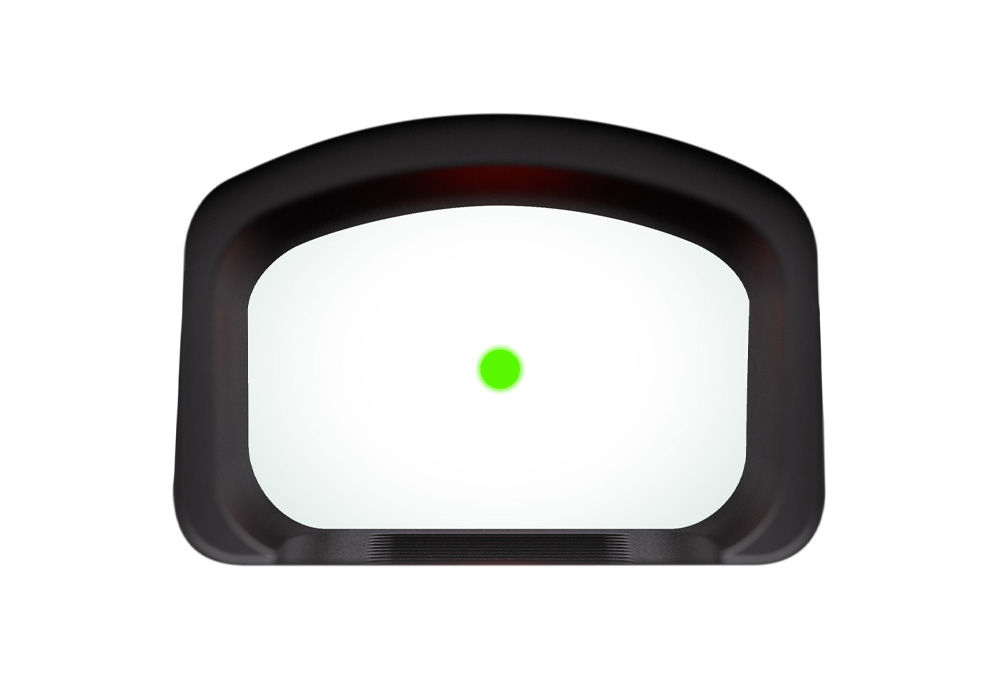
A 3 MOA green dot optic uses an illuminated green aiming point that spans approximately 3.14 inches at 100 yards, offering a useful balance between visibility and a relatively fine sight picture. MOA stands for minute of angle, an angular measurement rather than a fixed physical size. The same 3 MOA dot spans about 1.57 inches at 50 yards and 0.79 inch at 25 yards, so its apparent coverage changes with distance while its angular size stays constant. That measurement describes the aiming point, not a guarantee of accuracy; the firearm, ammunition, shooter, and viewing conditions all influence results. For recreational range sessions and organized target competition, this dot size appeals to shooters who want an aiming reference that is easy to distinguish without covering too much of a small target. Against a paper bull’s-eye or a plainly painted steel plate, the green point provides a distinct visual reference within the optic’s window. Green illumination can appear especially bright to some eyes, although comfort and clarity vary from person to person. Neither color nor dot size alone determines how sharp the reticle will look. Astigmatism, corrective lenses, brightness settings, and the optic’s optical quality can all affect whether a dot appears round, flared, or slightly irregular. Green is a preference worth evaluating, not a universal solution for visual differences. Shooters comparing reticle colors can also explore 3 MOA Red Dot Sights, which use the same nominal angular dot size with a different illumination color. A clean, unobtrusive sight picture matters more than a color preference on paper. For someone spending an afternoon on a supervised range, a comfortable reticle is one that remains distinct against the target without becoming an overpowering glow. That combination of modest target coverage, visible illumination, and individual visual comfort gives 3 MOA green dot optics their broad appeal.
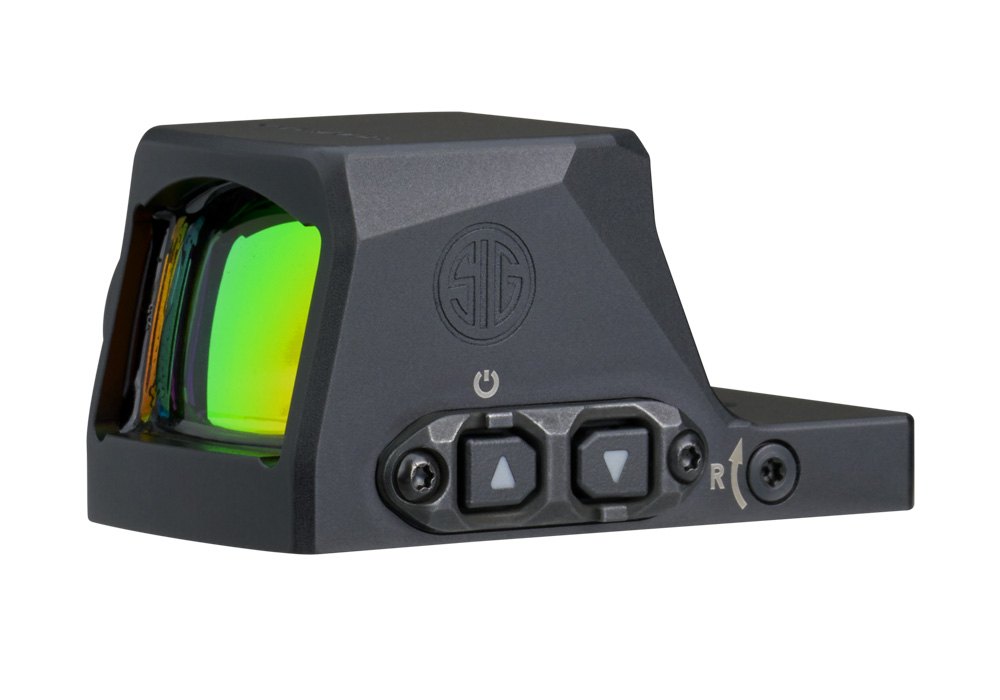
Fit is just as important as the view through the lens. Green dot optics can differ substantially in mounting footprint, housing dimensions, weight, and intended platform, even when they share the same 3 MOA designation. A compact handgun optic and an optic intended for a long gun are not necessarily interchangeable. Compatibility depends on the firearm’s mounting interface, any required adapter, and the optic manufacturer’s stated requirements. Matching a footprint name is only part of that assessment; screw specifications, clearance, and support from the mounting surface also matter. Manufacturer documentation or a qualified professional can help confirm suitability without relying on appearance alone. For a handgun carried in a holster, clearance around the optic housing is another practical consideration. Lens-window size and housing shape affect how open the view feels, while overall dimensions influence how naturally the optic fits the platform. A larger window may feel less restrictive, but it also occupies more space. Materials and construction deserve similar attention. Aluminum housings are common, and protective finishes help resist everyday surface wear, though neither material nor finish alone establishes long-term durability. Recoil compatibility, mounting integrity, control design, and the protection surrounding the lens all contribute to how an optic holds up under repeated use. Open-emitter designs leave the light source’s path to the lens more exposed, while enclosed-emitter designs surround that path within a protective housing. Dust, lint, and other debris are therefore relevant considerations when comparing the two formats. Lens coatings may help manage reflections and improve light transmission, but viewing comfort still depends on the complete optical system. Some tint can be normal in a reflex sight because the lens coating reflects the emitter’s light toward the eye. The important distinction is whether the target remains clear and the aiming point remains usable. A durable optic should suit its intended role as a complete assembly, rather than depend on a single specification that sounds impressive in isolation.
Everyday ownership brings smaller details into focus: accessible controls, sensible brightness adjustment, battery access, and straightforward lens care. An illuminated dot that looks crisp against one background can seem overly bright against another, so a useful adjustment range helps accommodate different range lighting and target colors. Excessive brightness can make the point appear larger or less defined than its nominal 3 MOA size. Manual controls offer direct adjustment, while automatic brightness systems vary in how they respond to surrounding light. Neither approach is automatically preferable for every shooter. Button placement, tactile feedback, and protection against unintended setting changes can be more meaningful than the number of settings listed. Battery life also needs context. Published estimates usually depend on specified brightness levels and operating conditions, and motion activation or automatic shutoff can change the ownership experience. A battery compartment accessible without removing the optic can simplify routine replacement, although the exact arrangement varies by design. Care is generally uncomplicated when it follows the manufacturer’s directions: suitable optical cleaning supplies, gentle handling, and attention to dust around the lens and emitter help preserve a clear view. Abrasive wiping and unsuitable solvents can damage coatings or seals, so cleaning products intended for ordinary household surfaces are not necessarily appropriate. Protective storage also helps keep the viewing window from rubbing against tools or other equipment in a range bag. Before handling or maintaining an optic attached to a firearm, the firearm should be unloaded and handled according to established safety practices. These practical details matter to first-time optic owners, experienced recreational shooters, and competitors who value consistent equipment behavior across repeated range visits. A green dot optic can also be a thoughtful gift for a responsible firearm owner when the recipient’s preferred color, mounting requirements, and intended use are known in advance. Personal fit is especially important for a gift because reticle appearance is difficult to judge on someone else’s behalf. The strongest match combines a comfortable green aiming point, verified compatibility, appropriate construction, and maintenance requirements that fit the owner’s routine. Those qualities give a 3 MOA green dot optic lasting usefulness beyond its most visible feature.