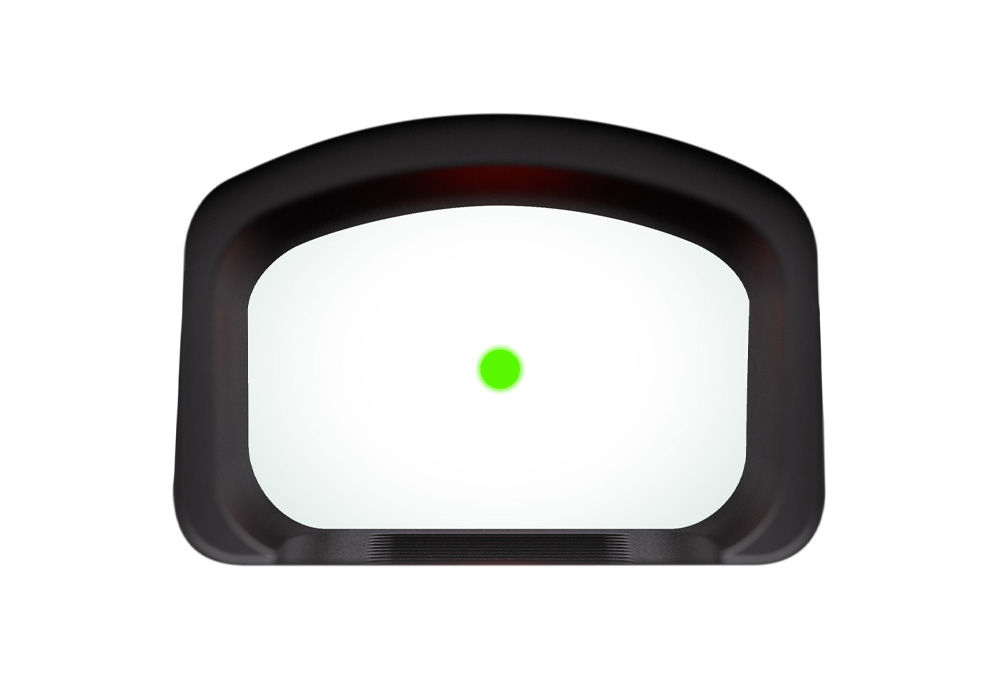
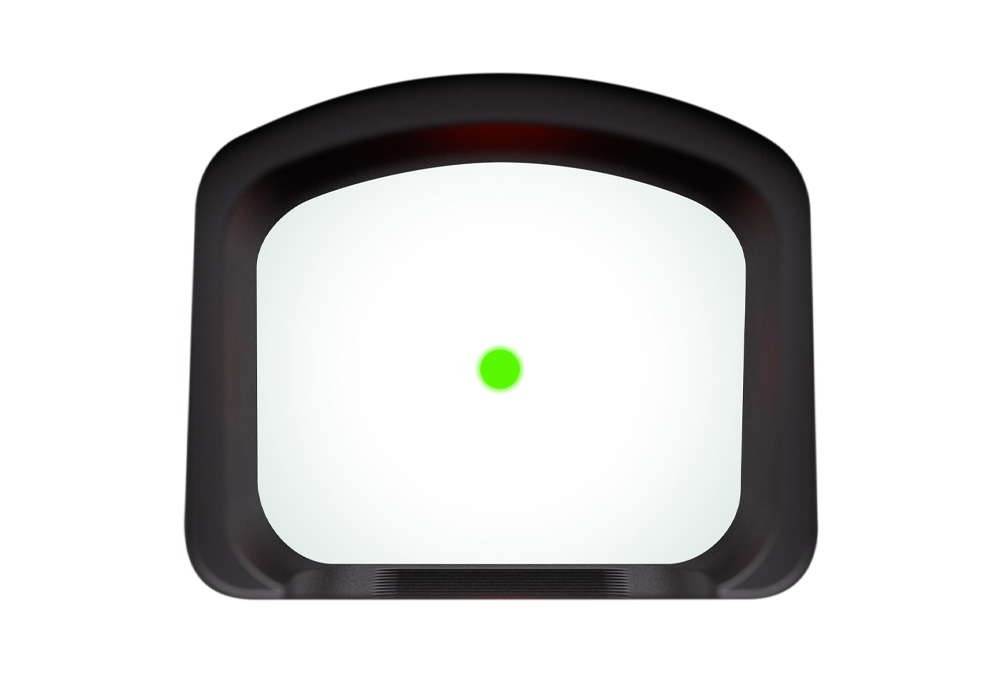
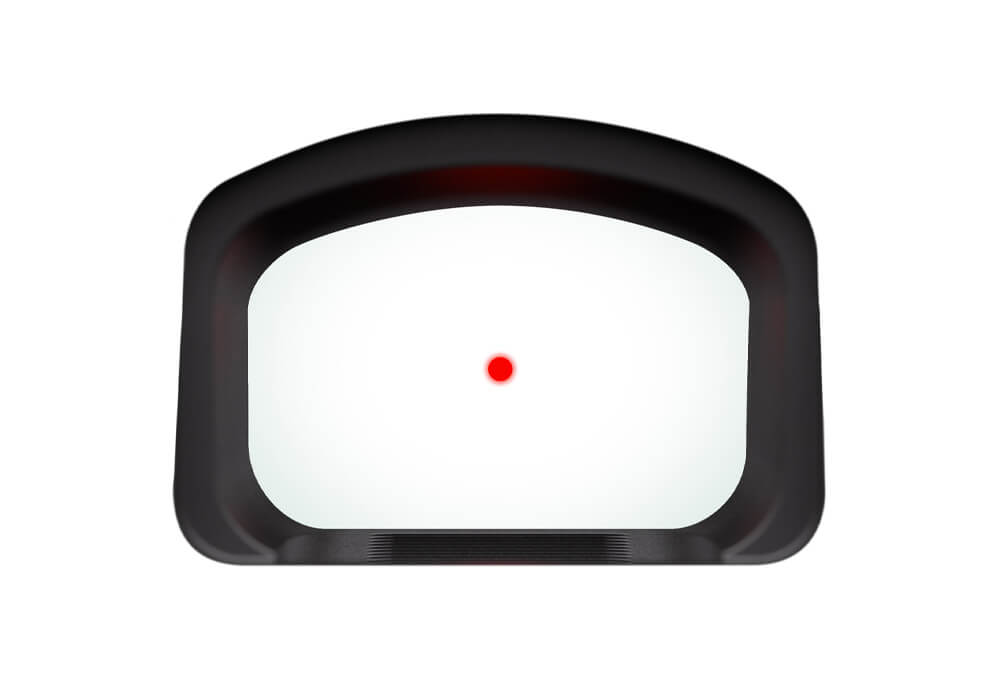
6 MOA Green Dot Optics are designed for shooters who value a bold, easy-to-find aiming point and rapid target acquisition at close to moderate distances. The “6 MOA” measurement describes the apparent size of the dot: at 100 yards, it covers approximately 6 inches of the target, while at typical defensive or training distances it presents as a compact, highly visible aiming reference. That larger point can be especially useful during a fast presentation from the holster, when shooting in changing light, or when the shooter needs to keep both eyes open and maintain awareness of the surrounding area. Green reticles may also appear more vivid to many eyes because human vision is particularly sensitive to green wavelengths. Shooters with astigmatism sometimes find that a green dot looks more distinct than a red dot, although individual vision, brightness settings, lighting conditions, and prescription eyewear all affect the final sight picture. These optics are commonly selected for concealed-carry pistols, home-defense handguns, training firearms, and close-range competition setups where speed and visibility take priority over extremely fine aiming precision. They can also make a thoughtful gift for a shooter who is already familiar with the basics of handgun safety and marksmanship, particularly when the optic is chosen to match the recipient’s firearm, mounting system, and intended use. A well-fitted optic is not a substitute for practice, but it can provide a clear focal point that helps reinforce consistent presentation, proper grip, and disciplined trigger control.
Compatibility should be the first consideration when selecting a 6 MOA green dot optic. Before purchasing, confirm the handgun’s optic-ready configuration, mounting footprint, screw pattern, adapter-plate requirements, and available clearance around the ejection port and rear of the slide. A sight that fits one compact pistol may not mount directly to another, even when both firearms are similar in size. The optic’s dimensions also matter for concealed carry: look at the overall length, width, height, lens position, and how the sight interacts with the chosen holster. Some shooters prefer an open-emitter reflex design because it can be compact and lightweight, while others choose an enclosed-emitter configuration for added protection against lint, dust, rain, and other debris that can collect during daily carry or extended range sessions. Consider the location and shape of the brightness controls as well. Side-mounted buttons may be easier to reach without changing the firing grip, while automatic brightness adjustment can be convenient when moving between indoor and outdoor environments. Manual controls remain valuable when a shooter wants to set a precise brightness level, and a useful optic should provide a setting range that supports dim indoor rooms, shaded outdoor positions, and bright daylight without washing out the aiming point. Battery access, low-battery warnings, motion activation, night-vision compatibility, and the ability to retain a preferred brightness setting can further influence the choice. For shooters who want a finer aiming reference for longer-distance precision work, a smaller reticle may be more appropriate; the selection of 1 MOA Red Dot Optics offers a useful point of comparison when evaluating dot size and intended shooting distance.
Durability and maintenance deserve equal attention, especially for an optic mounted on a reciprocating handgun slide. Look for a housing built to withstand repeated recoil, routine holster contact, and the bumps that come with transportation and practice. Lens clarity, anti-reflective coatings, emitter protection, and a window size that allows quick visual access all contribute to practical performance. A larger window can make it easier to find the dot during the draw, while a compact profile may be preferable for concealment and reduced snag potential. Once installed, the optic should be secured according to the manufacturer’s specifications, with the appropriate screws, thread treatment, and torque procedure; over-tightening can be just as problematic as an improperly secured mount. Confirm the zero from a stable position, then verify it with the firearm held in the same manner used for normal shooting. Afterward, practice presenting the handgun from a safe, unloaded condition before progressing to live fire. Many shooters discover that the dot briefly disappears when their draw angle is inconsistent, and repeated slow presentations help build the alignment needed for a faster, more reliable sight picture. Recheck the zero after installation, after significant handling, and whenever the optic has been removed or exposed to a hard impact. During cooler months, temperature changes, gloves, heavier clothing, and lower outdoor light can all affect how the optic is accessed and perceived, making realistic practice especially valuable. With the right fit, a visible 6 MOA green aiming point can support fast, confident sight acquisition while remaining simple to operate for concealed carry, home-defense preparation, range practice, and close-range competition.