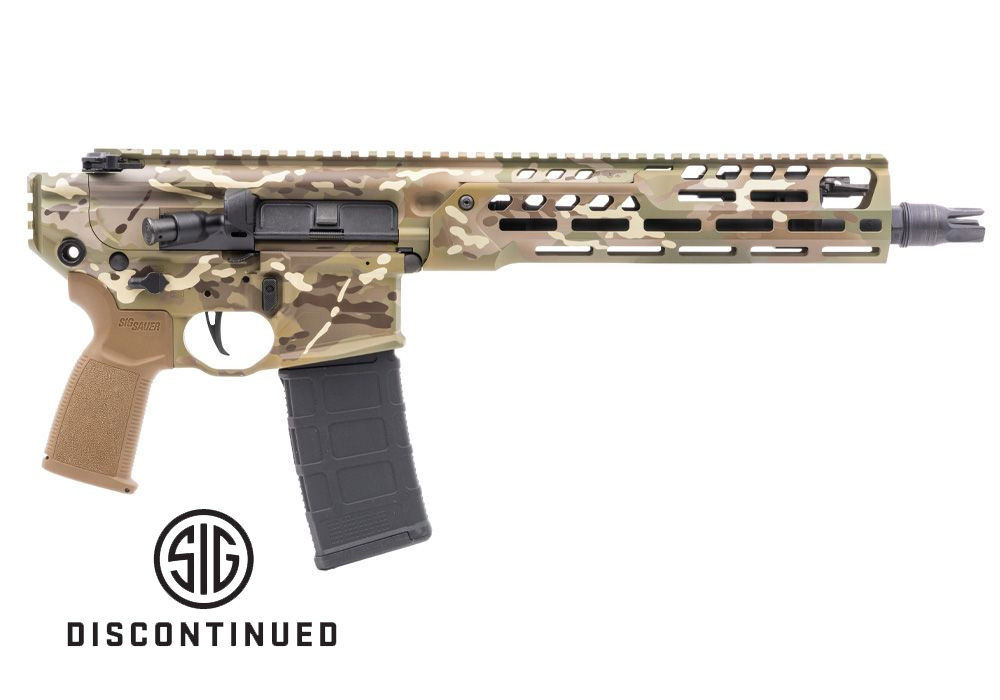
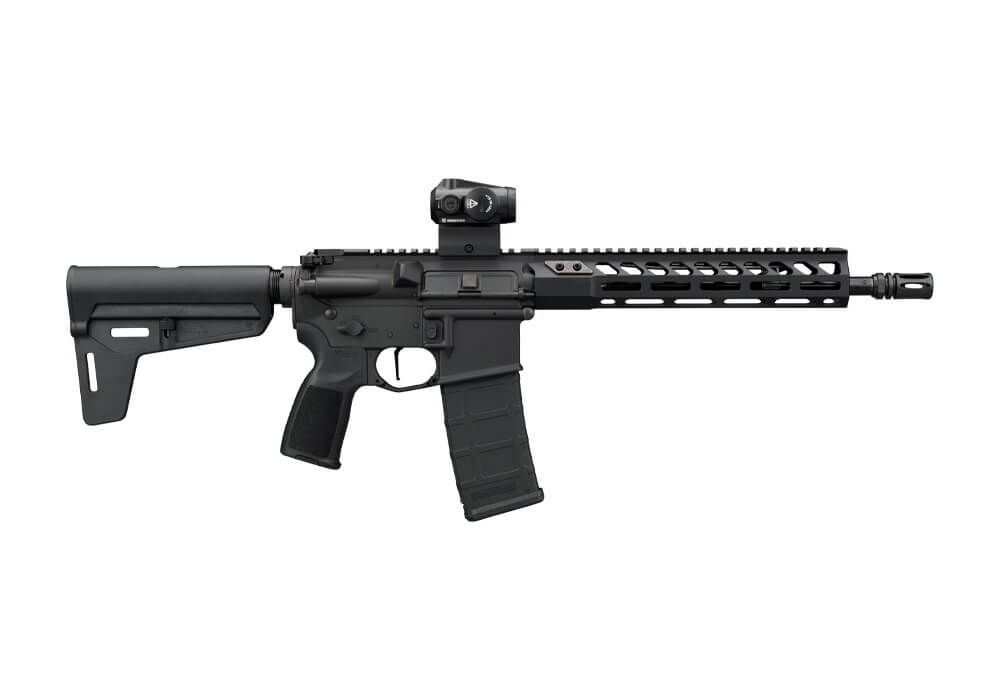
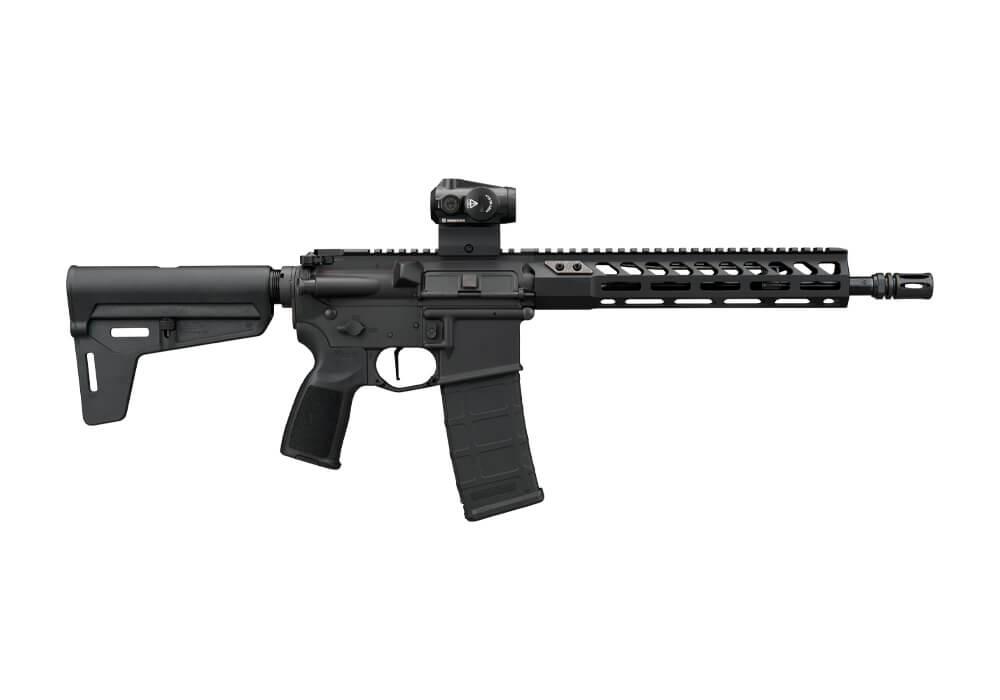
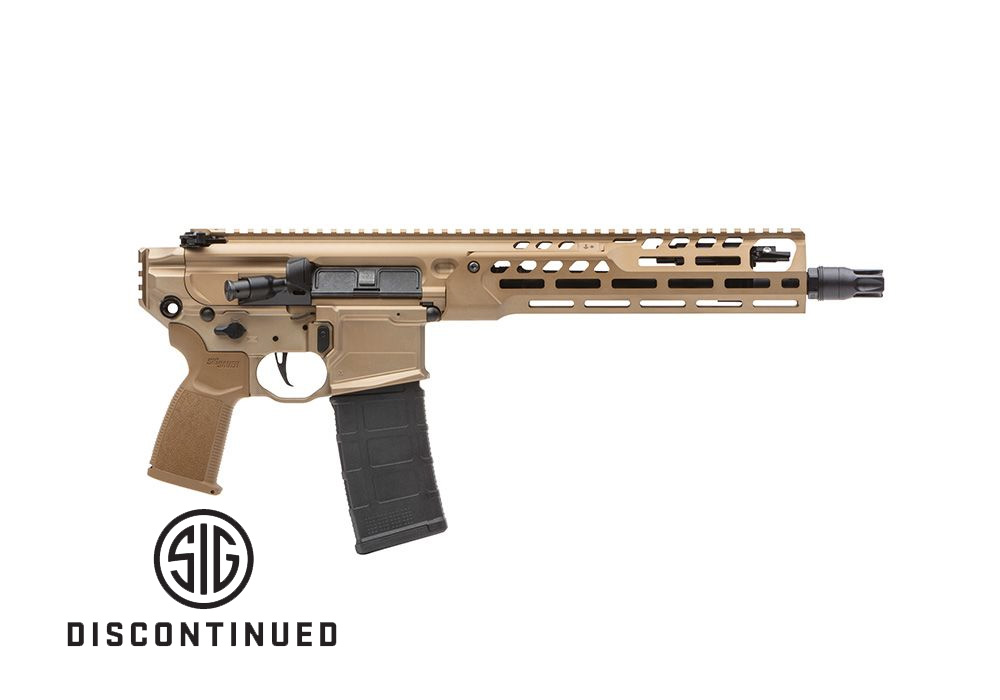
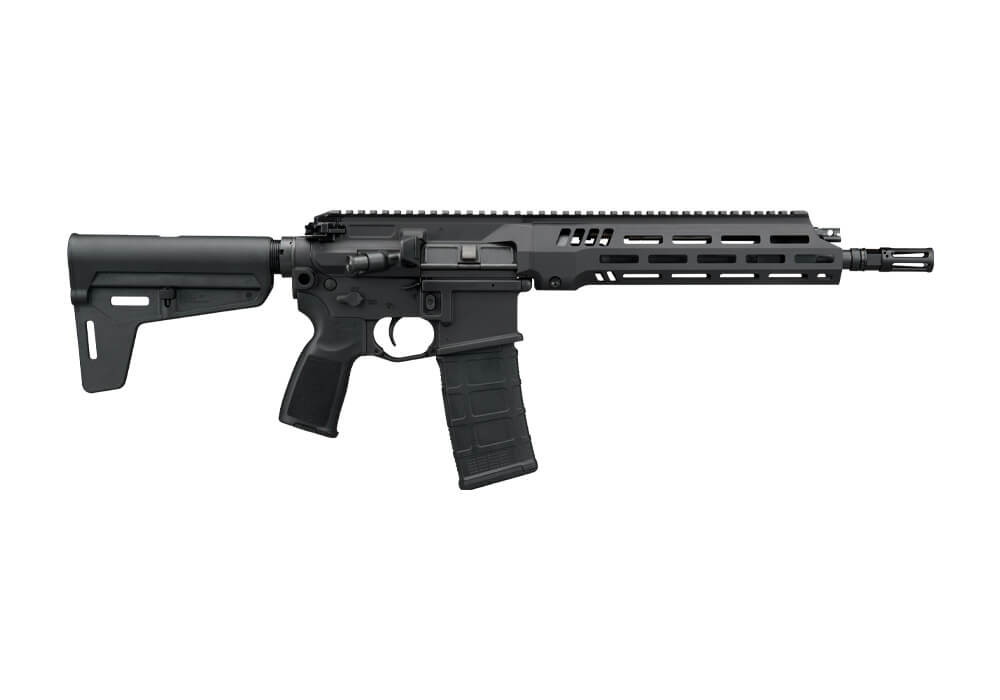
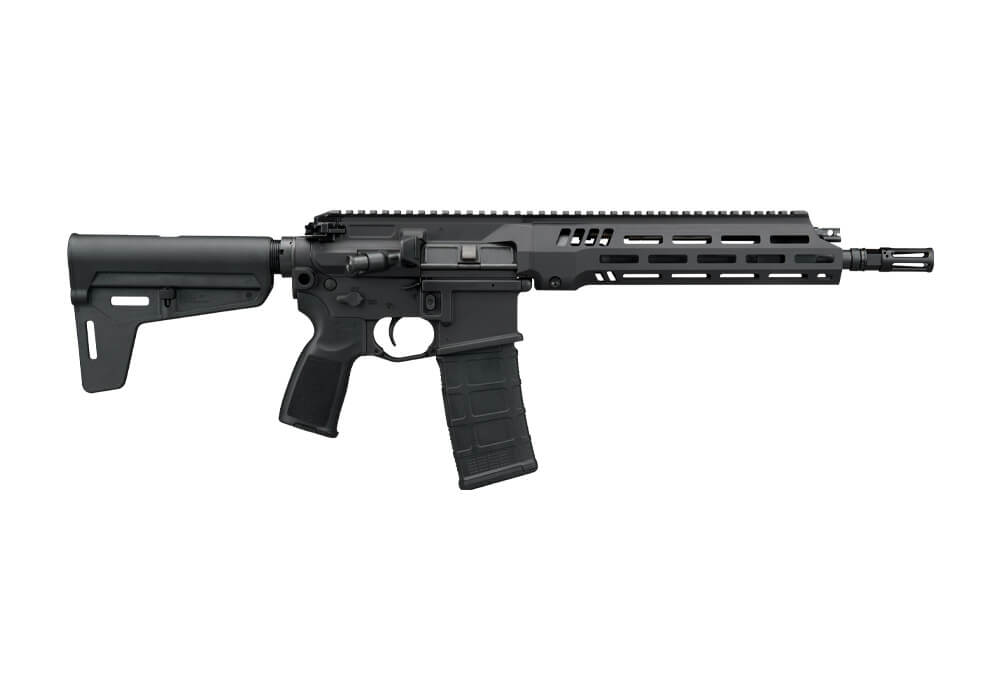
5.56 NATO pistols bring rifle-cartridge target shooting to a compact firearm format, offering a distinct alternative to both conventional handguns and full-length rifles. Chambered for 5.56x45mm NATO, these firearms commonly feature a short barrel, a separate magazine, and controls familiar to shooters who use modern sporting rifles. Their appeal for range shooting lies in a combination of manageable overall dimensions, configurable sighting options, and a shooting experience that differs noticeably from a traditional pistol cartridge. Compact dimensions do not necessarily mean less weight or a gentler report, however. A rifle-caliber pistol can feel substantial in the hands, and its shorter barrel typically produces more pronounced muzzle blast than a longer firearm using comparable ammunition. That difference becomes especially noticeable at an indoor lane or beneath a covered firing line, where sound and pressure can feel more intense. Properly fitted eye and hearing protection, along with compliance with the facility’s firearm and ammunition rules, belongs in any range plan. Barrel length also affects velocity: with comparable ammunition, a shorter barrel generally delivers lower muzzle velocity than a longer one. That does not establish a universal distance limit or determine accuracy by itself. Ammunition consistency, barrel quality, sighting equipment, and the shooter’s ability all contribute to results on paper. For recreational shooters, the attraction may be a relaxed session comparing target groups from a permitted bench setup; for more experienced enthusiasts, it may be the opportunity to become familiar with a different firearm layout. Newer shooters can also find the format interesting, although its sound, weight, and handling characteristics warrant supervised familiarization rather than assumptions based on its size. The most useful way to understand a 5.56 NATO pistol for range shooting is as its own category: compact in overall form, chambered for a rifle cartridge, and best evaluated against the actual conditions and requirements of the range where it will be used.
Materials and construction help distinguish how these firearms feel during a session and how they hold up over repeated outings. Depending on the design, receiver assemblies may use aluminum, while barrels and other heavily stressed components use steel; grips and some exterior components may use reinforced polymers. The material name alone does not tell the whole story. Surface treatments, machining quality, component fit, and the manufacturer’s maintenance requirements all influence long-term ownership. Anodized aluminum and treated steel surfaces can offer useful resistance to wear and corrosion, but no finish eliminates the need for inspection and care. For a range firearm, practical details often become apparent away from the display counter: whether the grip feels comfortable through an extended session, whether the handguard has edges that press into the support hand, and whether controls are accessible without an awkward change in grip. Overall weight deserves the same attention as overall length. A compact pistol with substantial accessories can feel less nimble than its dimensions suggest, while a balanced configuration may feel more comfortable during ordinary handling. Handguard length and shape also affect the usable gripping area, an important consideration on a short-barreled firearm where the muzzle is closer to the shooter’s hands. Sighting choices should suit the intended target work and the firearm’s mounting provisions. A nonmagnified sight can provide an uncluttered view for ordinary range targets, while magnification can help make smaller aiming marks easier to see. Neither replaces a secure, compatible mounting arrangement or a clear understanding of the sight’s operation. Accessory interfaces vary, so compatibility should be confirmed through the manufacturer’s specifications rather than appearance alone. The same applies to magazines, replacement components, and any support accessories. Some configurations use different operating systems or control layouts, which can change maintenance procedures and the feel of handling. For shoppers comparing 5.56 NATO pistols, those differences are most meaningful when considered together: a comfortable grip, suitable sighting arrangement, sound construction, and an understandable maintenance routine contribute more to satisfying ownership than a long accessory list.
Ammunition compatibility and routine care are central to dependable range use. A firearm designated by its manufacturer for 5.56 NATO will generally also accept .223 Remington ammunition, but the chamber marking and owner’s manual are the controlling references. The reverse should not be assumed for a firearm marked only for .223 Remington. Range restrictions may also apply to projectile construction, so cartridge designation alone does not establish whether a particular load is permitted. Factory ammunition of the correct specification provides a straightforward starting point for recreational target sessions, with consistency and reliable function more relevant than broad claims about performance. After a range visit, maintenance should follow the firearm manufacturer’s procedures, including confirmation that the firearm is unloaded before cleaning or inspection. Fouling, lubrication needs, and inspection points vary by design; a familiar routine and the correct cleaning supplies help protect finishes and keep wear easier to recognize. Persistent function problems, damaged components, or unusual wear call for evaluation by the manufacturer or a qualified gunsmith rather than improvised adjustments. Secure storage is equally important, with access restricted to authorized adults and ammunition stored in accordance with applicable requirements. A protective transport case can help prevent bumps and abrasion, but transport arrangements must also satisfy local law and range policy. Legal classification and permitted accessories can vary by jurisdiction and configuration, so any changes deserve careful verification before installation. For shooters considering a longer format alongside a compact pistol, 5.56 NATO Rifles for Target Shooting provides a related category to explore, with different dimensions and handling characteristics to weigh against the same range goals. Ultimately, a suitable range pistol is one that fits the shooter, meets the facility’s rules, and supports the kind of target shooting they genuinely enjoy. Comfortable handling, clear documentation, compatible ammunition, and realistic expectations about sound and barrel length create a stronger foundation for repeat range visits than appearance alone.