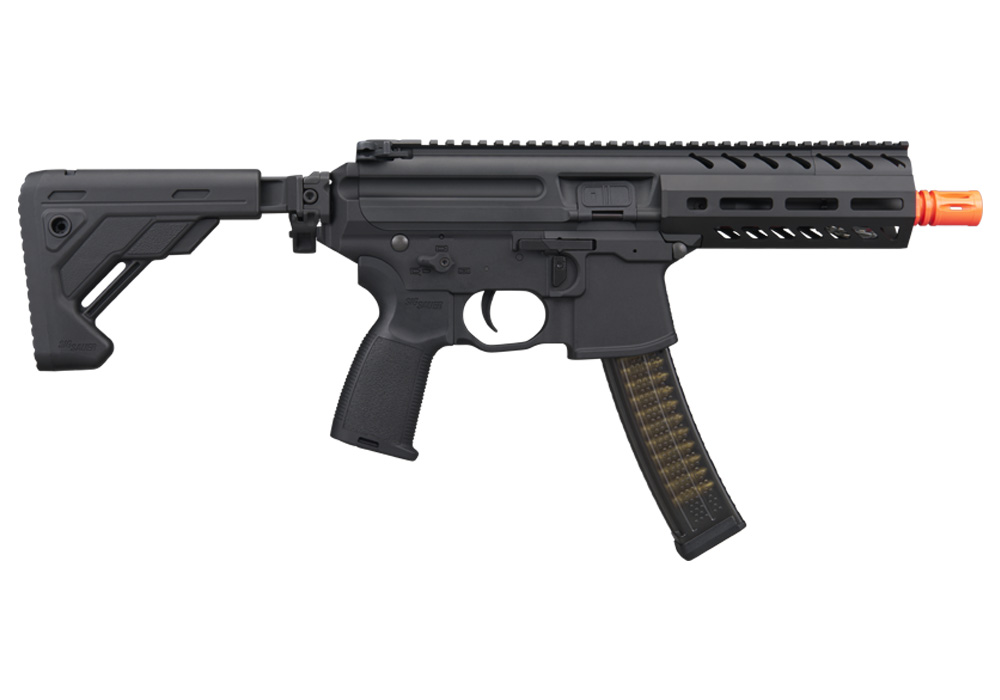
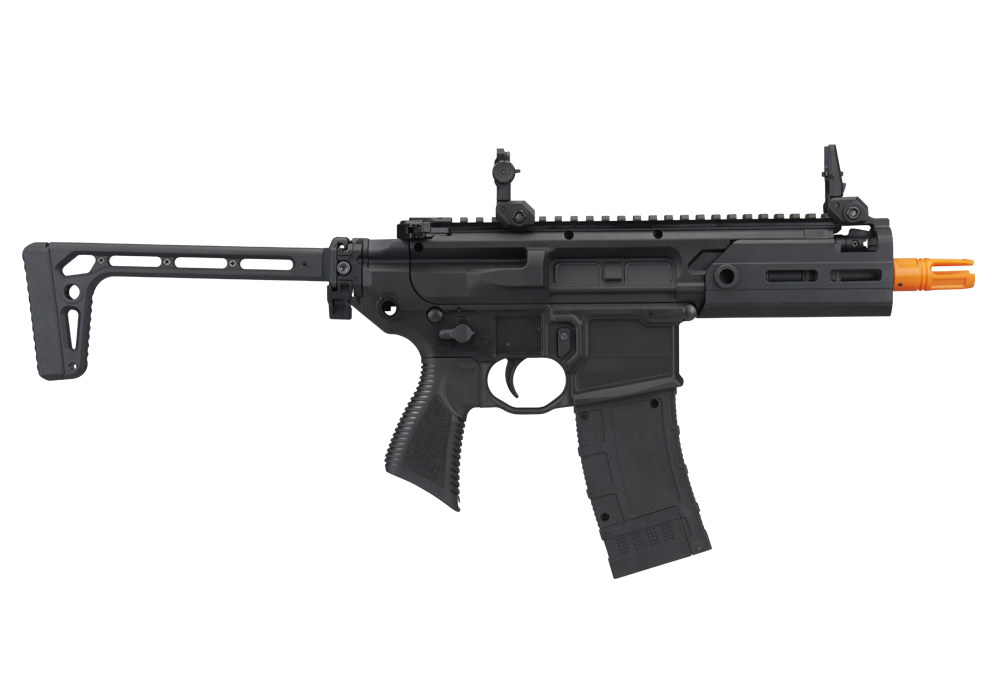
Airsoft rifles for competitive matches are selected with a different standard in mind than casual backyard equipment. During a match, every movement, reload, and controlled burst can affect the outcome, so consistency matters from the first trigger pull to the last engagement. Players typically look for a rifle with dependable trigger response, stable velocity, practical ergonomics, and durable external construction that can withstand repeated transport, barricade contact, and fast movement through demanding terrain. An electronic trigger unit or MOSFET can help reduce lock time and provide a cleaner, more predictable trigger feel, while a well-tuned gearbox supports reliable cycling throughout a full game. For many competitors, an airsoft electric gun, or AEG, offers a versatile balance of performance and maintenance, with rechargeable power and dependable operation across a wide range of conditions. Standard or extended capacity magazines can also help players tailor their setup to match rules and personal preferences, though magazine fit, feeding reliability, and ease of changing magazines are just as important as the number of rounds carried. A rifle should feel natural when shouldered, with controls that can be reached without shifting your firing grip and a stock or brace position that remains comfortable during long periods of movement. When the weather warms, outdoor fields may involve tall grass, wooded lanes, dusty staging areas, and uneven ground; during the cooler months, indoor arenas and covered fields can make compact handling and quick target transitions especially valuable. The right competitive platform fits both the player and the environment rather than simply emphasizing the most impressive specification.
Accuracy and consistency depend on the relationship between the inner barrel, hop-up assembly, ammunition, and power system. A tight-bore inner barrel may support a more consistent shot path when paired with quality, properly weighted BBs, while a rotary-style hop-up chamber can make fine adjustments easier and help maintain a repeatable trajectory at longer distances. These components work best when the rifle is properly maintained and the hop-up setting is matched to the BB weight and field limits. Chronograph requirements vary between fields and events, so velocity should always be checked with the ammunition and configuration used during play; a rifle that is fast on paper is not automatically the best choice if it is difficult to control, inconsistent from shot to shot, or outside a venue’s rules. AEG platforms are often valued for their reliable performance and straightforward operation, while high-pressure air systems provide adjustable output and a crisp, immediate response for players who prioritize fine tuning and tournament-style consistency. Gas-powered platforms can offer realistic cycling and an engaging shooting experience, though temperature, gas choice, magazine care, and seal maintenance may affect performance. Competitive players should also consider battery access, charging equipment, air tank and regulator compatibility, spare magazines, sling attachment points, optic mounting space, and the availability of replacement parts. A compact rifle can be an advantage in close-quarters arenas, where quick cornering and low-profile movement matter, while a longer field-oriented configuration may provide a steadier aiming position in open lanes. Players who split their time between indoor and outdoor venues may prefer a modular setup with adjustable stock length, adaptable rail space, and a configuration that can be changed without compromising reliability. For a broader selection suited to open-field play, explore Airsoft Rifles For Outdoor Tournaments.
These rifles can suit experienced competitors refining a tournament setup, new players joining a structured league, and teams building a dependable group of primary platforms for practice and match days. They can also make a thoughtful gift for an adult airsoft enthusiast when the recipient’s field preferences, power source, and equipment requirements are known. A rifle chosen as a gift is most useful when paired with practical essentials such as eye protection approved for airsoft use, biodegradable or field-approved BBs, batteries or compatible gas, spare magazines, a charger, a sling, and a secure case. Protective equipment remains essential: full-seal eye protection is a baseline requirement at most organized venues, and additional face, hand, hearing, and lower-body protection may be appropriate depending on the field and rules. Before purchasing, players should review local regulations, venue policies, minimum engagement distances, magazine restrictions, and chronograph standards. Match preparation also benefits from simple habits: inspect the rifle before leaving home, confirm that magazines feed correctly, check the battery or air supply, clean the barrel, and test the hop-up setting with the ammunition intended for competition. On the field, a rifle that balances comfortably and operates predictably allows players to focus on communication, positioning, and controlled shots rather than equipment interruptions. Whether the goal is fast-paced indoor competition, a demanding outdoor match, or regular practice with teammates, the strongest choice is a platform that combines responsive controls, consistent performance, manageable weight, and the durability to keep pace with the way it will actually be used.