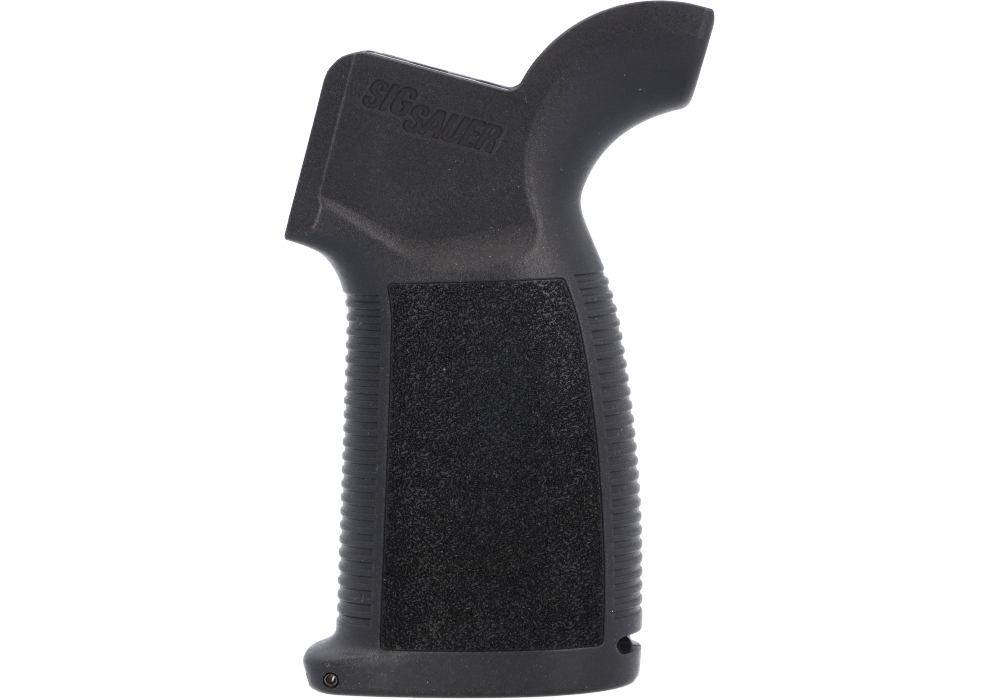
AR-15 grips shape one of the most personal contact points on the rifle: the place where the firing hand rests throughout a range session. A well-suited pistol grip balances angle, texture, and dimensions so the hand can settle naturally without excessive pressure or an awkward wrist position. More vertical designs can feel comfortable with an upright posture and a shorter stock setting, while a more swept-back profile may suit a different stance or personal preference. Neither shape is universally better; comfort depends on the relationship between the shooter’s hand, the grip, and the rest of the firearm. Grip width matters just as much as angle. A broad palm swell may fill a larger hand comfortably, while a slimmer profile can give smaller hands a less stretched feeling. Front-to-back depth also affects how far the fingers wrap around the grip and how the index finger reaches the trigger. Finger grooves offer a defined resting place for some hands, but a groove-free surface leaves more room for individual finger spacing. An extended upper section, often called a beavertail, changes how the grip meets the web of the hand and can soften the feel of that contact area. These differences may look subtle in a photograph yet become noticeable over an extended practice session. Someone who feels a hard ridge beneath a knuckle or finds a pronounced swell pressing into the palm may prefer a simpler contour rather than a more sculpted one. Texture deserves the same attention: enough surface definition to support a secure hold, without an abrasive finish that becomes distracting. The most suitable AR-15 pistol grip is not necessarily the largest, most heavily textured, or most angular option. It is the one whose proportions feel natural for the individual and whose fit is appropriate for the firearm.
Materials influence how AR-15 grips feel, wear, and respond to routine care. Rigid polymer is common because it combines relatively low weight with practical durability and allows a wide range of molded contours and textures. Rubberized surfaces introduce a softer, more yielding feel, although their resistance to oils and cleaning chemicals depends on the particular material. Metal grips can offer a firm, precisely defined shape, with weight and surface feel that differ noticeably from polymer. Wood brings visible grain and a traditional appearance, but its finish may require different care from a synthetic surface. No material eliminates the importance of sound construction. Even edges, consistent texture, and a clean transition around the upper grip area matter wherever the hand makes contact. Coarse stippling or raised panels can feel reassuring during a short handling check but become uncomfortable against bare skin during a longer session. Conversely, a very smooth surface may feel pleasant initially while offering less purchase when hands become sweaty. Gloves change that impression again, particularly when seams or reinforced palms sit against pronounced finger grooves. Durability is therefore more than resistance to visible marks; it also includes how well the material and texture retain their useful feel through regular handling and cleaning. Manufacturer care recommendations should take priority over assumptions about what a surface can tolerate. A soft cloth and an approved cleaning method can help remove residue without unnecessarily exposing rubber, coatings, or finishes to harsh chemicals. Compatibility is equally important. An AR-15 label alone does not establish that every grip suits every receiver or configuration, and exterior clearance can vary around adjacent controls and lower-receiver contours. Published fit information, mounting requirements, and any stated limitations deserve attention before a grip becomes part of a firearm. Uncertain fit, looseness, or interference is a matter for a qualified gunsmith rather than a reason to force components together.
For recreational shooters, sport competitors, and people attending supervised training, grip preferences often become clearer through ordinary time on the range. A grip that feels comfortable during a brief handling check may feel different after repeated periods of holding the rifle, especially if a narrow edge presses against the same part of the hand. Consistency of feel matters more than an imposing appearance. A straightforward profile with modest texture can be a better personal match than deep grooves or aggressive shaping, while another shooter may appreciate a fuller contour that gives the palm a distinct resting place. The surrounding furniture also affects that impression. Comparing grip dimensions alongside AR15 Stocks helps put wrist comfort and overall fit into context, since the distance between the shoulder and the hand changes how a grip feels. Matching colors can create a coordinated appearance, but compatible dimensions and comfortable contact surfaces have greater practical value. Grip weight, width, and any integrated storage features also contribute to the character of the setup; a compartment is a convenience, not a substitute for evaluating the main gripping surface. For someone selecting a gift for an experienced firearm owner, an AR-15 grip is a personal accessory rather than a universal choice. Knowing the recipient’s firearm configuration, preferred profile, and material preferences makes that choice more thoughtful, while guessing from appearance alone can miss the details that matter most. Owners replacing a worn grip may favor familiar dimensions, whereas those reassessing comfort may be interested in a different angle or a less pronounced palm swell. In either case, realistic expectations are important. A grip can change the feel of the firearm in the hand, but it does not replace safe handling, sound instruction, or regular practice. Lasting satisfaction comes from suitable fit, durable materials, manageable care, and a shape that remains comfortable beyond the first few minutes of use.