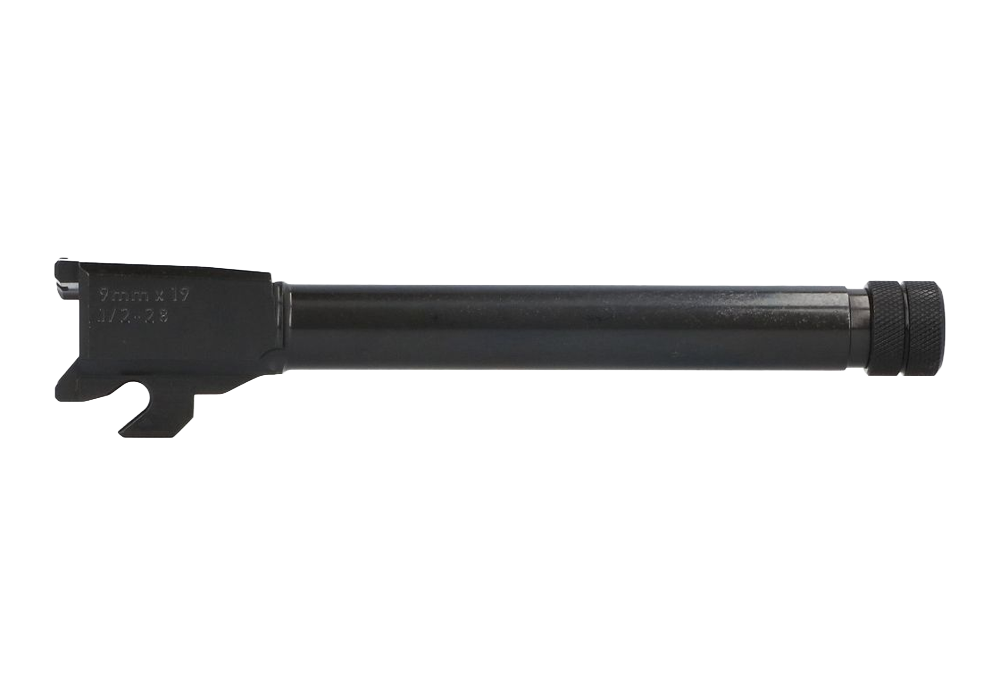
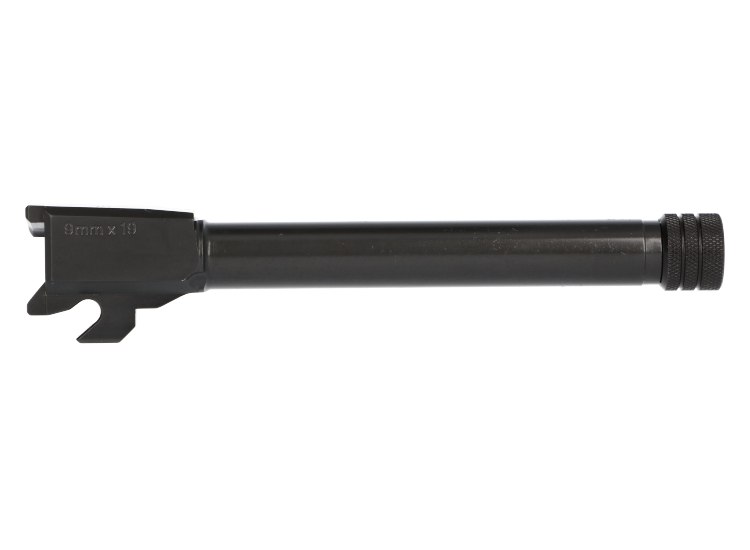
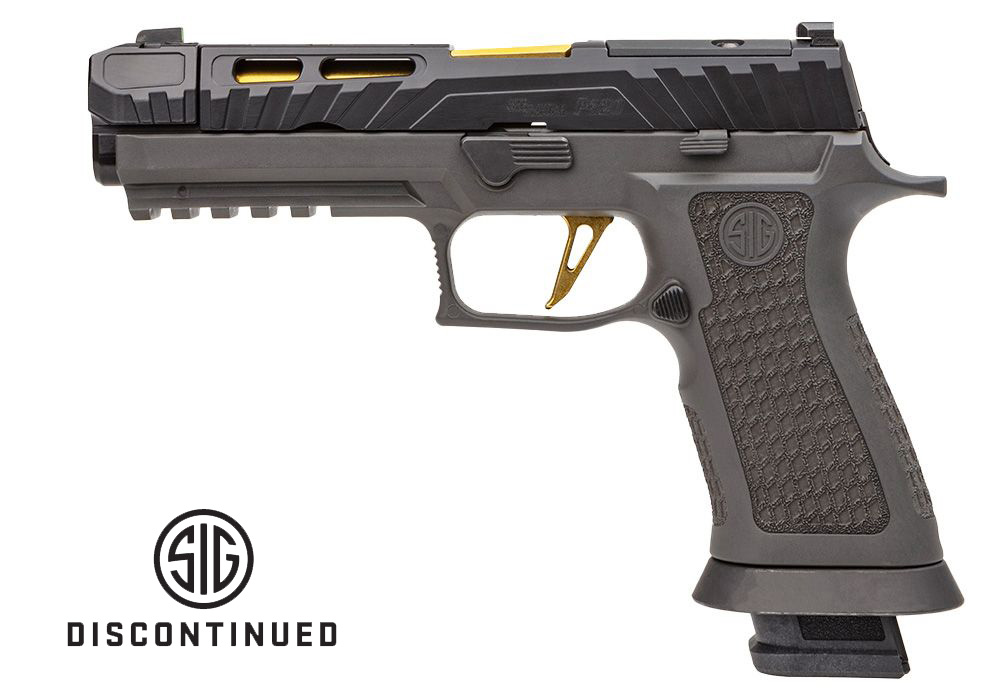
Black and gold 9mm threaded barrels combine two distinct finish styles with a barrel profile that extends beyond the slide to provide external muzzle threads. Black finishes offer a restrained appearance that blends with many pistol configurations, while gold-colored finishes create a visible contrast at the chamber hood and muzzle. The gold appearance generally comes from a surface treatment rather than solid gold; titanium nitride, commonly abbreviated TiN, is one familiar option, and other gold-colored coatings may use physical vapor deposition, or PVD. Black barrels may feature a nitride treatment or another protective finish, depending on their specifications. These treatments differ in composition and application, so color alone does not establish hardness, corrosion resistance, or service life. Many replacement pistol barrels use stainless steel, including 416R stainless steel, while other designs use different steel alloys selected for their intended application. The underlying material, machining quality, surface treatment, and compatibility all contribute to the finished barrel’s characteristics. For a pistol owner who appreciates understated details, a black barrel can keep the overall appearance cohesive. A gold-colored barrel can highlight the exposed chamber hood against a dark slide without changing the rest of the pistol’s visual character. Some configurations combine black surfaces with gold-colored accents, though the finish pattern depends on the individual design. Appearance is only part of the decision: the barrel still needs the correct chambering, dimensions, and mechanical fit for the host pistol. A finish described as match grade should not be treated as a universal promise of smaller groups, because practical accuracy also depends on barrel fit, ammunition consistency, sighting equipment, and the shooter. The strongest appeal of this category is the combination of a carefully selected appearance, suitable construction, and a threaded muzzle for compatible accessories—not an assumption that one color or coating automatically performs better than another.
Fit deserves particular attention because 9mm threaded pistol barrels are not interchangeable simply because they share a caliber or resemble one another. Pistol family, model, generation, slide configuration, and original barrel dimensions can all affect compatibility. Two compact pistols may look nearly identical on a range bench yet require different barrel geometry at the chamber hood, locking surfaces, or muzzle. Manufacturer specifications provide the relevant distinctions, including whether a barrel is intended as a direct replacement or requires evaluation by a qualified gunsmith. The threaded section adds another compatibility consideration. A 1/2x28 thread pattern is common among 9mm pistol barrels, but other patterns exist, and a shared caliber does not confirm that a muzzle accessory will fit. Thread diameter, pitch, direction, and the accessory’s specified mounting requirements must correspond. Thread length and the supporting surface behind the threads can also matter, making the complete specifications more useful than a short description such as “threaded 9mm barrel.” A compatible thread protector helps shield exposed threads when no accessory is attached, while its finish can either blend with the barrel or provide a contrasting detail. Barrel length also influences how far the muzzle projects beyond the slide, which can affect holster clearance and the overall profile of the pistol. Owners comparing different lengths can also explore Long Barrel 9mm Pistol Barrels for a related selection, while keeping host-pistol compatibility central to the comparison. A longer barrel is not automatically a better choice, nor does added length guarantee greater practical accuracy. For range use, a barrel that fits the intended pistol and works with its existing equipment is more useful than a visually appealing option with uncertain dimensions. When a suppressor or another muzzle accessory is part of the intended configuration, compatibility involves the complete firearm and mounting system, not just the barrel’s visible threads.
Care and durability are equally important to the long-term appeal of a black or gold threaded barrel. A protective finish can help resist wear or corrosion, but it does not eliminate the need for routine cleaning, appropriate lubrication, and inspection according to the firearm and barrel manufacturers’ instructions. Carbon residue and friction can change the appearance of exposed surfaces over time, especially around the chamber hood and other contact areas. Light finish wear may reflect normal use rather than a functional problem, although unusual marks, corrosion, or suspected damage warrant assessment by a qualified professional. Gold-colored surfaces can make residue and contact marks more noticeable against their brighter background, while black finishes may conceal some cosmetic changes; neither appearance alone reveals the barrel’s condition. Cleaning products should be compatible with both the steel and its surface treatment, and abrasive polishing can alter a finish rather than restore it. Exposed muzzle threads benefit from protection during transport and storage, particularly when a pistol shares a case with other equipment. Before handling a barrel for cleaning or inspection, the firearm should be unloaded and handled in accordance with established safety practices. For the recreational shooter, these barrels may suit a range pistol whose owner values both a distinctive appearance and clearly documented specifications. For an experienced enthusiast, the attraction may be coordinating a barrel finish with an existing slide and controls while preserving the intended fit. A black finish offers visual continuity; gold creates a focal point without requiring additional decorative details. As a gift, a replacement barrel is best suited to a recipient whose exact pistol configuration and preferences are known, since color is much easier to judge than mechanical compatibility. Clear material information, an identified finish, confirmed fit, and straightforward care requirements provide a more dependable basis for selection than appearance alone. Those details help distinguish a barrel that merely looks appropriate from one that belongs in the intended pistol and supports its owner’s regular range routine.