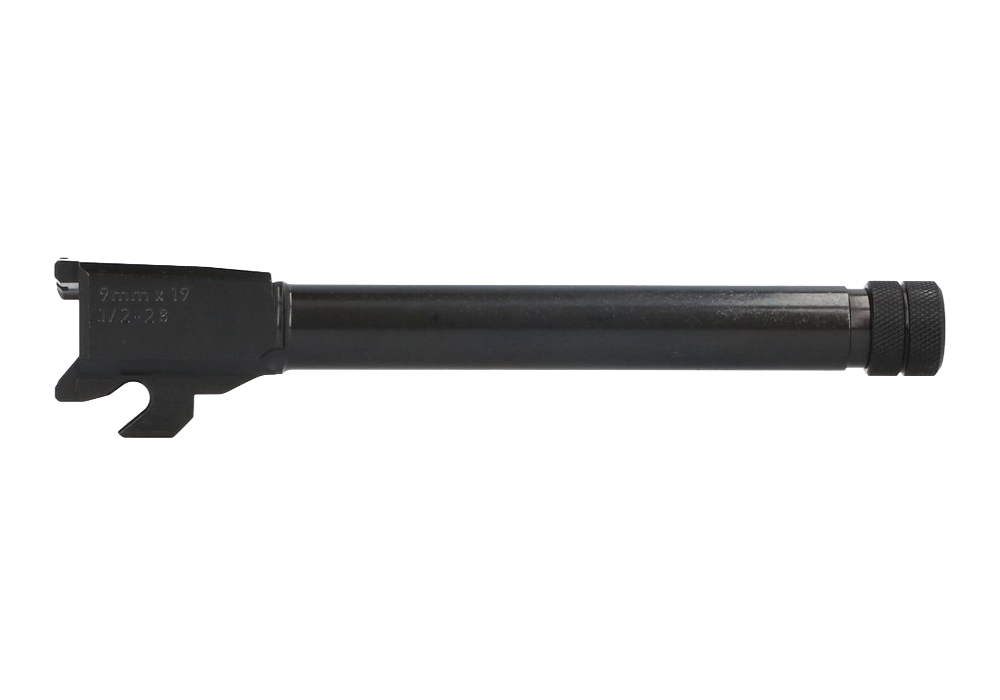
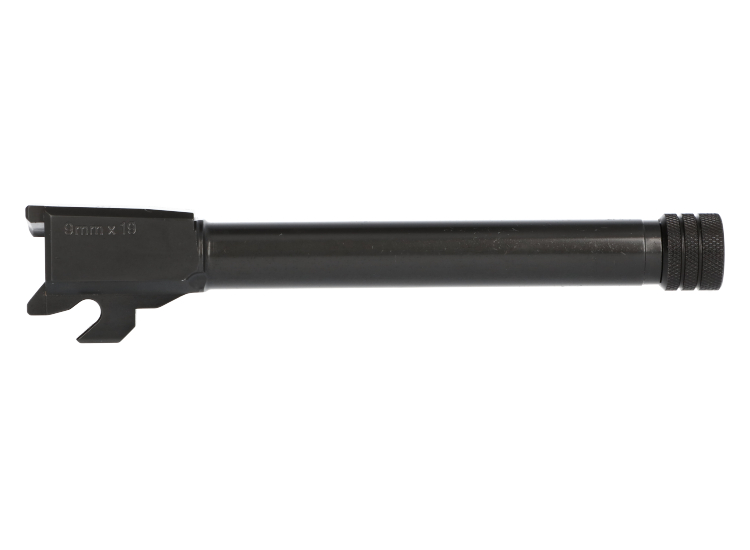
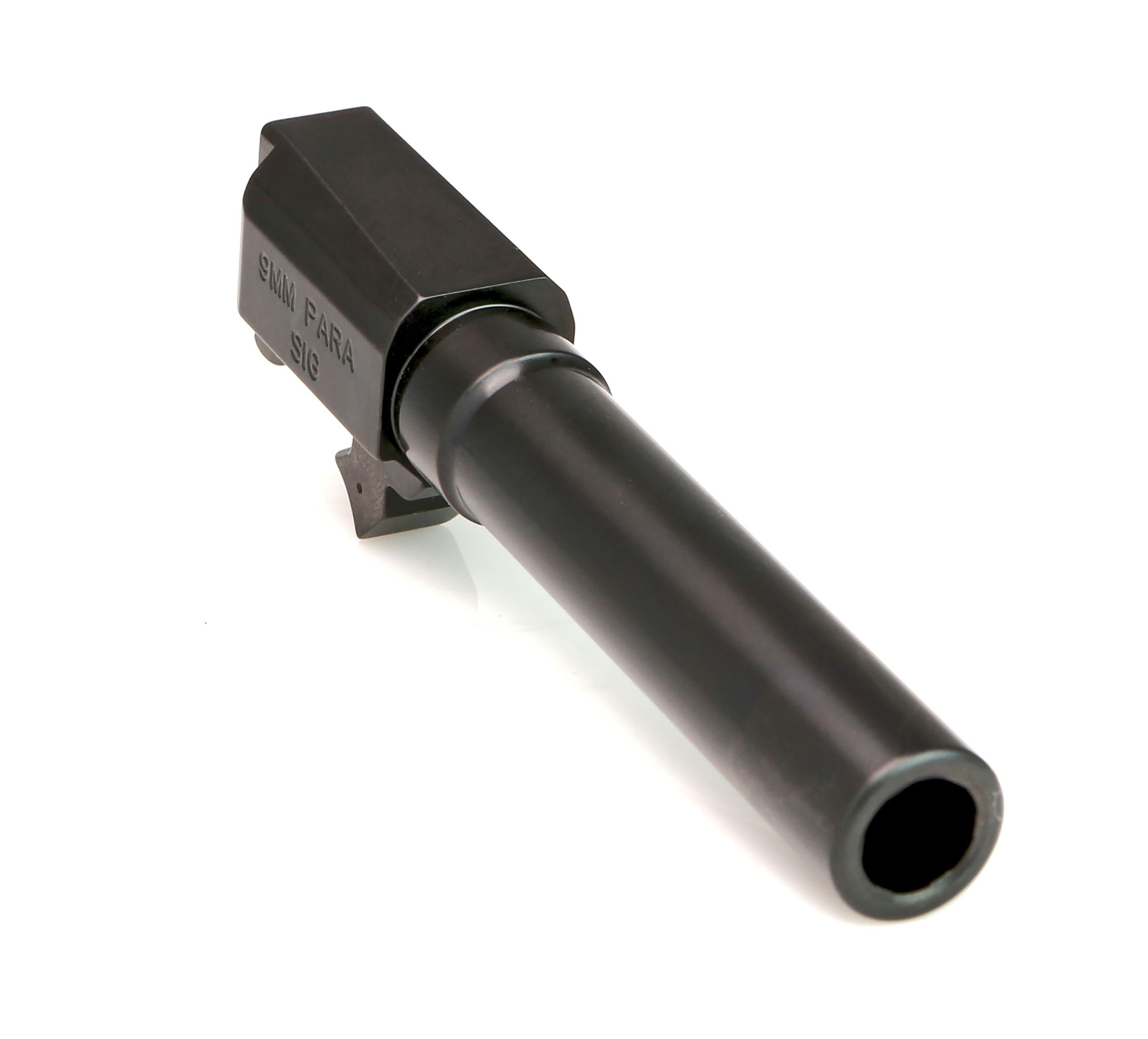
Long barrel 9mm pistol barrels are a practical option for shooters who want to refine the handling and performance of a compatible handgun. In this category, “long barrel” generally refers to a tube measuring approximately 5 to 6 inches or more, though the exact length varies by pistol platform and barrel design. Adding length can give the 9mm cartridge more time to accelerate, which may produce increased muzzle velocity with the same ammunition; the gain is measurable but tends to diminish as barrel length continues to increase. The additional weight at the front of the pistol can also help settle the muzzle and moderate perceived movement during a string of fire. A longer barrel may extend the sight radius on pistols that use traditional front and rear sights, creating more distance between the sighting points and making small alignment errors easier to identify. These characteristics make extended barrels popular for range practice, target shooting, competition-oriented setups, and full-size pistols used for recreational training. They can also complement optics-equipped handguns, although the barrel itself does not replace careful sight-in, consistent grip, or sound marksmanship fundamentals. When comparing options, start with the exact make, model, generation, and chambering of the handgun. A barrel designed for one frame or slide configuration may not be suitable for another, even when the pistols share the same caliber. Review the manufacturer’s fitment information, lockup design, lug geometry, feed-ramp profile, and required slide or recoil-system specifications before purchase. Factory dimensions and tolerances matter, particularly when selecting a replacement component intended for dependable cycling.
The choice between a standard, extended, or threaded barrel depends on how the pistol will be used and which accessories, if any, are part of the setup. A standard barrel can be a straightforward replacement for a worn component or a way to restore a pistol to its original configuration. An extended target barrel may suit a full-size range pistol where the shooter values a longer sighting plane, added forward balance, or the ability to use a longer slide and barrel combination. Threaded barrels add external threads for compatible muzzle devices, but thread pitch, shoulder dimensions, thread direction, and overall protrusion must match the intended accessory. A threaded barrel should never be selected solely by caliber; a 9mm barrel with the wrong thread specification may not safely interface with a compensator or suppressor. Suppressor use also involves applicable federal, state, and local requirements, along with any manufacturer guidance for ammunition, recoil springs, boosters, and service intervals. In some configurations, the added weight at the muzzle can change cycling behavior, so function testing with the chosen ammunition and accessories is essential. For shooters browsing replacement components, Factory Spec 9mm Barrels can provide a useful reference point for dimensions and platform-specific compatibility. Look closely at finish, rifling, crown protection, chamber support, and material specifications, but treat those details as part of the complete fitment picture rather than isolated selling points. A match-oriented barrel may offer tighter manufacturing tolerances, while a duty-style replacement may emphasize reliable feeding and straightforward service. Neither description alone guarantees the best result for every handgun, which is why matching the barrel to the slide, recoil assembly, ammunition, and intended use remains the most important consideration.
Long barrel 9mm pistol barrels can be a thoughtful purchase for an experienced shooter, a competitor preparing a dedicated range handgun, or a firearms enthusiast maintaining a carefully documented collection. They may also be a suitable gift when the recipient’s exact pistol model and generation are known, though a gift card or clearly confirmed part number is often safer than guessing. Barrel fit is highly specific, and even a small difference in model designation can affect installation or function. Before installing any replacement, unload the firearm completely, remove all ammunition from the work area, and follow the owner’s manual and barrel manufacturer’s instructions. If the component is not explicitly identified as a user-installable part, or if fitment is uncertain, consult a qualified gunsmith. After installation, inspect the barrel and slide for unusual contact, verify that the action locks correctly, and conduct a careful function check in accordance with the firearm’s instructions. Live-fire testing should take place only at an appropriate range, beginning with a modest quantity of suitable factory ammunition while watching for failures to feed, extract, or lock open, unusual marks, or changes in primer and case appearance. During warmer days or cooler range sessions, the same fundamentals apply: eye and ear protection, a safe direction, a stable backstop, and strict control of the loaded firearm. With the right match between pistol and component, an extended 9mm barrel can bring a distinctive balance to a full-size handgun, offer a longer sighting plane, and support a more deliberate, consistent experience on the range.