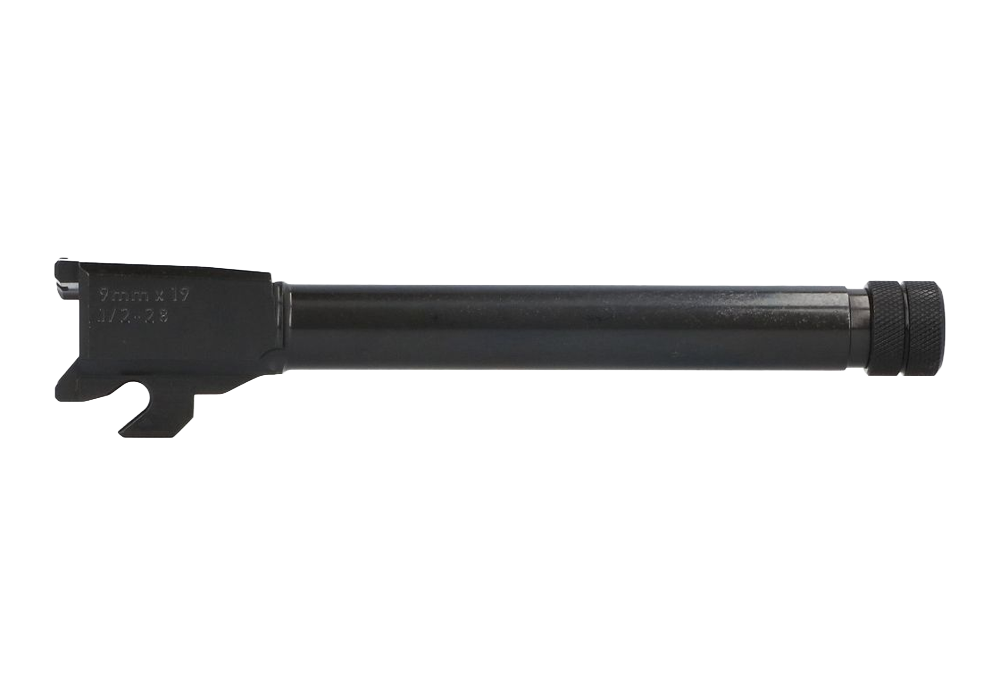
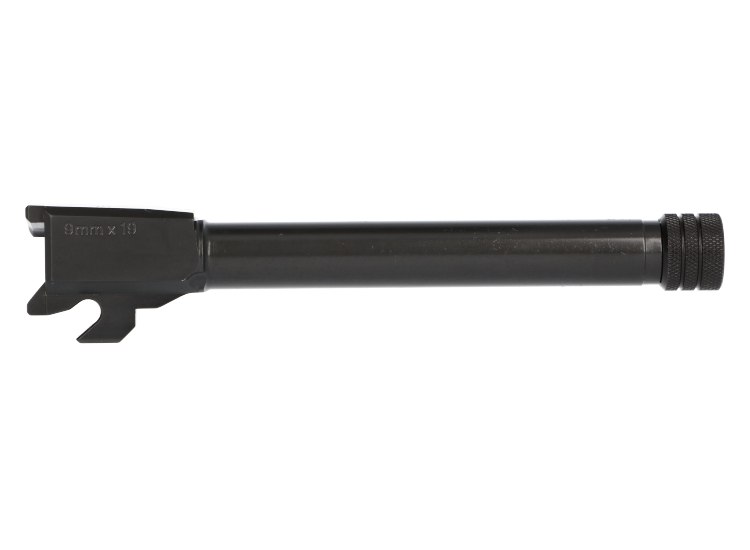
Black 9mm Luger pistol barrels are steel handgun components chambered for 9x19mm ammunition, with dark surface treatments or coatings that give them a subdued appearance and help protect the underlying metal. Their appeal combines a clean visual match with practical considerations: resistance to corrosion, durability at contact surfaces, and compatibility with the pistol they are intended to serve. The black color alone does not identify the steel, finish process, or performance characteristics, so material and finish descriptions offer more useful information than appearance by itself. Common barrel materials include stainless steel and alloy steel, each selected for properties that support the demands of repeated firing. Stainless steel can still benefit from a protective surface treatment, and it still requires appropriate care. Black nitride is a diffusion-based surface treatment rather than a conventional paint-like coating; it can increase surface hardness and improve resistance to wear and corrosion. Diamond-like carbon, often abbreviated DLC, is a thin carbon-based coating valued for hardness and low-friction characteristics. These finishes are not interchangeable, and their performance depends on the underlying material, application process, and operating conditions. A dark barrel may blend into a black slide for a restrained appearance or provide a subtle contrast against a lighter finish, but its mechanical suitability remains more important than the color combination. For someone who spends regular afternoons at the range, the meaningful details are often less visible: consistent fit, sound construction, and surfaces that tolerate normal cycling and cleaning. For an owner replacing a worn component, matching the firearm’s specifications matters more than choosing a finish by name. Black finishes can develop polished areas where the barrel contacts other components, and those marks do not necessarily indicate a defect. Likewise, a pristine exterior cannot confirm the condition of the bore or chamber. A useful description of a black 9mm Luger pistol barrel brings together its chambering, material, finish, dimensions, and intended firearm compatibility rather than treating the dark color as a promise of greater accuracy or unlimited service life.
Fit is the central consideration when comparing pistol barrels, because the 9mm Luger designation identifies the cartridge, not a universal set of dimensions. Two pistols can use the same ammunition while requiring different barrel lengths, external profiles, locking surfaces, and chamber geometry. Compatibility may also depend on the firearm’s generation, slide configuration, or other manufacturer-defined distinctions. A barrel that looks similar to the original component is not necessarily an appropriate replacement, and overall length alone cannot establish a correct match. Product specifications should clearly identify the intended platform and any fitting requirements; uncertain compatibility is a reason to consult the firearm manufacturer or a qualified gunsmith. Standard-length, nonthreaded barrels generally retain the pistol’s familiar profile, while threaded configurations extend beyond the slide to provide an attachment interface for a compatible muzzle accessory. That extension can affect holster clearance and the way the pistol fits into a storage case, details that become noticeable when an owner tries to use an established range setup. Thread specifications also matter: a threaded muzzle is not a universal connection, and accessory compatibility depends on more than the presence of threads. Depending on the design, a thread protector helps shield exposed threads when an accessory is not attached. The choice between threaded and nonthreaded configurations should reflect the intended use rather than an assumption that one is inherently better. Range practice, recreational target shooting, organized competition, and lawful personal protection can involve different equipment requirements, and competition rules may limit permitted configurations. For a related finish and configuration selection, Black and Gold 9mm Threaded Barrels provides a companion category to consider while keeping firearm fit and accessory specifications at the center of the decision. Barrel length, rifling, chamber dimensions, and muzzle construction are relevant comparison points, but none should be interpreted in isolation as a guarantee of improved results. Reliable function and repeatable accuracy depend on the relationship among the barrel, firearm, ammunition, and shooter. A suitable replacement preserves that relationship rather than asking a finish or an external feature to compensate for an incompatible component.
Care and durability are closely connected, even when a black barrel has a wear-resistant finish. Powder residue, fouling, moisture, and handling can affect surfaces over time, so routine cleaning and inspection remain part of responsible ownership. The firearm and barrel manufacturer’s recommendations are the right reference for cleaning products, lubrication, and service intervals, particularly when a surface treatment has specific care requirements. Aggressive abrasives or unsuitable chemicals can harm a finish without offering a useful cleaning benefit. The bore, chamber, exterior contact areas, and any muzzle threads deserve attention appropriate to their design, while unusual wear or a change in function warrants assessment by a qualified professional. A protective finish helps manage exposure; it does not eliminate maintenance or turn every visible mark into a reason for replacement. Someone who practices frequently may see bright contact lines develop on an otherwise dark barrel, while a pistol used less often may show little exterior wear but still need periodic inspection. Storage also matters: a clean, dry environment and manufacturer-recommended protection are preferable to leaving residue or moisture against metal surfaces. For regular range users, durability means a barrel that remains suitable for its intended firearm through ordinary use and care, not a finish that stays cosmetically untouched forever. Competitive shooters may place particular value on consistent function within their equipment rules, while recreational owners may prefer a straightforward replacement that maintains the familiar handling of their pistol. As a gift for an experienced firearm owner, a barrel calls for exact knowledge of the recipient’s firearm and preferred configuration; caliber and color alone are insufficient. Across these uses, a black finish offers a practical, understated appearance that complements many handgun configurations. The strongest selection rests on verified compatibility, clearly described materials, an appropriate finish, and realistic maintenance expectations. Those details remain useful long after the initial visual impression, when the barrel becomes part of a familiar routine of practice, inspection, cleaning, and secure storage.