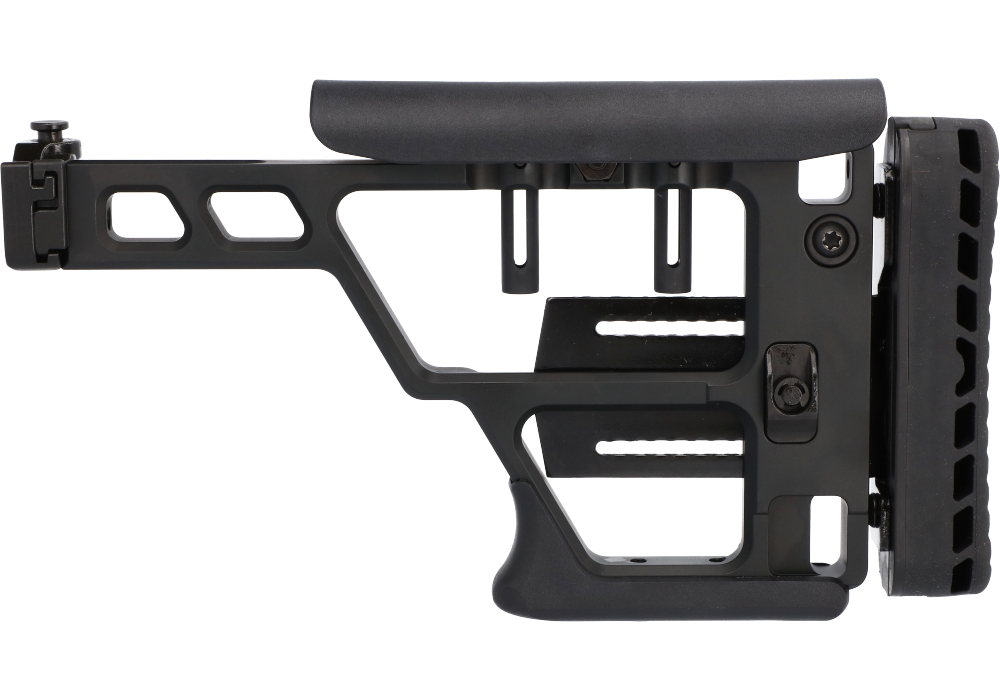
Black stock adapters are practical components for shooters who want to change the rear configuration of a compatible rifle or pistol without replacing the entire firearm. Depending on the design, an adapter may provide a folding mechanism, convert a rear receiver interface to a Picatinny rail, or support an alternative buffer tube and stock arrangement. The black finish is a popular choice because it complements a wide range of receivers, handguards, sights, and other accessories while maintaining a subdued appearance. These adapters are often selected for compact storage, transport, and maneuverability. A folding configuration can reduce the overall packed length of a compatible firearm, making it easier to place in a range bag or secure case, while a rail-based adapter can provide a straightforward attachment point for a stock or brace designed around a 1913 interface. The right choice depends on the firearm platform, rear receiver threads, buffer system, hinge clearance, and the type of stock or brace intended for use. An adapter designed for one platform should not be assumed to fit another, even when the parts appear similar. AR-pattern firearms, AK-pattern firearms, rimfire platforms, and training replicas may use different mounting standards and may require distinct solutions. Carefully reviewing the manufacturer’s specifications before purchase helps confirm thread pattern, interface type, folding direction, compatibility with the operating system, and any limitations on stock or brace selection.
When comparing black stock adapters, construction and installation details deserve close attention. Steel hinge components may appeal to users who prioritize a robust locking interface, while aluminum or other lightweight materials can help keep a compact setup balanced during extended range sessions. Look for a secure lockup, clean machining, positive retention, and a design that does not interfere with the charging handle, ejection path, safety selector, bolt carrier movement, or normal disassembly. Folding adapters are generally intended to be used with firearms and operating systems specifically approved for that configuration; a firearm must be able to function safely in the folded or extended position according to the adapter’s instructions. Picatinny stock adapters follow a different approach, replacing or adapting the rear mounting point so that a compatible stock can attach to a rail interface. This can be useful for modular builds, compact configurations, or shooters who already own a preferred 1913-compatible component. Threaded adapters and buffer-tube conversions should be matched carefully to receiver threads and tube dimensions, since similar-looking parts may not share the same standards. Installation should be performed with the firearm unloaded and separated from ammunition, using the correct tools and torque specifications. If the installation affects the receiver, recoil system, or locking components, a qualified gunsmith can help verify alignment and function. After installation, inspect the adapter and attachment hardware, confirm that the stock locks securely in each intended position, and perform a careful function check in accordance with the firearm and adapter manufacturers’ instructions.
These accessories may suit recreational shooters refining a range setup, hunters seeking a more transportable configuration where lawful, instructors assembling training platforms, or experienced owners updating an established build. They can also be a thoughtful gift for a firearm enthusiast who enjoys practical upgrades, particularly when the recipient has already identified a compatible platform and interface. A gift buyer should avoid guessing at fitment and instead confirm the firearm model, rear mounting standard, preferred stock style, and whether a folding or fixed rail solution is wanted. Shooters who prefer a fixed mounting arrangement may find that Adjustable Stock Adapters better match their setup, while those focused on compact storage may prefer a folding design that locks firmly when extended. During the cooler months, a well-organized range bag and a compact, properly fitted configuration can make trips to the bench more convenient, especially when equipment is carried between a vehicle, a safe, and a covered firing line. As with any firearm component, local laws and regulations may affect which stock, brace, folding mechanism, or overall configuration is permissible. Confirm compliance before installation or use, and retain the product documentation for future maintenance. With the correct platform match and careful installation, a black stock adapter can provide a clean, functional way to tailor the firearm’s rear interface to the shooter’s storage needs, handling preferences, and broader accessory system.