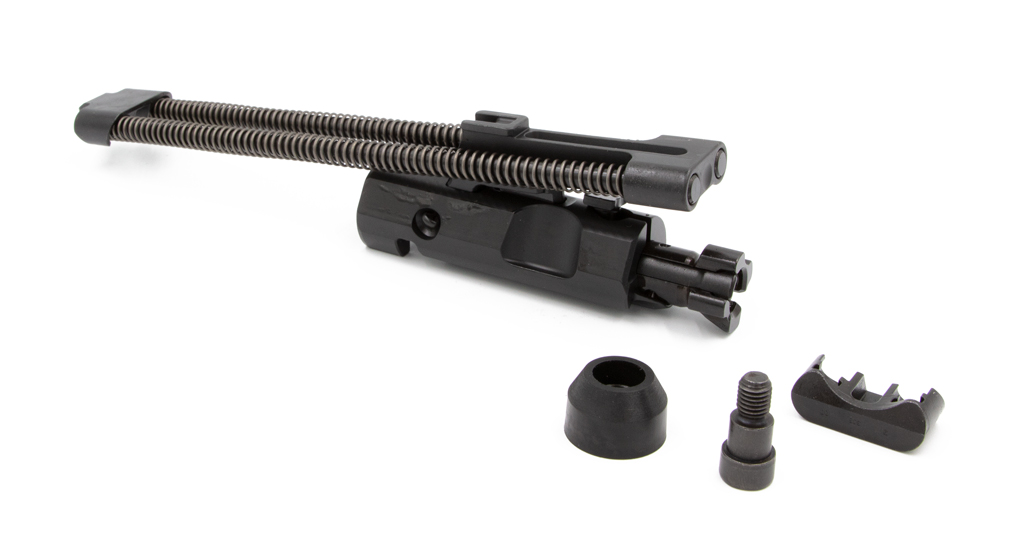
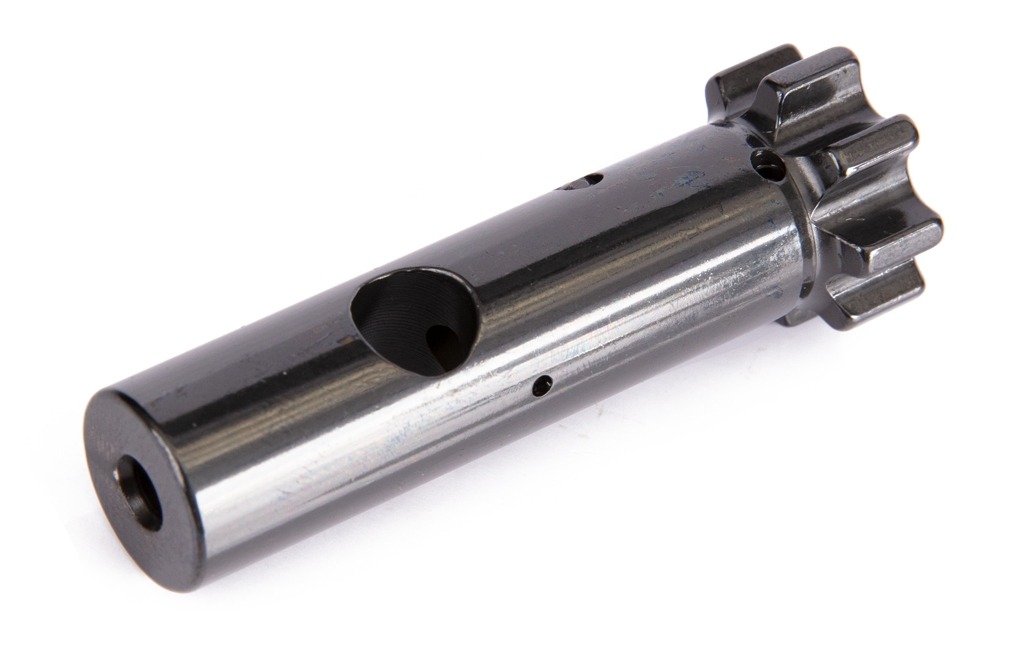
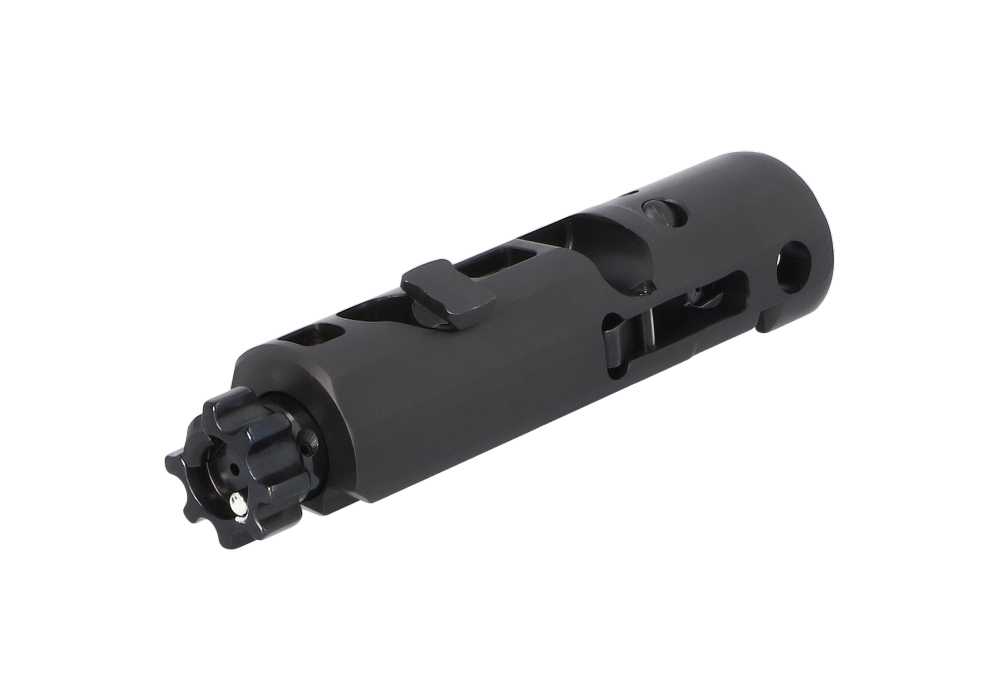
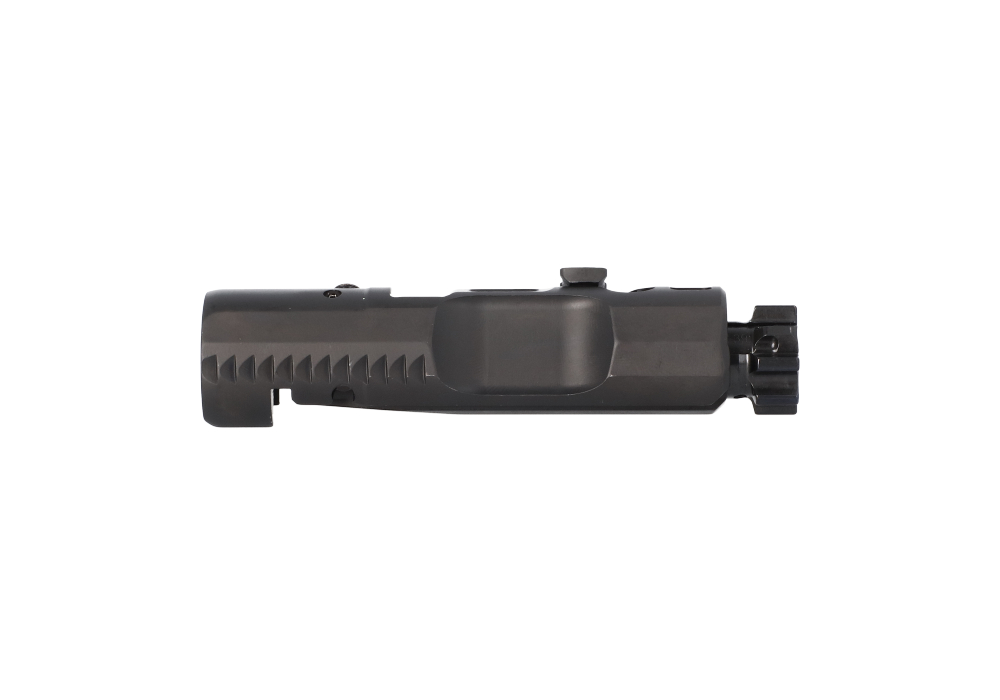
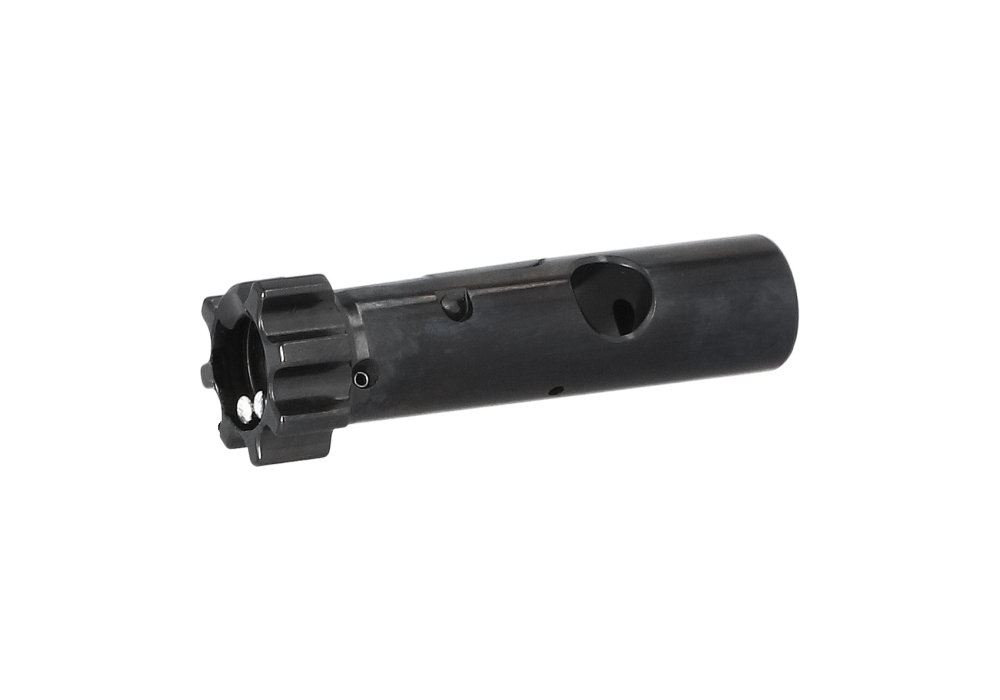
A bolt carrier group for home defense rifles is a working assembly whose value lies in correct fit, consistent function, and dependable service rather than an elaborate appearance. Often shortened to BCG, it supports the rifle’s operating cycle by carrying the bolt as the action chambers a cartridge, locks, unlocks, extracts the fired case, and ejects it. The exact design varies by firearm platform, so this category is best understood as a selection of platform-specific components, not interchangeable parts for every rifle. For owners maintaining a rifle intended for lawful home protection, the starting point is the firearm manufacturer’s specification for the complete assembly. That includes the rifle family, chambering, operating system, and any model-specific requirements. Similar exterior dimensions do not establish compatibility, and a familiar-looking carrier is not proof that its bolt or other components belong in a particular firearm. A useful product description should clearly distinguish a complete bolt carrier group from a carrier alone or an individual replacement component. That distinction matters when comparing assemblies that look nearly identical in photographs but contain different parts. Intended use also deserves attention: a component designed around specialized competition requirements may serve a different purpose from the original assembly specified for a general-use rifle. Standard configurations can provide a straightforward reference point when they match the firearm manufacturer’s requirements, but carrier weight or profile alone cannot guarantee reliable operation. The rifle functions as a complete system, and the condition and compatibility of its interacting parts matter more than any single advertised feature. For a household owner who also practices regularly at the range, the most useful qualities are clear documentation, appropriate materials, accessible care instructions, and a service history that can be tracked. Those considerations keep the purchase focused on maintaining the firearm correctly rather than chasing a finish, a label, or a claim that one assembly suits every application.
Materials and surface treatments help explain differences among bolt carrier groups, though neither should be evaluated in isolation. Steel is common in these assemblies because the bolt and carrier encounter repeated mechanical loading, contact, and wear. Different components can require different steel specifications and heat treatments; the material appropriate for a carrier is not automatically the material appropriate for a bolt. A stated alloy is useful information, but manufacturing consistency, dimensional control, and inspection practices also contribute to service life. Product documentation may identify magnetic particle inspection, which is used to detect certain surface or near-surface defects in suitable materials, or high-pressure testing, which evaluates a component under a specified proof load. These terms describe quality-control processes, not a promise that a part cannot fail. It also matters whether a claim applies to each component or to a sampling process, so precise descriptions are more informative than broad assurances. Surface finishes bring another set of practical distinctions. Phosphate finishes typically have a textured surface that retains lubricant, while nitride treatments alter the steel’s surface to support wear and corrosion resistance. Diamond-like carbon coatings can offer a hard, low-friction surface, with results depending on the coating system, application quality, and underlying component. None of these treatments eliminates the need for cleaning, lubrication, or inspection. A smooth exterior may be convenient to wipe after a range session, but appearance alone does not reveal the condition of internal contact surfaces or the quality of the assembly. Durability is better viewed as the combined result of suitable materials, controlled processing, correct fit, and appropriate care. Shoppers comparing related component categories can find additional context on the Bolt Carrier Group for Rifle Performance page while keeping their own firearm’s specifications as the primary reference. The practical goal is not the most striking component on the bench, but an assembly with a clearly documented purpose and maintenance requirements the owner can follow.
Fit and care become especially important when a rifle has an established role in the household. A replacement bolt carrier group should be evaluated against the firearm’s manual and the component manufacturer’s compatibility information, with uncertain fit or condition referred to a qualified gunsmith. Headspace, the relationship between the chamber and the locked bolt, is a safety consideration that cannot be judged from a product photograph or from whether an assembly appears to slide into place. A part that seems to fit is not necessarily suitable for use. The same caution applies to wear: polished contact areas, persistent residue, corrosion, and visible damage require different judgments, and an owner should not assume that every change in appearance is harmless or that every mark signals failure. Manufacturer-directed inspection and professional evaluation provide a sounder basis for decisions than cosmetic comparisons. Routine care should follow the firearm’s instructions, using compatible cleaning products and the prescribed lubrication rather than treating a protective finish as a substitute for maintenance. After ordinary practice, a clean work area, adequate lighting, and a consistent maintenance record can help an owner notice changes and communicate concerns accurately to a service professional. Keep the firearm unloaded during maintenance, with ammunition separate from the work area, and follow the manual’s safety procedures. If function changes or damage is suspected, stop using the firearm until it has been evaluated. These products are relevant to experienced rifle owners maintaining an existing firearm, newer owners working with a qualified professional, and households replacing a worn assembly through the appropriate service process. As a gift, a bolt carrier group calls for exact compatibility information from the recipient; guessing from the rifle’s appearance is not enough. Responsible ownership also extends beyond component selection to secure storage that prevents unauthorized access, familiarity with applicable laws, and appropriate safety training. Within that broader responsibility, a well-documented, correctly matched bolt carrier group has a straightforward place: supporting the rifle’s intended function through suitable construction, proper care, and timely professional service when needed.