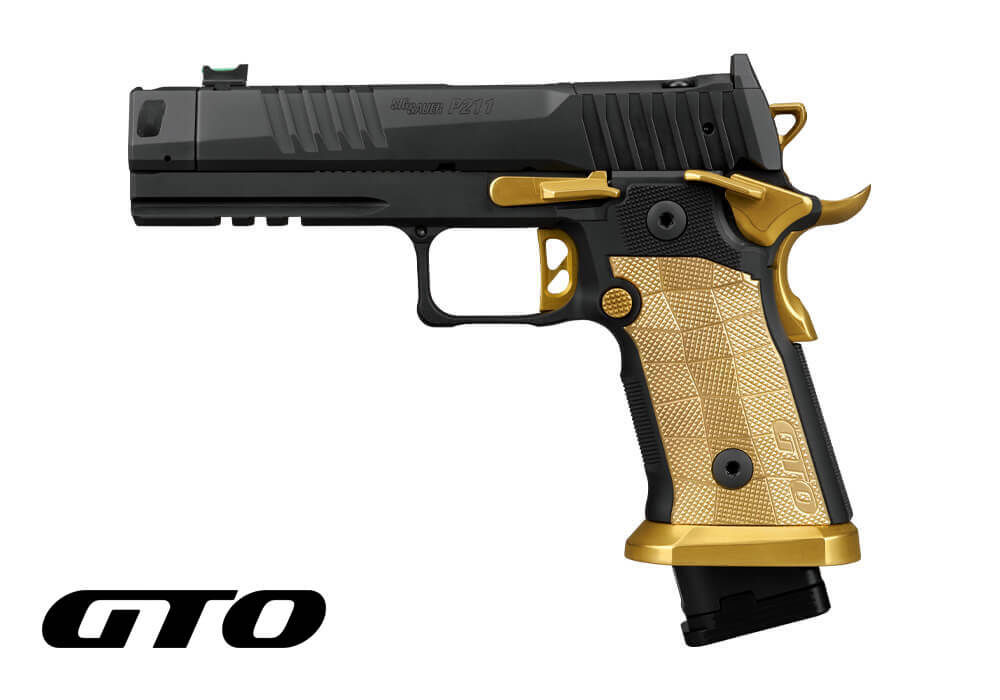
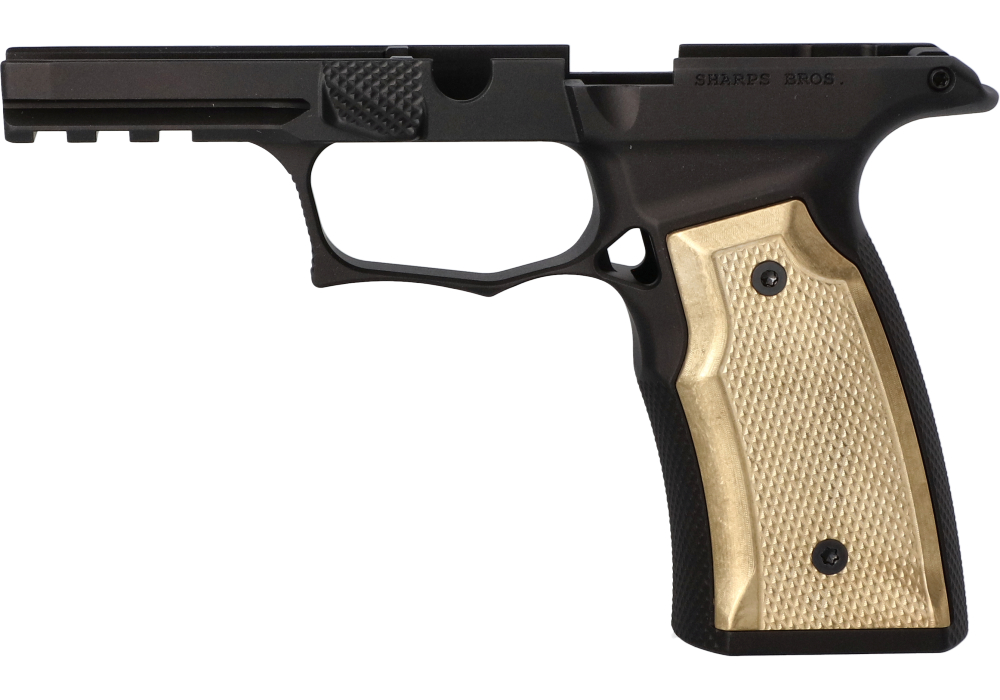
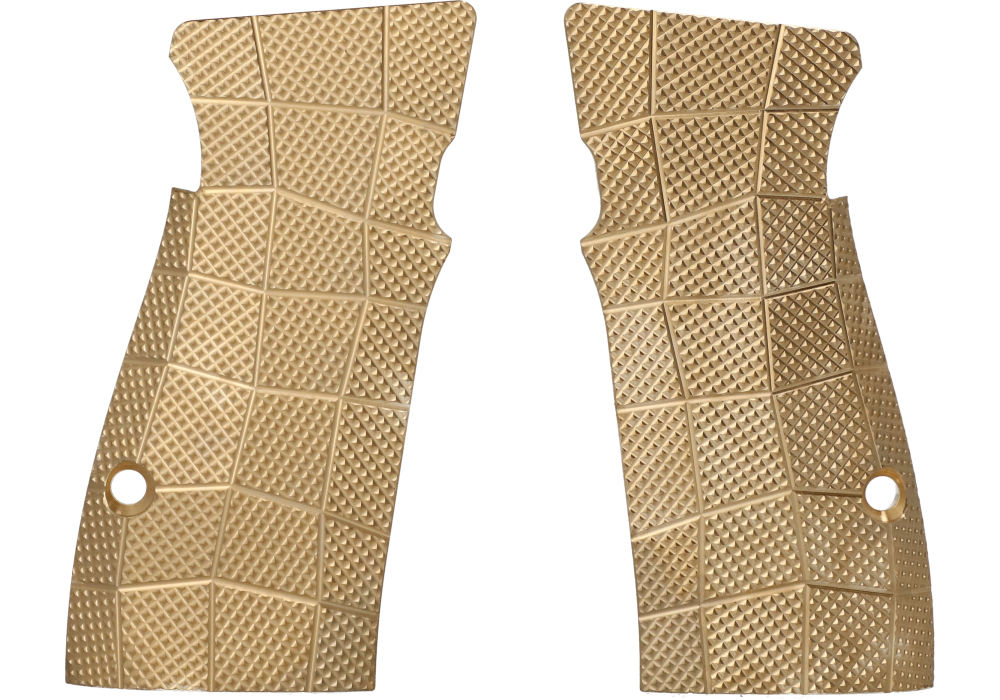
Brass grip panel sets appeal to firearm collectors who appreciate the way a thoughtful detail can change the character of a familiar pistol. Made from dense brass, these panels add noticeable weight at the point where the firearm meets the hand, often creating a steadier, more planted feel than standard polymer, G10, or lightweight aluminum panels. That additional mass can help moderate muzzle movement and make follow-up shots feel more controlled, while the added balance may be especially appealing on compact or lightweight pistols that feel lively in the hand. The difference is easy to notice when a pistol is picked up from a display case: instead of the light, utilitarian feel of factory panels, brass brings a reassuring heft and a sense of permanence. For collectors, that character can be just as important as function. A polished surface can provide a warm metallic contrast against blued, stainless, or coated components, while a darker finished surface offers a more understated appearance and can complement a modern collection. Over time, exposed brass may develop a subtle patina from handling and display, giving each set a naturally individual look. Collectors who prefer a consistent presentation can maintain the original finish with appropriate care, while those who enjoy the marks of ownership may welcome the gradual changes that come from regular handling. These sets can also make thoughtful gifts for a firearm enthusiast, especially when the recipient enjoys customizing a favorite sidearm, restoring a classic-looking setup, or refining the presentation of a carefully assembled collection. A grip panel set is personal without being extravagant, and it gives the recipient an opportunity to make a familiar firearm feel distinctly their own.
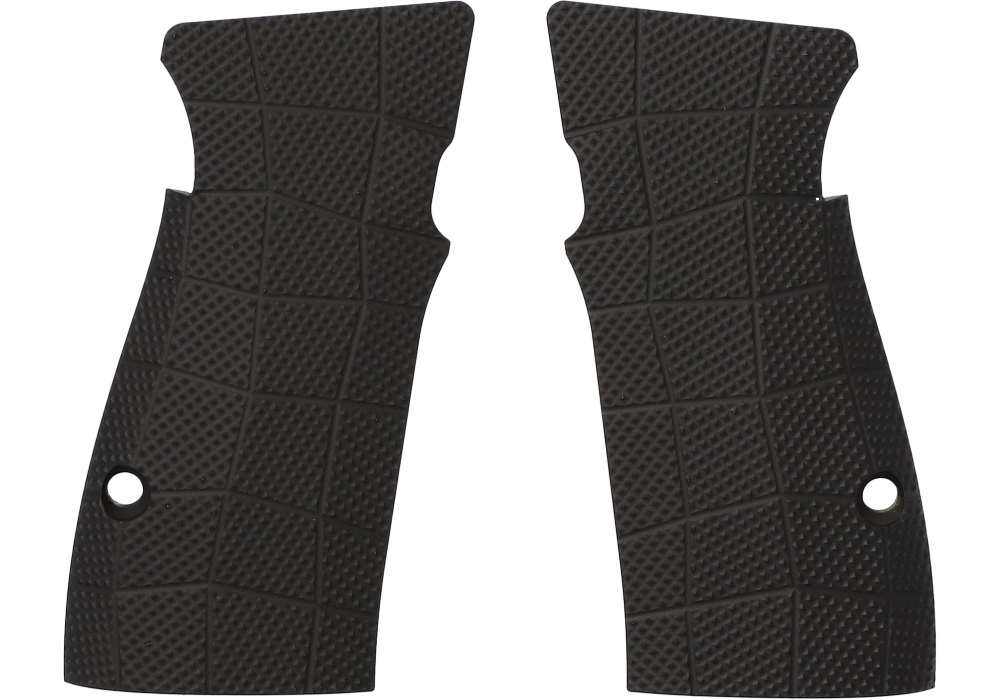
Fit should be the first consideration when comparing brass grip panels for firearm collectors. Grip dimensions, screw locations, frame contours, magazine release clearance, safety placement, and the shape of the backstrap or grip module can vary substantially, even among pistols that appear similar at a glance. Confirming the exact firearm platform and generation before ordering helps prevent issues with alignment or interference, and it is important to verify whether the set is intended for a factory frame, a modified frame, or a particular grip configuration. Some designs use conventional mounting screws, while others may require specific fasteners or additional hardware; the included components and installation requirements deserve a close look. Weight is another meaningful choice. Brass is considerably denser than common grip materials, so a set can add a measurable amount to overall firearm weight—sometimes substantially more than stock polymer or aluminum panels. That extra weight may improve balance for range practice, display, or competition-oriented use, but it may also change how the firearm carries and how it feels during extended handling. Buyers should consider belt, holster, and storage compatibility rather than assuming an existing setup will remain unchanged. Surface treatment matters as well. Raw or polished brass emphasizes the material’s natural color and can develop a distinctive finish with use, whereas a protective coating or dark finish may offer a more subdued appearance and simplify coordination with other components. Texture deserves equal attention. Traditional checkering, machined patterns, and other grip treatments can provide different levels of traction, and the best choice depends on hand size, preferred shooting style, glove use, and whether the firearm is primarily displayed, handled at the range, or carried in a lawful manner. Edges should meet the frame cleanly, the panels should sit flush, and the texture should feel secure without creating distracting hot spots during a long session.
Brass grip panel sets are often selected for the experience they create as much as for their specifications. At the range, the added density can give a compact pistol a calmer, more deliberate feel as the shooter works through controlled strings of fire. In a collection, brass panels can serve as a visual focal point, drawing attention to the lines of the grip and adding contrast to a display without requiring a major alteration. Some owners reserve a set for a special presentation firearm, while others rotate panels among trusted platforms as their preferences change. During the cooler months, when time spent organizing a safe, refreshing a display, or planning indoor bench work can become part of a collector’s routine, a grip upgrade offers a manageable project with a noticeable result. Installation should always be approached with the firearm completely unloaded, the action open, and ammunition kept separate from the work area; anyone uncertain about compatibility or installation should consult a qualified gunsmith. Once installed, check that the panels are secure, controls move freely, magazines insert and release properly, and the grip does not affect holster fit or safe handling. Routine care is straightforward: use a soft cloth, avoid harsh abrasives that could alter the finish, and follow the care recommendations associated with the surface treatment. For those comparing options beyond collector-focused configurations, the selection of Brass Grip Panels for Personal Defense Pistols provides another place to consider how material, texture, added weight, and intended use come together. Whether chosen to refine balance, refresh the appearance of a longtime favorite, or give an enthusiast a distinctive addition to a growing collection, brass grip panels bring a substantial feel and a lasting visual signature to the firearm they fit.