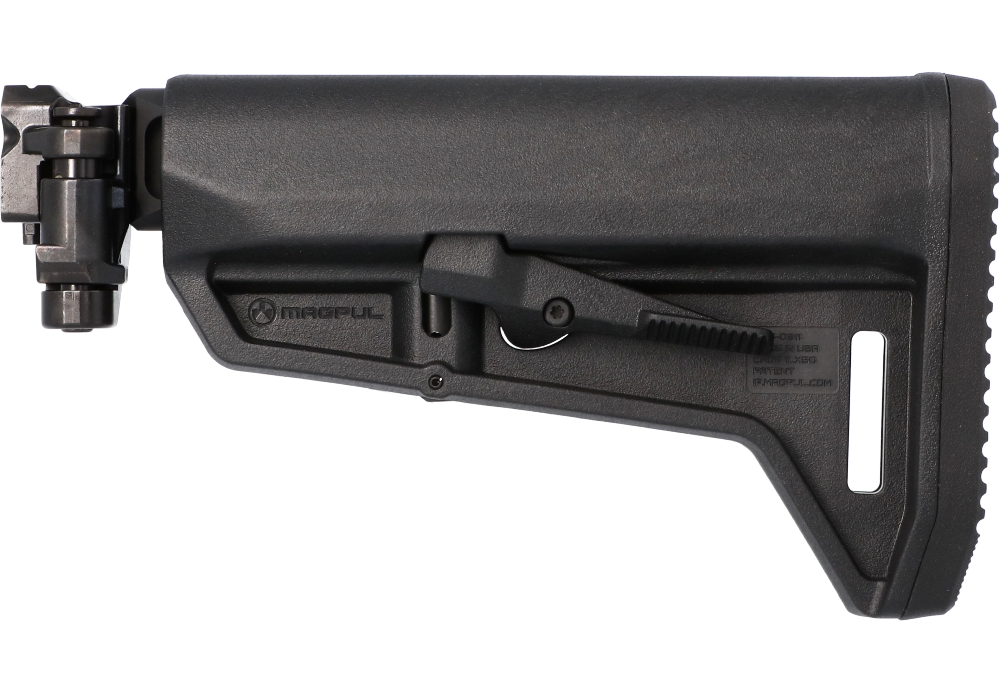
Collapsible stock adapters are designed to change how a firearm’s rear stock interfaces with the receiver, buffer tube, or rear mounting rail, giving owners more flexibility in how a platform is stored, transported, and configured. In many setups, the adapter creates a hinged connection that allows the stock to fold alongside the firearm, reducing the overall length when the firearm is secured for transport or placed in a safe, cabinet, vehicle case, or range bag. That shorter folded profile can make a noticeable difference in practical storage. A rifle that once needed a long case or a carefully cleared corner may fit more easily in a compact protective bag, while a firearm transported to the range can occupy less space among hearing protection, ammunition, tools, and other equipment. These adapters are often considered by recreational shooters, hunters, competitors, preparedness-minded owners, and anyone working with limited storage space. They can also be a thoughtful gift for an experienced firearm owner who enjoys refining a familiar setup, provided the recipient’s firearm platform and mounting system are known in advance. The most important consideration is compatibility: an adapter must match the receiver design, buffer system or rear rail interface, stock type, and operating components of the firearm. Some configurations are intended for platforms using a conventional buffer tube, while others are designed for firearms with a Picatinny or 1913-style rear interface. Understanding those differences before ordering helps prevent an adapter from arriving with the wrong mounting pattern, incompatible hardware, or an unsuitable stock connection.
A standard folding hinge adapter generally allows the stock to fold for transport and storage, but it may interrupt normal cycling when the firearm is folded. On many designs, the bolt carrier group or operating assembly cannot travel through its complete cycle in the folded position, meaning the firearm is intended to be fired only with the stock extended and properly locked. Other specialized systems use a different operating arrangement and may be engineered to permit cycling with the stock folded; these systems are more configuration-specific and should be evaluated closely against the firearm manufacturer’s instructions. The ability to fold does not automatically mean a firearm can be safely or reliably operated while folded. Before selecting an adapter, review whether the design is intended for storage only or for operation in a folded position, and confirm that the complete firearm configuration—not just the adapter by itself—supports the intended use. Owners should also account for the changes an adapter can make to the handling of the firearm. A folding mechanism may add weight at the rear, increase the folded width, alter the balance against the shoulder, or slightly change the extended length of pull depending on the stock and mounting arrangement. Those details are easy to overlook when viewing a product online, yet they become apparent when moving through a doorway, placing the firearm into a case, or shouldering it from a supported position. A secure locking interface, positive hinge engagement, durable materials, and a stock that remains firmly aligned when extended are all valuable features for a dependable setup. Installation should follow the manufacturer’s instructions, with attention to fastener specifications, alignment, clearance, and any platform-specific requirements. When the configuration involves receiver disassembly or changes to operating components, consulting a qualified gunsmith is a prudent step.
Choosing among collapsible stock adapters starts with defining the job the firearm needs to perform. For an owner whose priority is compact storage during the cooler months, a simple folding adapter may provide the desired reduction in length without adding unnecessary complexity. Someone who regularly drives to outdoor ranges or transports a firearm in a secured case may place greater value on a slim folded profile and a hinge that remains tight after repeated use. A competition shooter may focus on consistent stock lockup, repeatable shoulder placement, and a fast, unobstructed transition between folded and extended positions. A hunter may weigh the adapter’s resistance to dust, moisture, and rough handling against its effect on balance during a long walk across uneven ground. Those selecting a setup for a gift should confirm the firearm model, rear interface, stock style, and intended use before purchasing; a conversation about the recipient’s current configuration can be more useful than guessing from appearance alone. It is also worth checking local laws, transport requirements, and any restrictions that may apply to firearm configuration or storage in the relevant jurisdiction. For owners seeking a different way to tune length and shoulder fit without adding a folding function, Adjustable Stock Adapters may be a better direction. Whichever style is selected, the goal is a well-matched system that stores efficiently, locks securely, and complements the way the firearm is actually handled. A careful fit check, a function check performed in a safe and lawful setting, and regular inspection of the hinge, locking surfaces, and mounting hardware can help preserve reliable performance throughout the life of the setup.