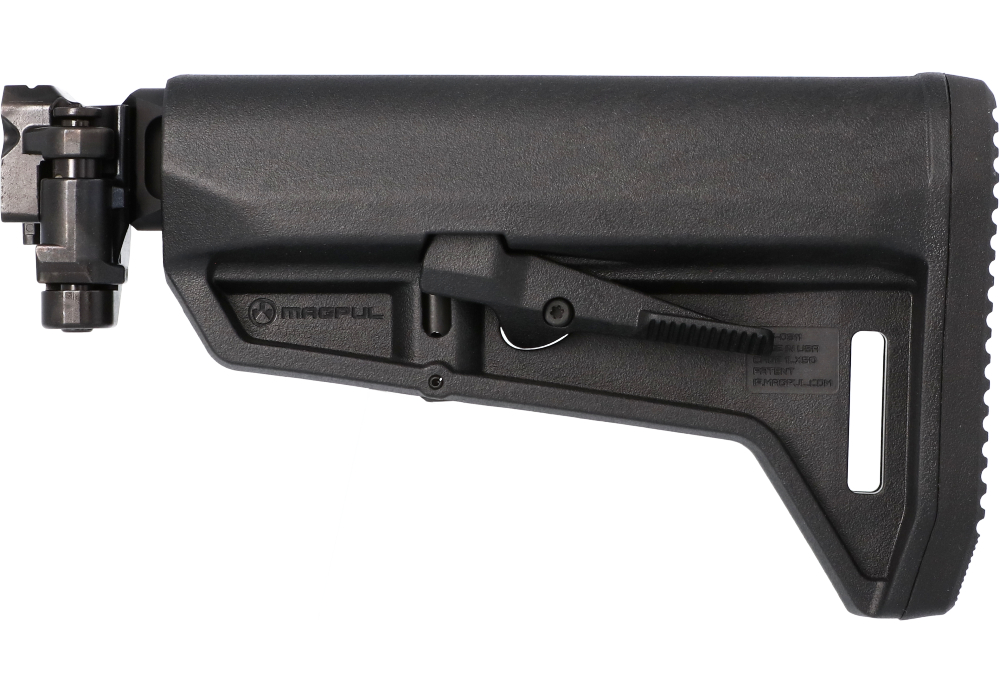
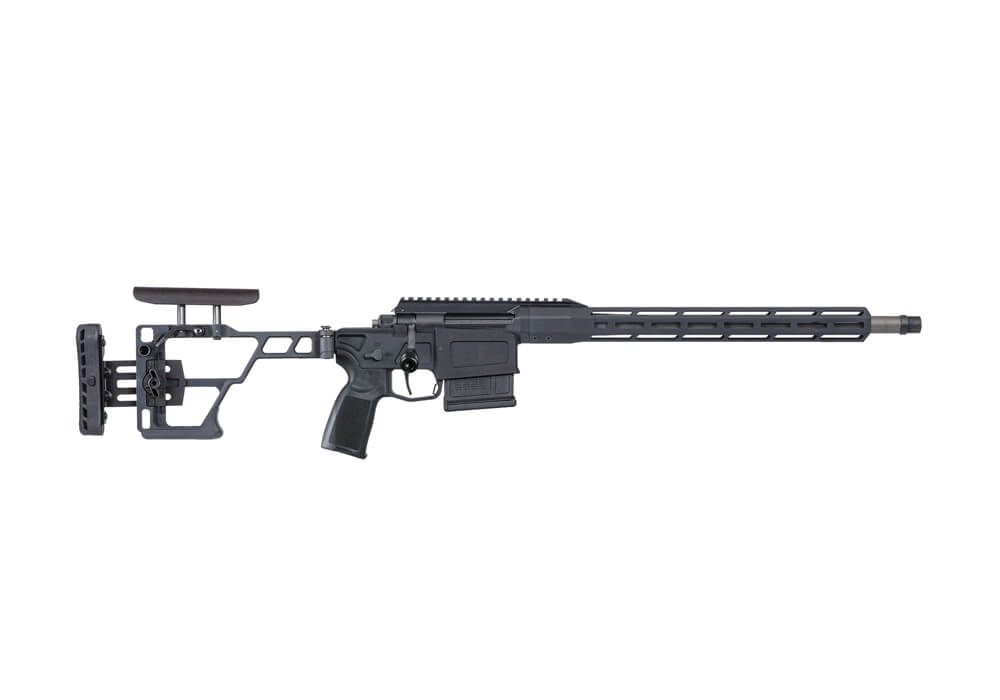
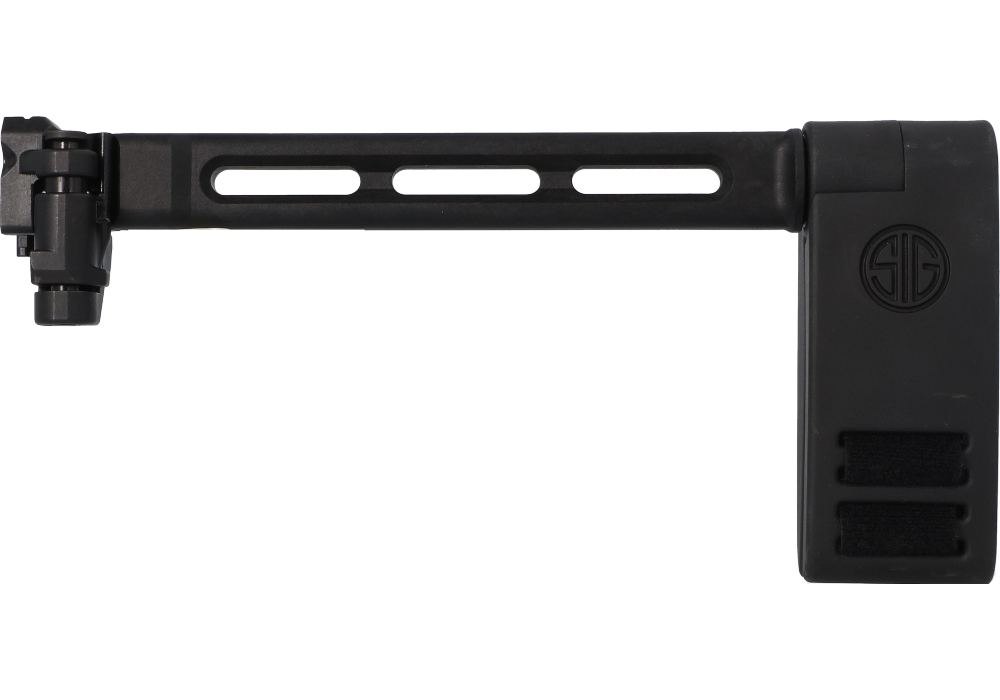
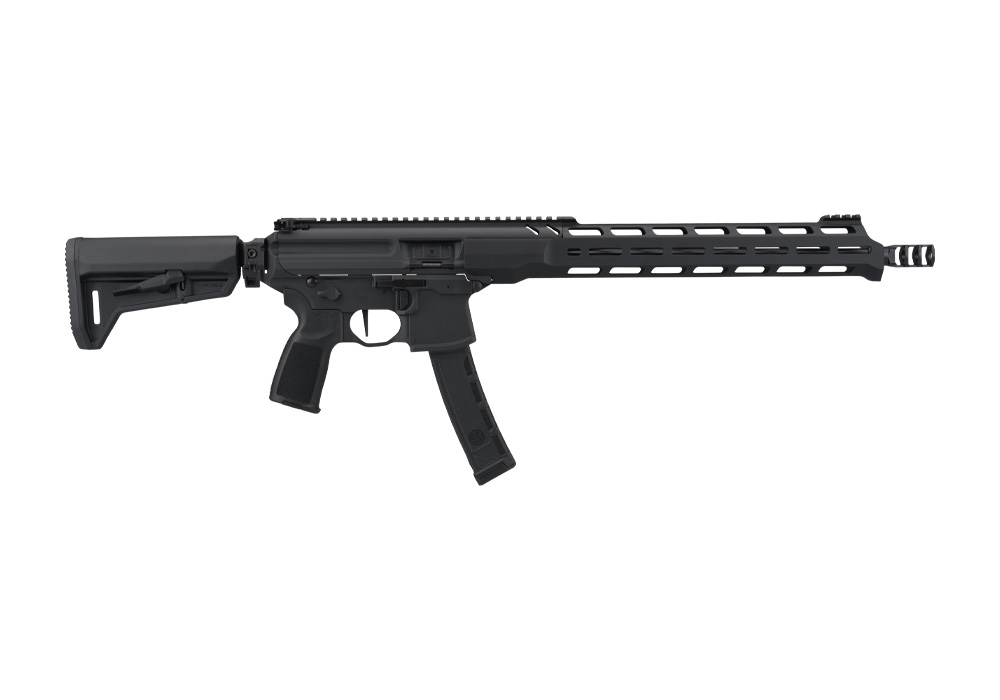
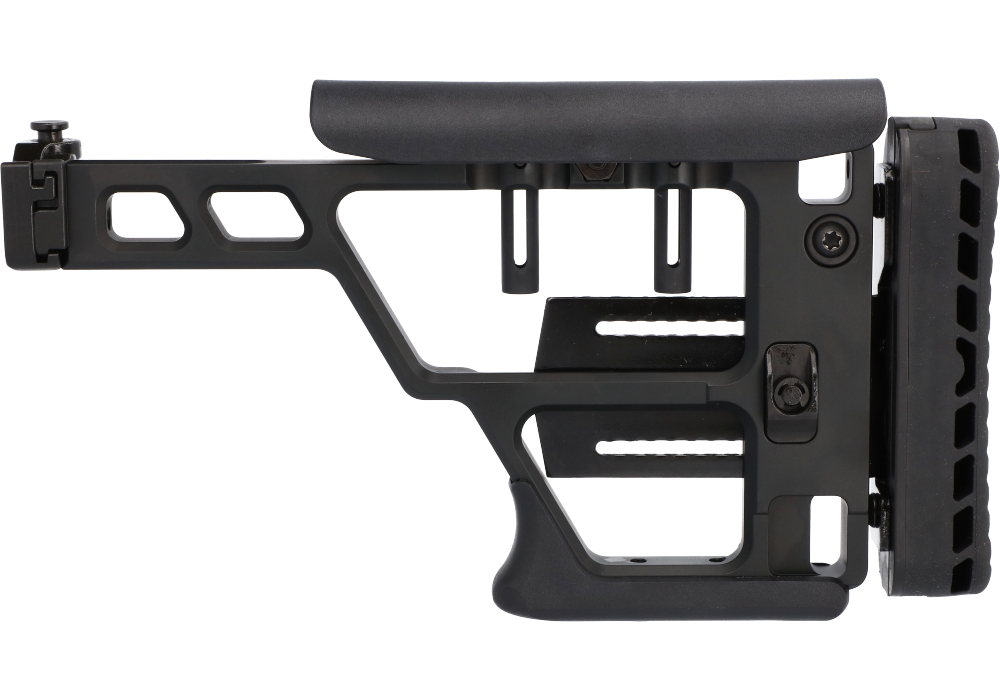
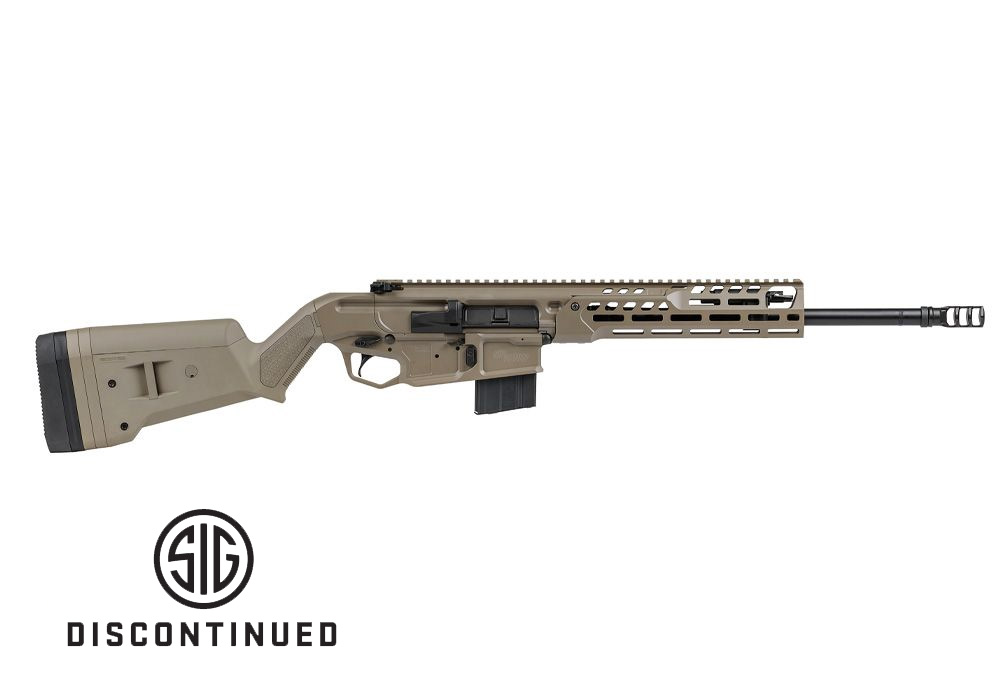
Collapsing stocks for black rifles provide adjustable length of pull, allowing the distance between the trigger and the rear of the buttstock to change without replacing the entire assembly. Often called collapsible or telescoping stocks, these components give compatible modern sporting rifles a more adaptable fit for different shooters and shooting positions. That adjustment matters because a rifle that feels comfortable at a standing bench may feel noticeably different when shouldered from a seated position or used by someone with a shorter reach. A suitable length of pull helps the shooter maintain a natural shoulder position, reach the controls comfortably, and establish a consistent cheek position behind the sights. Collapsing and folding describe different functions: a collapsing design shortens along its adjustment mechanism, while a folding design pivots to the side. Some assemblies combine both functions, but neither feature should be assumed from appearance alone. The familiar black finish is a visual characteristic, not a compatibility standard; rifles with similar silhouettes can use very different rear mounting arrangements. Many conventional designs travel along a receiver extension, while others use dedicated rails or platform-specific mounting systems. For shoppers, the useful distinction is not simply how compact an assembly looks, but whether its mounting interface, adjustment range, and overall geometry suit the intended rifle. A streamlined profile can help an unloaded firearm fit more conveniently within a suitable case, while a broader cheek surface may feel more comfortable during extended range sessions. Neither shape is inherently better for every shooter. Recreational target shooters, competitors, and owners seeking a more comfortable fit may value different combinations of weight, support, and adjustment. The strongest choice is usually the one that addresses a clear need without adding unnecessary bulk or complexity. Adjustable length does not replace sound shooting fundamentals, but it can remove an awkward reach or cramped shoulder position that makes a well-fitting rifle harder to use comfortably.
Materials and construction shape how a collapsible buttstock feels in the hand, balances on the rifle, and holds up to repeated use. Reinforced polymer is common because it can provide useful rigidity with relatively low weight, while aluminum components often appear in mounting sections, support rails, and other structural areas. Neither material tells the whole story on its own. Wall thickness, reinforcement, hardware quality, and the design of the adjustment mechanism all contribute to durability. Smoothly finished edges are worth attention around the cheek contact area and adjustment lever, where rough molding seams or sharp corners can become distracting. A textured or resilient buttpad can help the rear of the rifle sit securely against the shoulder, although its shape and firmness affect comfort as much as its surface pattern. Wider cheek surfaces provide more contact area; slimmer designs keep the profile compact and may leave more room within a fitted case. Weight also deserves context rather than a simple lighter-is-better judgment. A heavier rear assembly changes the balance of the complete rifle, while a very light design may suit someone prioritizing easy transport. Fit at the mounting interface is equally important. Receiver extensions are not all the same diameter or specification, and a component intended for one pattern should not be assumed to fit another. Rear rail interfaces likewise require confirmation of the firearm’s requirements and the assembly’s intended application. Some designs include a secondary locking feature intended to reduce movement after adjustment, but the amount of play depends on the complete interface and its tolerances. A secure setting, positive engagement, and accessible controls are more meaningful than an impressive number of adjustment positions. Sling attachment points can add convenience when their placement works with the rifle and carry arrangement, but sockets, loops, and compatible attachment hardware vary. Published dimensions, interface specifications, included hardware, and manufacturer compatibility information provide a firmer basis for selection than photographs alone.
Everyday ownership brings smaller details into focus, especially after several trips between a secure storage location, a transport case, and the range. An adjustment lever that is easy to identify by touch can simplify returning to a familiar setting, while a protected control may be less likely to catch against case padding or other equipment. Clearly defined positions help a shooter repeat a preferred fit rather than estimate it each time. For a rifle shared by adult family members during supervised target practice, repeatable adjustment can accommodate different arm lengths without treating one person’s setup as universal. For someone who spends longer sessions at a bench, cheek support and buttpad comfort may matter more than achieving the shortest possible overall profile. Compactness also has limits: shortening the rear assembly does not ensure that a rifle will fit a particular case, and folded dimensions are not the same as collapsed dimensions. Shoppers comparing compact configurations can explore Collapsible Stock PDW Rifles for related context, while keeping the requirements of the individual firearm central to any accessory decision. Care is generally straightforward, but the appropriate methods depend on the materials and mechanism. With the firearm unloaded and handled according to its safety instructions, routine attention can include checking for visible cracks, damaged contact surfaces, loose hardware, or grit around moving parts. Cleaning products should be compatible with polymer, rubber, and surface finishes, and lubrication should follow the manufacturer’s recommendations rather than assumptions about what a sliding mechanism needs. Persistent looseness, incomplete locking, or unfamiliar movement warrants evaluation by a qualified gunsmith instead of improvised fixes. Legal requirements also matter because a buttstock can affect a firearm’s classification, and compatibility alone does not establish that a configuration is lawful. As a gift for an experienced firearm owner, this category benefits from knowing the exact platform and the recipient’s preferences in advance. Across uses, lasting satisfaction comes from verified fit, dependable adjustment, comfortable contact surfaces, and construction suited to regular handling.