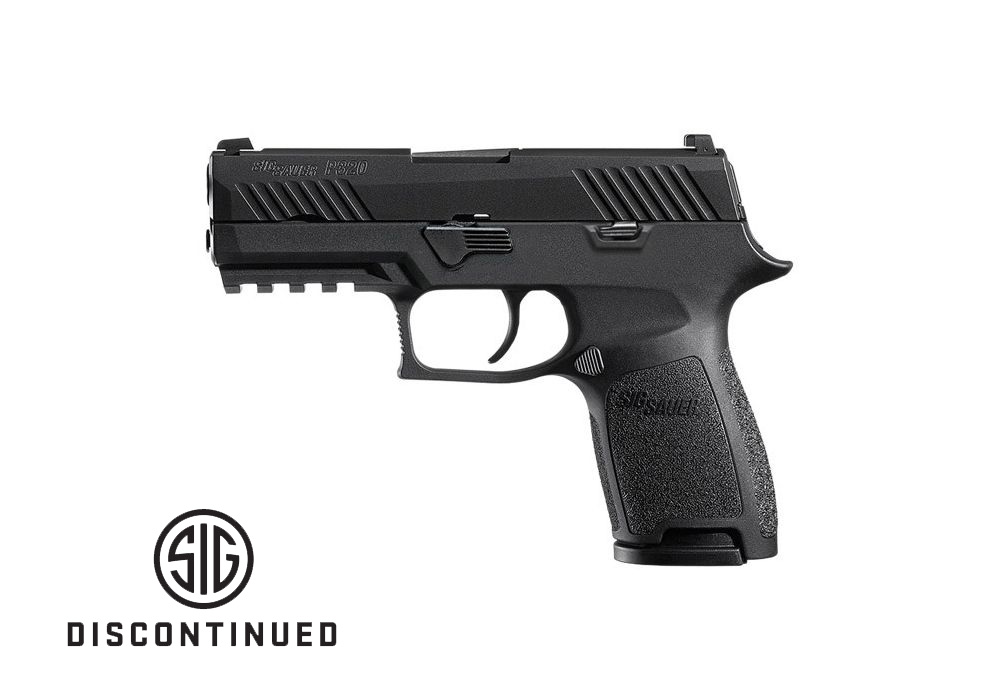
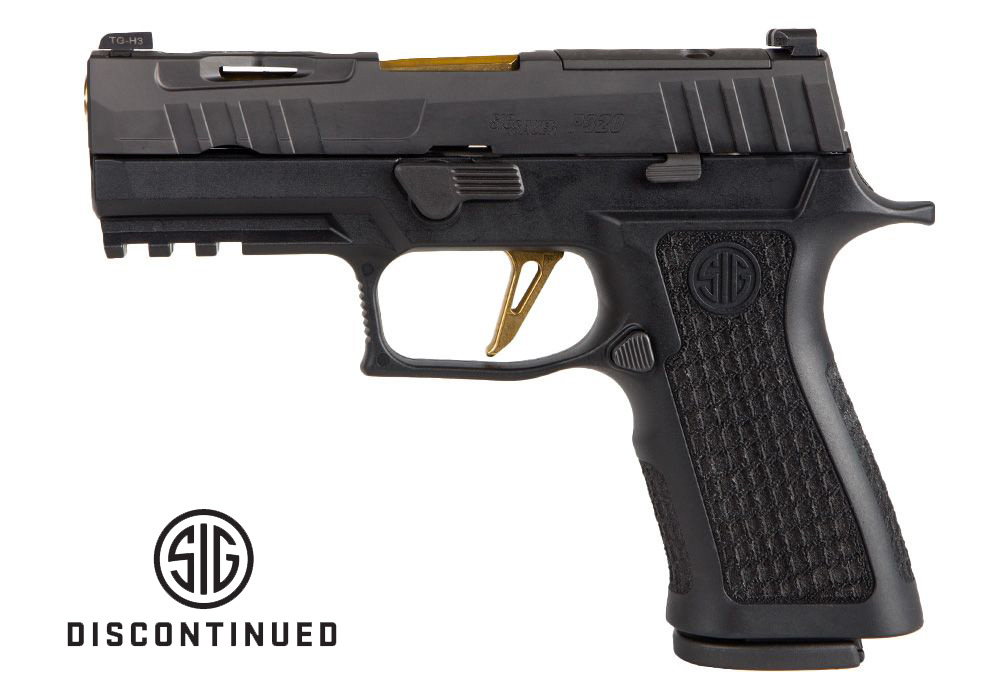
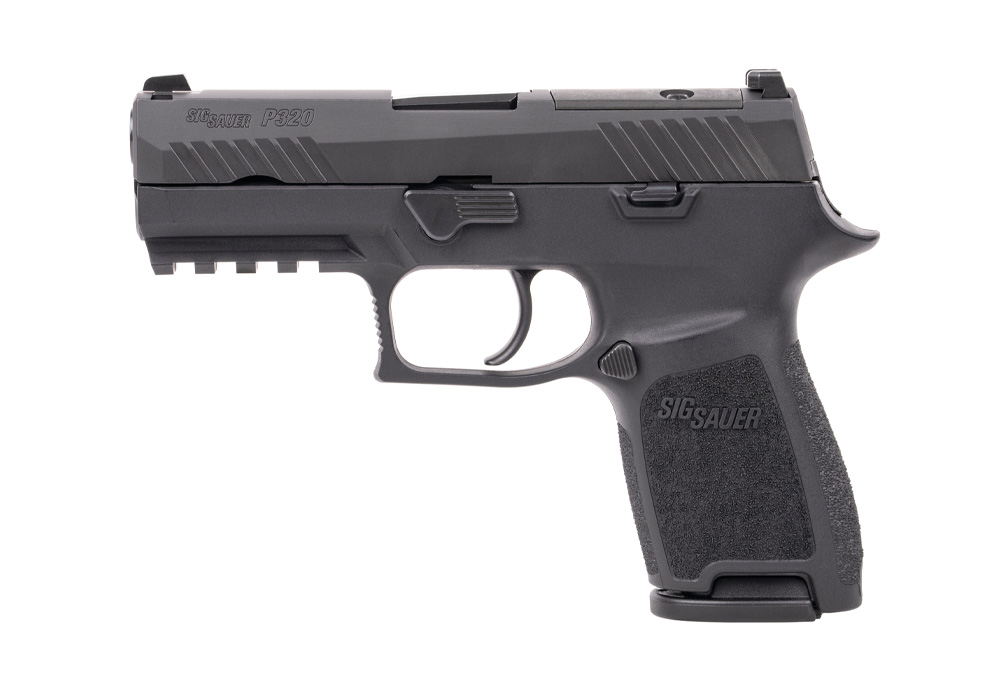
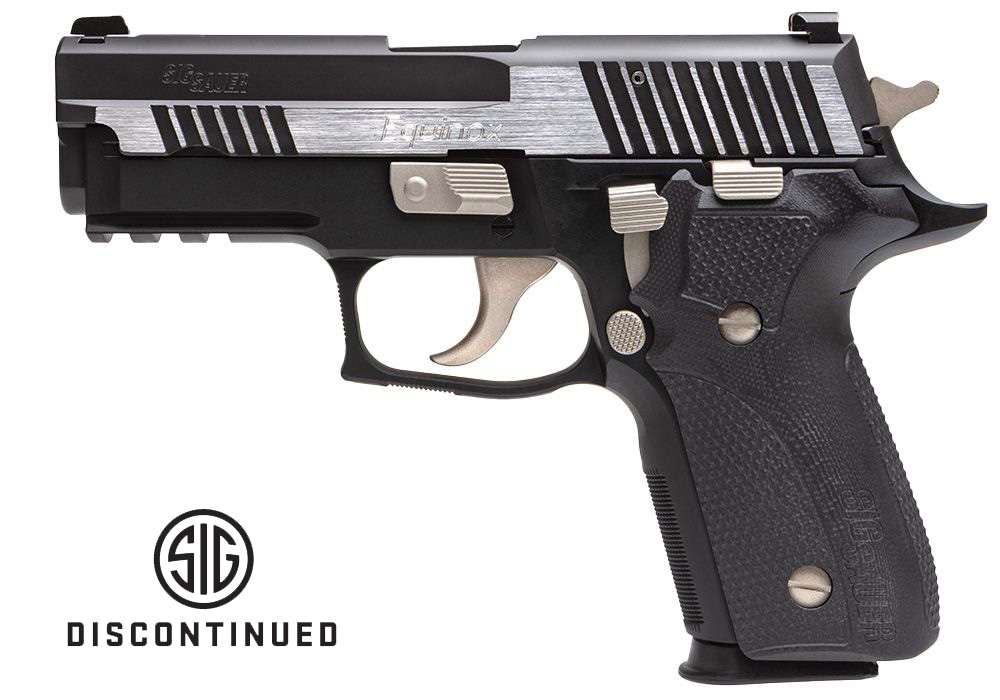
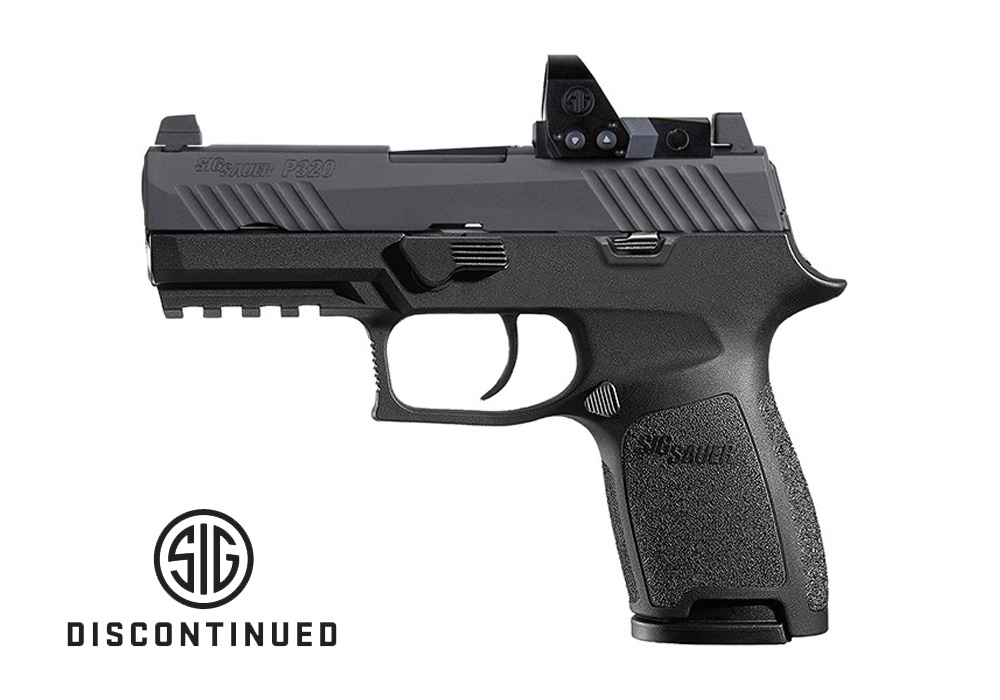
Compact pistols with a slide stop lever combine a relatively compact frame and slide with a control that holds the slide open when engaged. On many semiautomatic pistols, the magazine follower activates this mechanism after the last round has been fired, leaving the action open and providing a visible indication that the magazine is empty. An open slide does not, by itself, establish that a firearm is unloaded; safe handling still requires verification according to the manufacturer’s instructions. Depending on the design, the lever may also serve as a slide release, although its intended operation should always be confirmed in the owner’s manual. The terms slide stop and slide release sometimes describe the same component, but they should not be treated as interchangeable across every pistol. Within the compact category, differences in frame dimensions, grip length, slide width, and control placement can be more meaningful than the category name alone. A shorter grip may be easier to accommodate in a suitable concealment holster, while a longer gripping surface may feel more comfortable during supervised range practice. Neither characteristic guarantees the right fit for every owner. These pistols can suit adults seeking a firearm for lawful personal protection, recreational target shooting, or formal instruction, provided the firearm matches their experience, physical needs, and local legal requirements. The slide stop is one part of that overall match, alongside the trigger, sights, magazine release, and grip geometry. A small, closely fitted lever presents a different feel from a more prominent control, and its position relative to the grip matters as much as its size. For a shopper comparing compact pistols, useful specifications include overall dimensions, unloaded weight, frame material, slide construction, and whether the controls are accessible from one side or both. Considering those details together gives a clearer picture of the firearm than focusing on a single feature in isolation. It also keeps the emphasis on suitability for regular, responsible ownership rather than assumptions about what every compact pistol should feel like.
Control layout deserves particular attention because two pistols with similar dimensions can feel quite different in the hand. A slide stop positioned on the left side of the frame is commonly intended for right-handed access, while an ambidextrous design provides access from both sides. Ambidextrous and reversible are not equivalent descriptions: a reversible control can be configured for a different side, whereas an ambidextrous control is accessible on either side without changing its configuration. Those distinctions apply to individual controls, so an ambidextrous magazine release does not necessarily indicate an ambidextrous slide stop. Left-handed shoppers, households with adults who use different dominant hands, and people considering a pistol for instruction may find that distinction especially relevant. Lever shape, surface texture, and clearance around the control also influence how readily it can be identified by touch. A wider shelf can feel more distinct, while a lower-profile lever sits closer to the frame; the most suitable arrangement depends on the entire grip and control layout. During an authorized fitting with a verified unloaded firearm, a qualified retailer or instructor can help assess whether the grip feels secure and whether the controls are reasonably accessible. That evaluation should include the reach to the trigger, the contour behind the trigger guard, and how the backstrap meets the palm. Interchangeable grip components, where present, may offer useful flexibility, but they do not eliminate every difference in hand fit. Someone with smaller hands may prefer a narrower grip circumference, while another shopper may find that a fuller grip distributes contact more comfortably. Grip texture matters as well: sharply defined texture and smoother surfaces feel different against the hand and against clothing during lawful carry. Holster compatibility should be checked for the exact firearm configuration, with particular attention to secure retention, full trigger coverage, and clearance around external controls. A holster’s fit cannot be established from the word compact alone. These practical details help distinguish a pistol that merely feels appealing at first contact from one that suits the owner’s intended use and established safety practices.
Materials and maintenance complete the picture. Compact pistol frames commonly use polymer or metal alloys, while slides are generally steel, with finishes and treatments that vary by design. Polymer frames can help limit overall weight, whereas metal frames can produce a different sense of balance and heft. Neither material alone determines quality, service life, or comfort. Slide construction, protective finishes, component fit, and adherence to the manufacturer’s care requirements all contribute to long-term performance. For shoppers comparing slide materials alongside control layouts, Compact Pistols With Stainless Steel Slide offers a related category to consider. Stainless steel can provide useful corrosion resistance, but it is not immune to corrosion and still requires appropriate care. Fingerprints, handling residue, lint, and accumulated range debris are reasons to follow the prescribed cleaning and inspection schedule rather than relying on appearance alone. The slide stop and its surrounding surfaces also warrant attention during routine maintenance, using only the procedures and supplies specified for the firearm. A lever that feels unusually loose, binds, or no longer functions as described should be evaluated by a qualified professional rather than altered at home. Attempts to reshape engagement surfaces or substitute incompatible parts can compromise safe operation. Durability is best considered as a combination of sound construction, suitable maintenance, and proper storage, not simply a particular finish or a heavier component. For regular range use, clear maintenance instructions and access to qualified service are meaningful ownership considerations. For lawful carry, the firearm, holster, and storage arrangements need to work together without exposing the trigger or interfering with controls. Secure storage that prevents unauthorized access is essential in every setting, especially wherever children or visitors may be present. A firearm is also a highly personal choice, so any contemplated gift requires careful attention to the recipient’s preferences, eligibility, and applicable transfer laws. Ultimately, compact pistols with a slide stop lever are best understood through the relationship between mechanical function, hand fit, construction, and responsible use. The strongest match is a firearm whose dimensions and controls suit its owner, whose care requirements are understood, and whose ownership includes appropriate training and consistent safety habits.