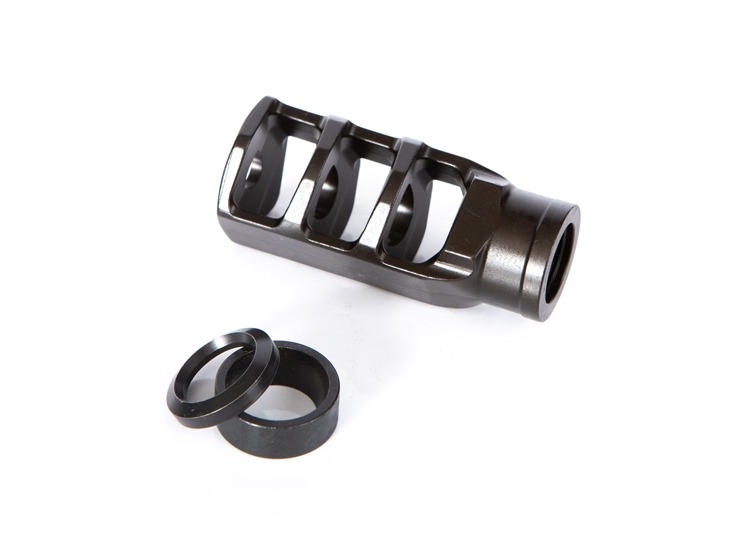
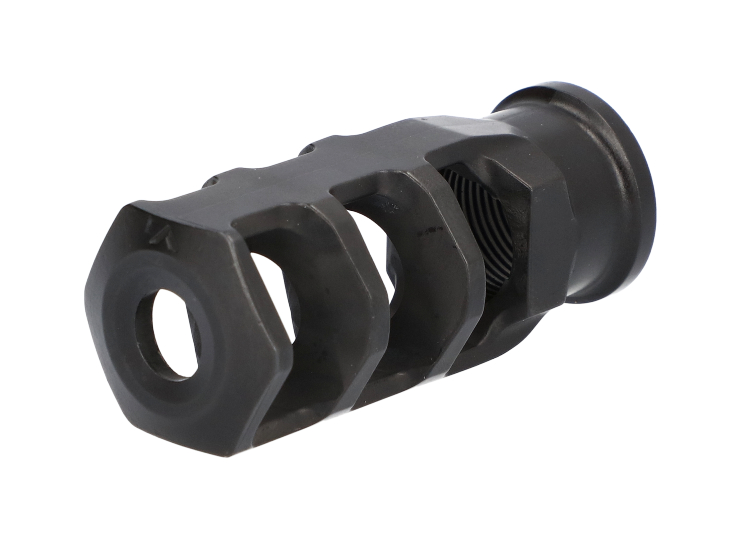
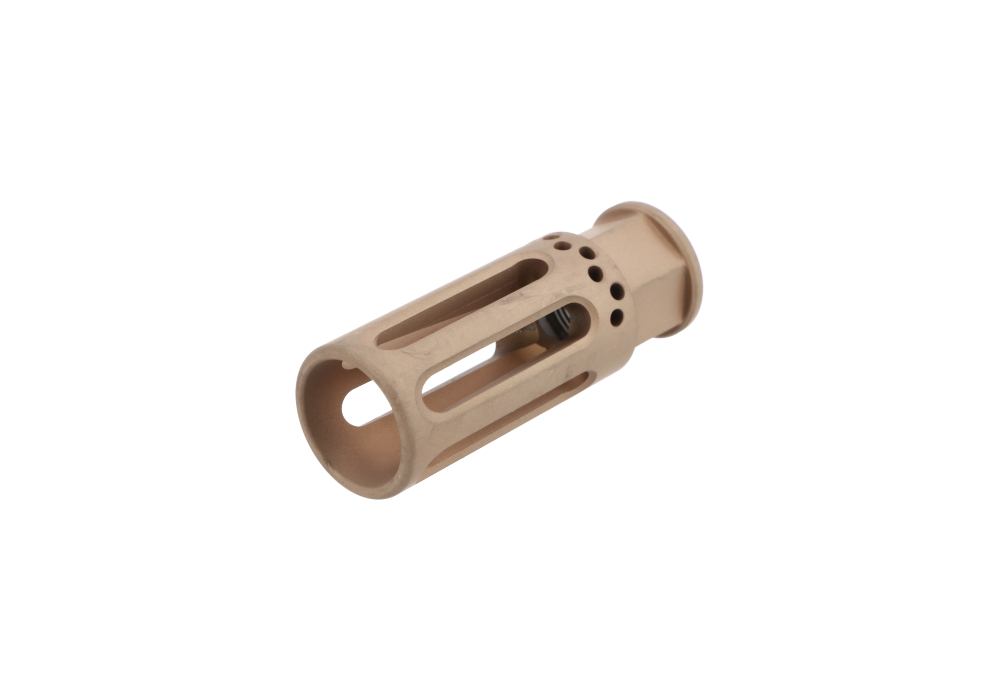
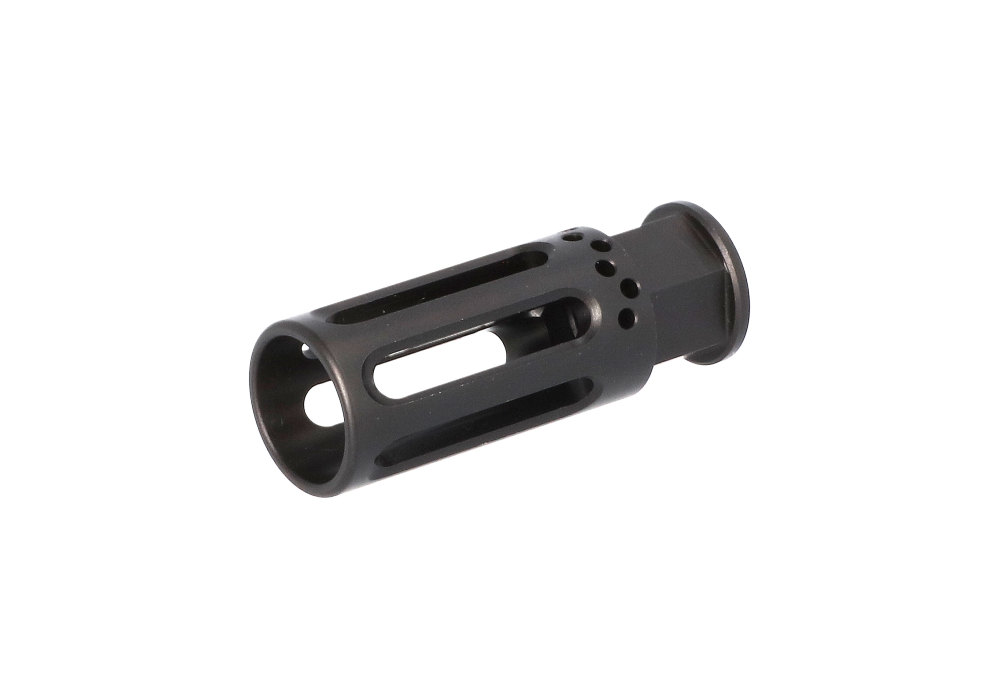
Precision rifle compensators are muzzle devices that redirect expanding propellant gases through ports to help counter muzzle rise. Depending on the design, gas is directed upward, outward, or through a combination of openings that influence how the rifle moves during firing. The practical goal is a more controlled sight picture: less upward movement can help a shooter keep the target within the scope’s field of view and reacquire the aiming point after a shot. That matters on a target range, where seeing a bullet’s impact can provide useful feedback, and in precision rifle competition, where a stage may involve several targets at different distances. Compensators and muzzle brakes have related functions, but the terms are not always interchangeable. A compensator primarily addresses muzzle movement, while a muzzle brake primarily addresses rearward recoil; some designs combine both functions. Port geometry, cartridge characteristics, barrel length, and the rifle’s overall configuration all affect the result. A device that feels well balanced on one rifle may feel different on another, even when both rifles use the same cartridge. Reduced movement is also not a guarantee of smaller groups or greater mechanical accuracy. Consistent ammunition, a stable shooting position, a suitable optic, and sound fundamentals remain important. From a supported position, a useful compensator can make the difference between briefly losing the target behind scope movement and retaining enough of the sight picture to observe the shot. That benefit should be weighed against the sound and pressure directed around the muzzle. Compensators do not function as sound suppressors, and some port arrangements increase perceived blast for the shooter or people nearby. At a covered firing line or beside another shooting bench, that characteristic can be especially noticeable. Hearing and eye protection remain essential, and consideration for neighboring shooters belongs alongside any assessment of recoil control. The most suitable design balances its effect on rifle movement with the setting in which the rifle will be used.
Compatibility is the foundation of choosing a compensator for a precision rifle. Barrel thread pitch, the device’s caliber rating, mounting requirements, and clearance for the intended projectile all need to agree with the rifle manufacturer’s specifications. Thread patterns such as 5/8x24 and 1/2x28 are common examples, but neither pattern alone establishes that a device is appropriate for a particular rifle or cartridge. A matching thread does not confirm correct bore dimensions, proper alignment, or a suitable seating surface. Rifles chambered in .223 Remington, .308 Winchester, or 6.5 Creedmoor can have different muzzle configurations, and compatibility should come from documented specifications rather than assumptions based on cartridge names. Some compensators require a particular rotational orientation so their ports operate as intended. Manufacturer-specified mounting hardware and installation requirements matter, and a qualified gunsmith can assess fit when the barrel configuration or mounting arrangement is uncertain. Material selection adds another layer to the decision. Steel and stainless steel are common choices for strength and resistance to wear, while other alloys may offer a different balance of weight and durability. Material names alone do not tell the whole story: construction, surface treatment, and the intended firing schedule also influence service life. Protective finishes can help resist corrosion and simplify routine care, but no finish eliminates the need for inspection and cleaning. Length, outside diameter, and weight deserve attention because a muzzle device changes the rifle’s overall dimensions and places additional weight at the end of the barrel. On a bench-focused rifle, that weight may be less noticeable than on a rifle carried between competition stages. Exterior dimensions can also affect clearance within a fitted case. For rifles used with a sound suppressor, compatibility requires separate confirmation; a compensator is not automatically a suppressor mount, and a mounting interface must match the relevant system. Changing a muzzle device may also change the rifle’s point of impact, so previous sight settings should not be assumed to remain valid after a change.
Long-term satisfaction depends as much on care and intended use as on the initial fit. Propellant residue can collect around ports and internal surfaces, while repeated firing exposes the device to heat and erosion. Manufacturer-recommended cleaning methods help manage that buildup without damaging the finish or altering critical surfaces. Maintenance should take place with the rifle unloaded and the device cool, and visible damage, unusual wear, or a mounting concern warrants evaluation before further use. A compensator’s ports and mounting surfaces are functional features, not simply cosmetic details, so forceful scraping, unapproved abrasives, or improvised modifications can create problems rather than solve them. Durability expectations should reflect the rifle’s actual workload. Occasional target practice and frequent competition use place different demands on a muzzle device, and inspection intervals should follow the manufacturer’s guidance. For a shooter who spends most range time evaluating groups from a bench, the priorities may be a predictable sight picture, manageable blast, and straightforward upkeep. A competitor moving among supported positions may also consider added length, balance, and event rules. Rules vary, and a device suitable for general range use may not meet every competition’s equipment requirements. For a rifle that also sees field use, Compensators for Hunting Rifles provides a related category to consider, with the same need to verify fit and account for muzzle blast. A compensator can also be a thoughtful accessory gift for an experienced precision rifle shooter, but it is a compatibility-dependent choice rather than a universal one. Confirming the recipient’s rifle specifications and preferences is more useful than choosing solely by appearance. Across these uses, meaningful comparisons center on documented fit, port design, material, dimensions, maintenance requirements, and the conditions of the shooting venue. Those details help distinguish a device suited to deliberate bench work from one better aligned with a competition-focused setup, without treating any single design as the answer for every precision rifle.