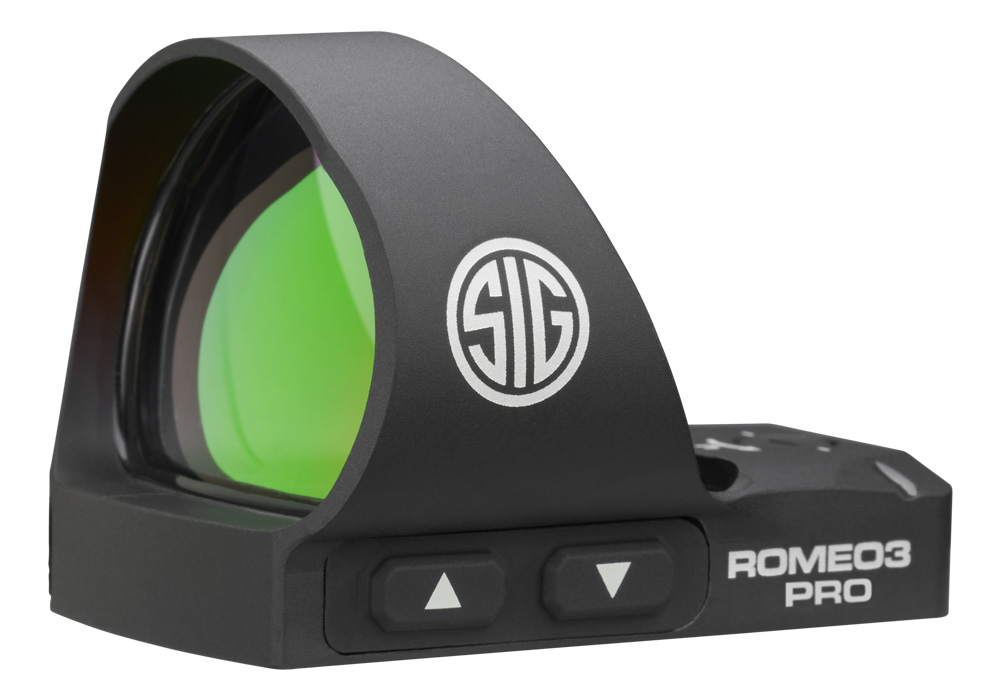
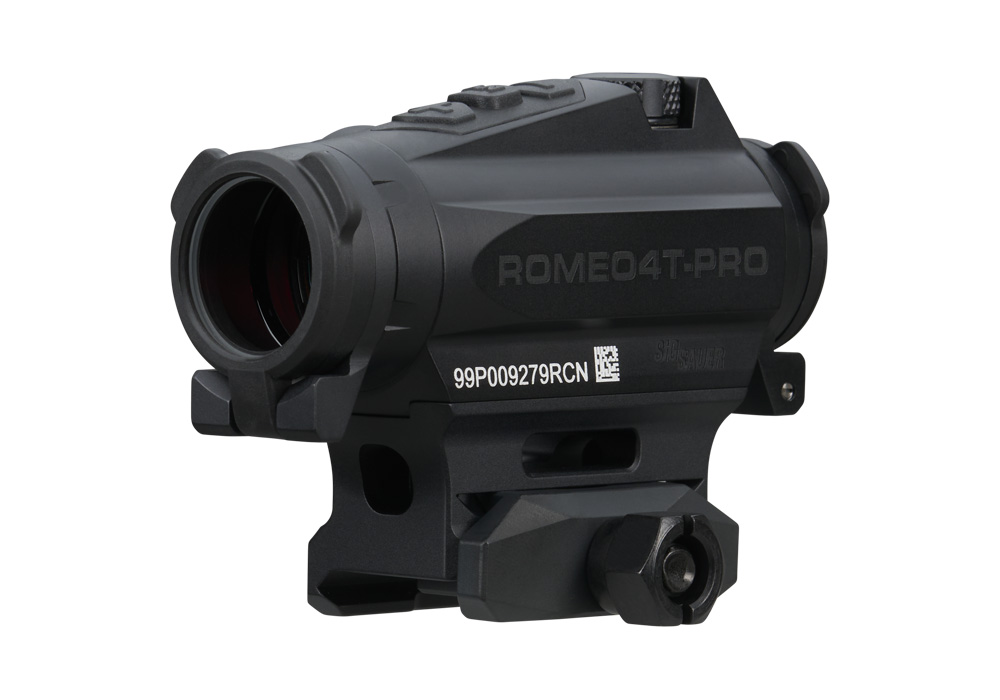
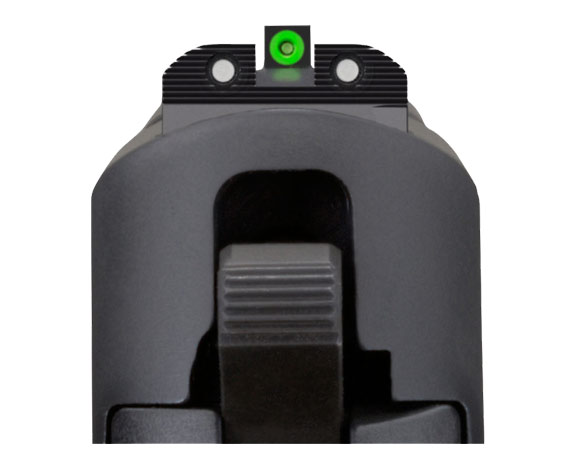
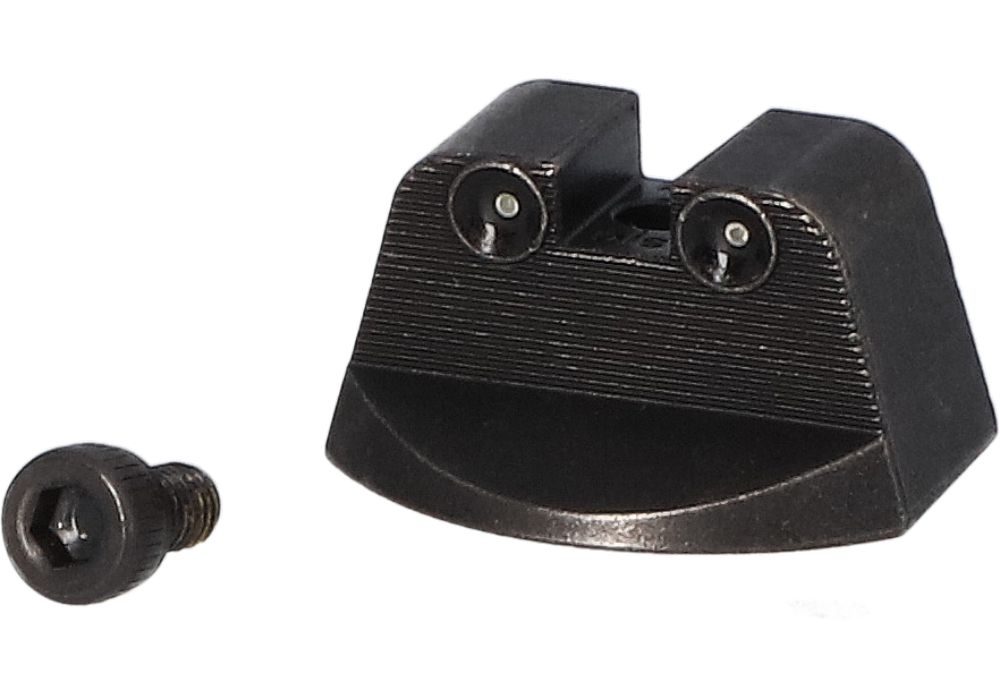
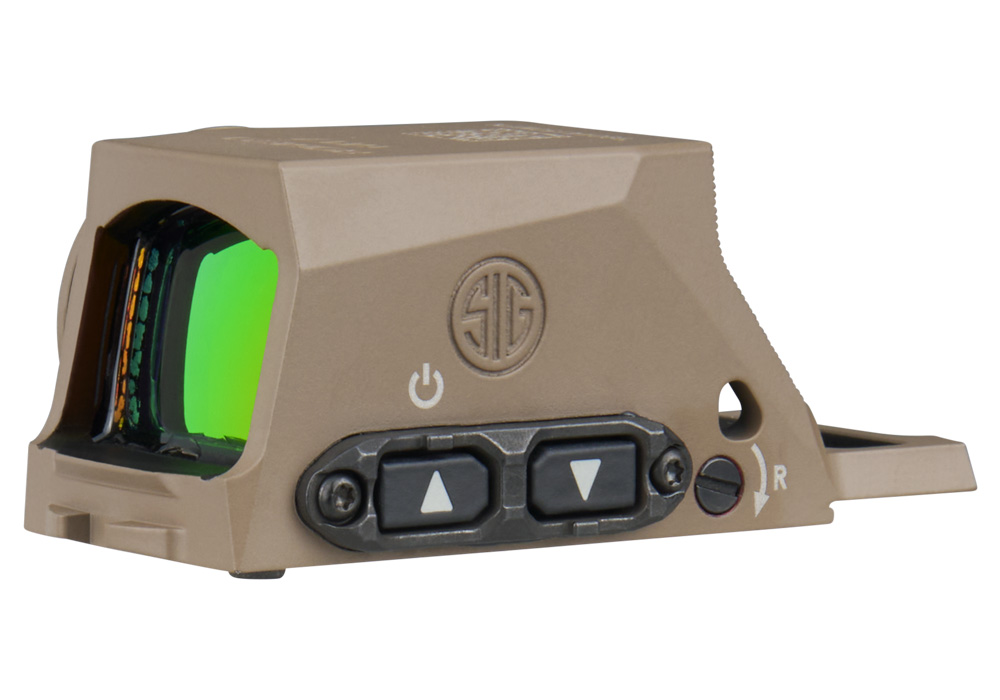
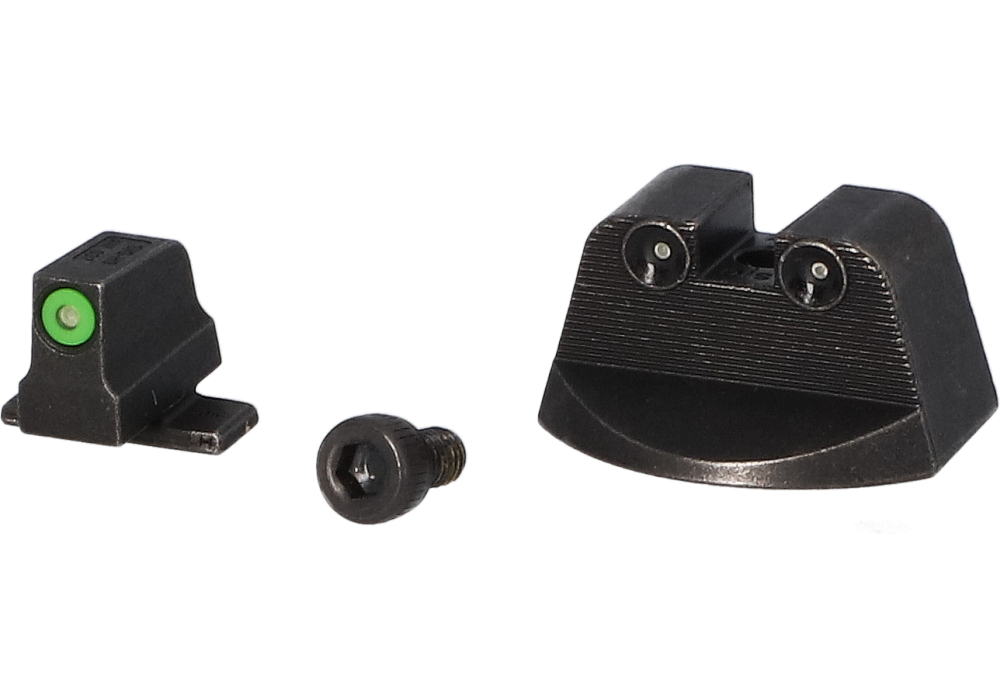
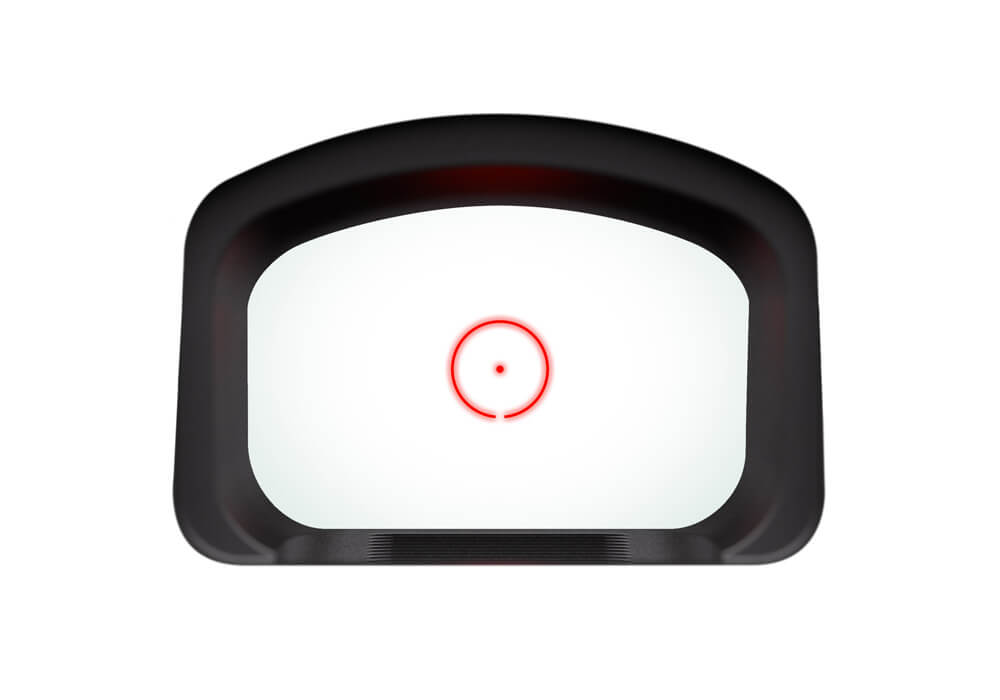
Competition pistol sight sets pair a front sight with a rear sight to provide a coordinated aiming reference for competitive handgun use. Common configurations include a fiber-optic front sight with a plain black rear sight, all-black target sights, and sets with an adjustable rear assembly. Each presents a different balance of visual contrast, sight-picture definition, and mechanical simplicity. A fiber-optic front sight gathers available light through a small insert, creating a bright reference against the target, while a black rear sight keeps surrounding visual detail relatively subdued. Fiber-optic inserts rely on ambient light rather than generating illumination independently. All-black arrangements offer a crisp, uncluttered outline that some competitors prefer for deliberate target work. Electronic reflex and red dot sights are a separate category of aiming equipment, not another name for a front-and-rear iron sight set, although certain competition configurations incorporate both. The appropriate choice depends on the pistol, the competition rules, and the shooter’s visual preferences. Rear-notch width, front-blade width, and the shape of the visible edges all influence how the sight picture appears. A relatively open rear notch leaves more visible space around the front blade; a closer-fitting visual relationship presents a different reference that may appeal to shooters who favor a more defined alignment. Neither appearance is universally preferable, particularly when eyesight, corrective lenses, target backgrounds, and range lighting vary. Serrations on some sight faces help reduce distracting reflections, while rounded or beveled exterior edges can limit sharp corners without changing the basic aiming reference. For someone entering local matches, returning to organized competition, or refining a familiar range pistol, a matched sight set offers a coherent starting point rather than a collection of unrelated components. The most useful comparison is between the actual sight pictures and fit requirements, not simply between descriptions such as “bright,” “fast,” or “target.”
Fit deserves close attention because competition pistol sights are not universally interchangeable. Compatibility can depend on the exact pistol model, slide configuration, mounting interface, and the dimensions specified for the front and rear components. Pistols within the same family can use different sight arrangements, so a familiar model name alone is not enough to establish a match. Front and rear heights also work together; selecting components independently without confirming their intended relationship can result in an unsuitable combination. Product specifications should identify the supported firearm configuration and explain whether a set is intended for a conventional slide or a particular optic-equipped arrangement. Taller iron sights may be relevant when an electronic optic is present, but visibility through an optic depends on the complete setup rather than sight height alone. For configurations involving an optic mounting interface, Pistol Sight Plates address a separate compatibility consideration and should not be confused with iron sight sets. Construction is another meaningful distinction. Steel sight bodies are common where resistance to wear and repeated handling matters, while protective finishes help shield exposed surfaces from corrosion and abrasion. No finish eliminates the need for care, and exposed edges may show wear over time. A fiber-optic insert is a different material from its surrounding body and deserves its own inspection for damage or loss of visibility. Fixed rear sights generally offer a compact, mechanically simple arrangement; adjustable rear designs include controls for windage and elevation where specified. That additional mechanism can be useful for competition applications, but it also introduces features that should be protected during transport and maintained according to the manufacturer’s directions. Overall profile matters beyond appearance: rear-sight shape, front-sight height, and protruding adjustment features can affect compatibility with a holster or protective case. Confirming those details before choosing a set helps avoid treating a single component as though it exists independently of the rest of the pistol’s equipment.
Long-term satisfaction often comes down to whether the sight set remains easy to see, suits the intended competition format, and receives appropriate care. A bright front reference that looks distinct against one target background may appear less prominent against another, and a very fine blade can feel different through prescription lenses than it does in a close-up photograph. Product images are useful for understanding shape, but published dimensions and a firsthand look at comparable sight pictures provide better context for visual proportions. Competition rules also deserve attention before selecting features: equipment divisions can place different limits on electronic optics, sight configurations, and other pistol components. A set intended primarily for organized matches should be evaluated against those requirements rather than assumed eligible because its description includes the word “competition.” For routine care, follow the firearm and sight manufacturers’ safety, inspection, and maintenance directions. Residue, lint, and surface grime can obscure fine edges or diminish the apparent brightness of an insert, while unsuitable solvents or abrasive cleaning materials can affect finishes and nonmetal components. Use only cleaning materials approved for the relevant surfaces, and have loose, damaged, or questionable components assessed by a qualified gunsmith. Installation and fit concerns likewise warrant professional attention rather than improvised correction. A protective case with appropriate clearance helps keep sight assemblies from bearing against hard surfaces during travel, and routine inspection can reveal wear before it becomes a distraction at a match. For regular competitors, durability includes more than the strength of the sight body: it also includes the condition of inserts, adjustment mechanisms, and mounting interfaces over repeated range visits. For a newer participant, straightforward compatibility and a clear visual reference may matter more than an extensive feature list. Sight sets can also be a thoughtful gift for an established competitor when the recipient’s exact pistol configuration, preferred sight picture, and competition requirements are known. Those practical details distinguish a well-considered accessory from one that merely looks suitable in a photograph.