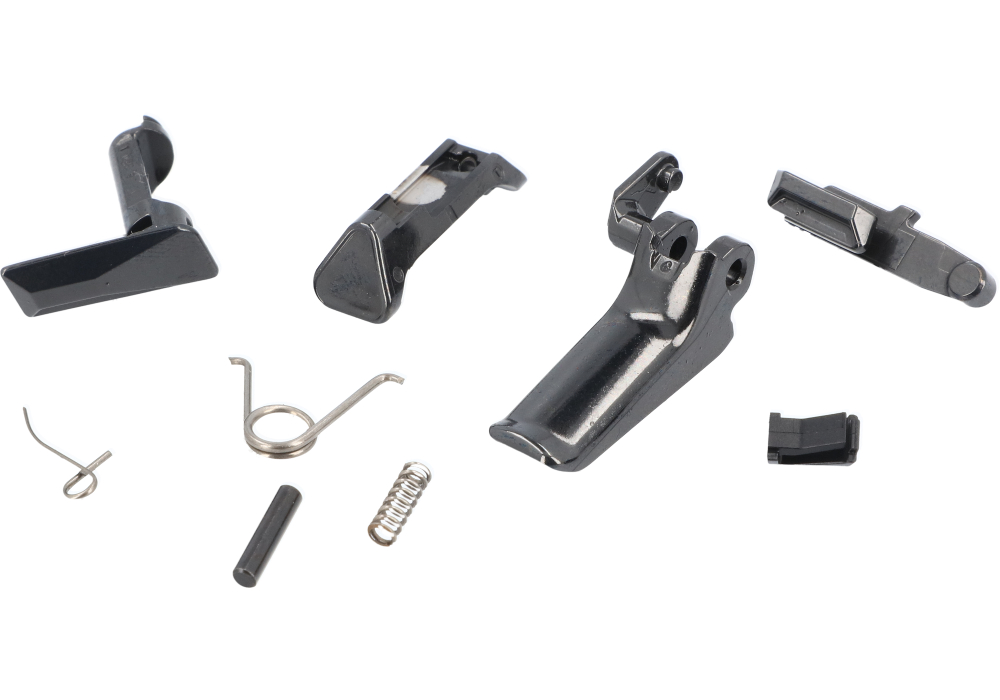
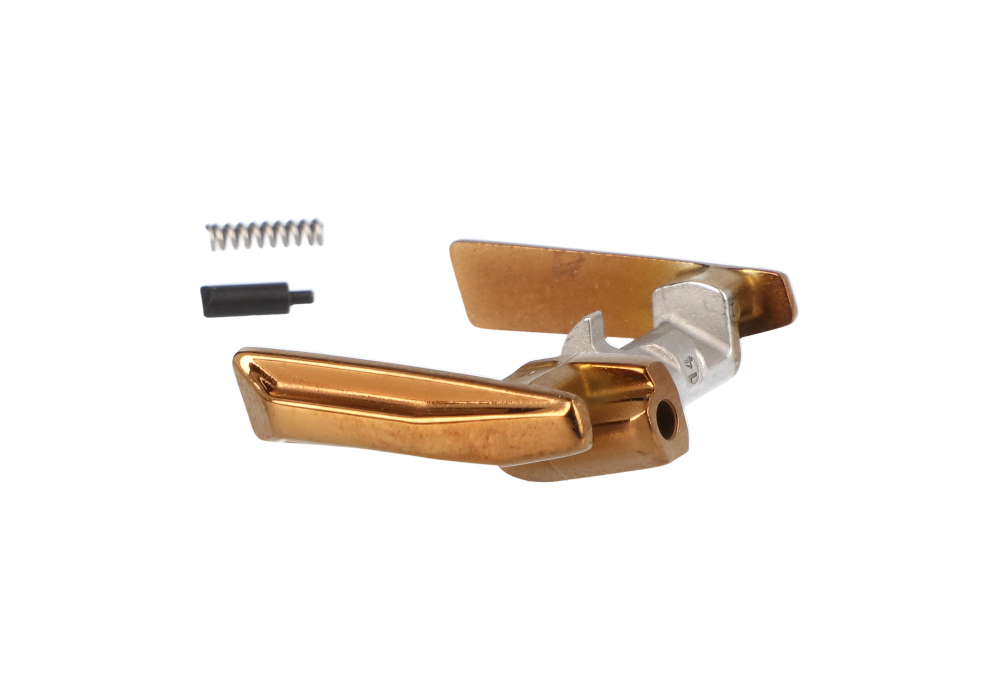
Control parts are the firearm components that provide the physical interface between the user and the firearm’s operating mechanisms. The category generally includes controls associated with functions such as retaining or releasing a magazine, holding an action open, or engaging a manual safety where the firearm’s design includes one. These components are distinct from electrical switches, industrial automation equipment, and other mechanical controls that share similar terminology. In a firearm parts catalog, their defining considerations are compatibility with the intended platform, appropriate construction, and correct function within the original design. A control may occupy only a small area of the frame or receiver, yet its shape, position, and condition can influence how familiar the firearm feels in the hand. Surface texture, edge contours, and the relationship between neighboring components all deserve attention. A broad contact surface is not automatically the right choice for every application, just as a compact profile is not automatically preferable. The appropriate configuration depends on the firearm’s specifications and the role it is expected to serve. Recreational owners, regular range visitors, collectors maintaining an original configuration, and professionals responsible for equipment upkeep may all have reasons to evaluate this category. Some are addressing wear identified during an inspection; others are looking for a replacement that preserves the feel and layout of an existing firearm. In either case, a useful starting point is the manufacturer’s terminology for the component, followed by the exact firearm model and any relevant production variation. Similar names and nearly identical photographs can conceal meaningful differences in dimensions or internal interfaces. Control parts should therefore be understood as platform-dependent components, not universal accessories. Their value rests in their suitability for a particular firearm and purpose, with reliable function and conformity to the manufacturer’s requirements taking precedence over appearance alone.
Materials and finish help explain how control parts withstand repeated contact, routine handling, and normal mechanical wear. Depending on the design, components in this category may use steel, aluminum, or engineered polymers, each with properties suited to particular structural and contact requirements. Material names alone do not establish quality or suitability. Geometry, manufacturing tolerances, surface treatment, and the way a component interacts with surrounding parts matter just as much. Steel can provide strength at heavily stressed contact points, while aluminum and polymer can serve appropriate roles where the design calls for different weight or structural characteristics. Protective finishes may help resist corrosion and surface wear, but no finish eliminates the need for care. Visible color is also an incomplete comparison: two dark finishes can differ in texture, treatment, and maintenance requirements. For an owner trying to preserve an existing configuration, matching the specified construction and finish can be more meaningful than selecting a part because it looks similar in a photograph. Fit deserves equally close attention. A shared platform name does not necessarily mean that every size, generation, or configuration uses the same controls. Handedness, factory safety configuration, and compatibility with adjacent components may also affect whether a replacement is appropriate. Where a firearm is used with a holster or other fitted equipment, the original equipment requirements remain relevant as well. A component that appears close enough should never be assumed to be interchangeable. Clear compatibility information and manufacturer documentation are more dependable than visual resemblance or informal comparisons. For related components presented together, Control Kits offers a separate category to consider alongside individual control parts, with the same need to confirm the stated application. Whether evaluating a single replacement or a grouped set, the objective is a configuration that meets the firearm manufacturer’s specifications. Installation, inspection, and any necessary function verification belong with a qualified gunsmith when the work exceeds the owner’s authorized maintenance procedures or involves uncertainty about fit.
Long-term care begins with recognizing that control parts are working components rather than purely cosmetic accents. Repeated handling can leave residue around exposed surfaces, while regular use can gradually change the appearance of contact areas. A polished edge or a visible finish mark does not, by itself, establish whether a part is serviceable; condition should be assessed according to the manufacturer’s guidance rather than appearance alone. Cleaning products and lubricants should be appropriate for the firearm’s materials and finish, and routine care should remain within the procedures described in the owner’s manual. More lubricant is not necessarily better, and harsh chemicals or abrasive tools can damage surfaces that require a gentler approach. Any inspection or maintenance should begin with the firearm unloaded and ammunition removed from the work area, following the manufacturer’s safety procedures. If a control feels different from its established behavior, binds, appears damaged, or does not function as specified, discontinue use and seek qualified evaluation rather than trying to reshape or adapt the component. This is particularly important when the source of the problem is unclear, because a symptom at an external control may involve another part of the mechanism. Durability is best considered in the context of the complete firearm, its maintenance history, and its intended use, not as a promise based on a material description. A firearm used regularly at the range may warrant a different inspection schedule from one kept primarily as part of a collection, but both benefit from careful records and attention to the manufacturer’s recommendations. Keeping the original documentation and recording any professionally completed replacement work can simplify future service. Control parts are also a highly personal gift category: the recipient’s exact firearm configuration and maintenance needs should be known before selecting a component. For owners and gift buyers alike, precise identification is more useful than guessing at preferences. A suitable choice supports the firearm’s documented design, respects the owner’s established setup, and provides a clear basis for responsible care throughout its service life.